What to Do When Your Child Guesses Words in Orton-Gillingham
If your child guesses words instead of reading them through, it can make reading practice feel frustrating fast. This guide explains why guessing happens in Orton-Gillingham and what parents can do to help.

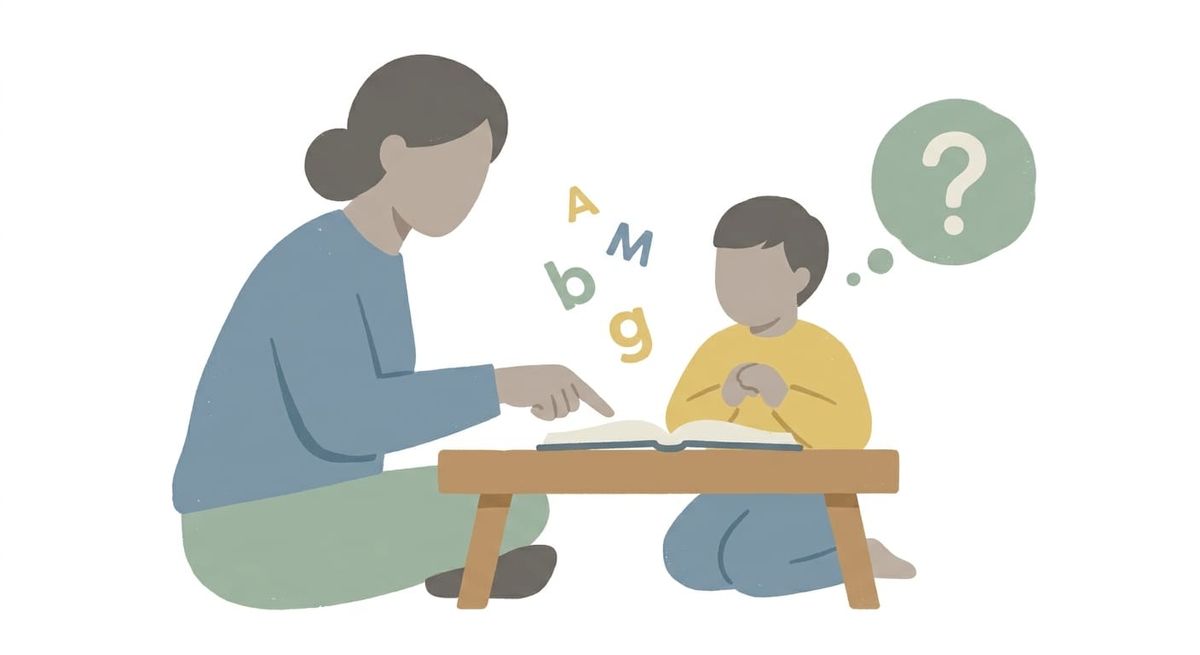
If your child looks at the first letter of a word and blurts out a guess, you are not alone. A lot of parents see this during reading practice and wonder if their child is being careless, rushing, or just not trying.
Usually, that is not the real problem.
When a child guesses words in Orton-Gillingham, it often means the reading task feels too hard, too fast, or not fully secure yet. The good news is that guessing can be changed. With the right response, you can help your child slow down, look at the whole word, and use the skills they are learning.
Why do children guess instead of decode?
Guessing is often a coping strategy. If reading feels effortful, a child may try to get through the word as quickly as possible instead of sounding it out.
A child might guess when:
- the word has a pattern they do not know well yet
- the text is less decodable than it seems
- they are tired and trying to move faster than their skill level allows
- they have gotten used to using pictures, context, or the first letter
- they are feeling pressure to get the word right quickly
This matters because repeated guessing builds the wrong habit. Instead of practicing accurate reading, your child starts practicing prediction.
What should you do in the moment?
If your child guesses words in Orton-Gillingham, try not to jump straight to “No, that’s wrong.” That can raise frustration fast.
Instead, guide them back to the word.
You can say things like:
- “Let’s look at every sound.”
- “Start at the beginning and slide through it.”
- “Does your guess match all the letters?”
- “Try that again more slowly.”
The goal is not to lecture. The goal is to interrupt the guessing habit and return your child to decoding.
If needed, cover part of the word and look at one chunk at a time. If the word is sunset, for example, you might guide your child through sun and then set, then blend the whole word.
Keep your tone calm and matter-of-fact. Short prompts work better than long explanations in the middle of reading.
Is guessing a sign the lesson is too hard?
Sometimes, yes.
If guessing happens once in a while, your child may just need a reminder to slow down. But if it happens over and over, it is worth asking whether the lesson or text is asking for too much.
Watch for signs like:
- your child guesses on most new words
- they know the sounds in isolation but do not use them in reading
- they get through practice by using context instead of the print
- they grow frustrated as soon as longer words show up
When that happens, go back to easier material for a few days. That is not a setback. It is often the fastest way to rebuild accuracy.
In Orton-Gillingham, strong reading habits come from practicing at the right level, not from pushing through words that are not secure yet.
A real-life example
Evan, a fourth grader, kept guessing words during home reading practice. If he saw stamp, he said step. If he saw inside, he said into. His mom thought he was not paying attention.
But when she slowed things down, she noticed something important. Evan could read the sound patterns in isolation, but once he saw the full word in a sentence, he rushed and guessed from the first letter.
So they changed two things. First, she used shorter decodable passages with fewer unfamiliar patterns. Second, she started prompting him with, “Check all the letters,” instead of immediately correcting him.
Within two weeks, Evan was stopping himself more often and going back to decode. He was not perfect, but he was building a much better habit.
Practical tips that help stop guessing
If your child guesses words in Orton-Gillingham, these small changes can make practice more productive.
1. Use shorter reading practice
A tired child is more likely to guess. Ten focused minutes is often better than twenty frustrating ones.
2. Choose text that matches taught patterns
If your child has learned short vowels and consonant blends, the reading should mostly stick to those skills. Too many unknown patterns push kids toward guessing.
3. Prompt, then wait
Give a simple cue like “sound it out” or “look through the whole word,” then give your child time to try. Jumping in too quickly can create dependence.
4. Praise accurate effort
Notice when your child self-corrects or slows down to decode. You might say, “You looked at all the sounds that time,” or “I like how you went back and fixed that.”
What if my child gets upset when I stop the guessing?
That can happen, especially if guessing has become automatic.
Try to keep the correction neutral. You are not calling out a bad behavior. You are teaching a better strategy.
It can also help to set expectations before practice starts. Say something like, “Today we are going to work on looking all the way through the word before saying it.” That gives your child one clear focus.
If emotions rise quickly, end while your child is still able to succeed on one or two easier words. That leaves practice on a better note and protects confidence.
You might also find this helpful
You might also find this helpful: How to Choose Decodable Text for Orton-Gillingham Practice
Conclusion
If your child guesses words in Orton-Gillingham, it does not mean they cannot learn to read accurately. It usually means they need more support with pacing, text level, or prompting.
Small changes can make a big difference. When you help your child slow down and use the print in front of them, you are building the habits that lead to stronger reading over time.
If you want extra support at home, ReadGenie offers structured, decodable reading practice based on Orton-Gillingham principles and the Science of Reading. You can explore it here: App Store and Google Play.



