How to Help With Orton-Gillingham Sight Words
If your child is learning to read with Orton-Gillingham, sight words can feel confusing. This guide shows parents how to teach them in a structured way that supports decoding instead of replacing it.

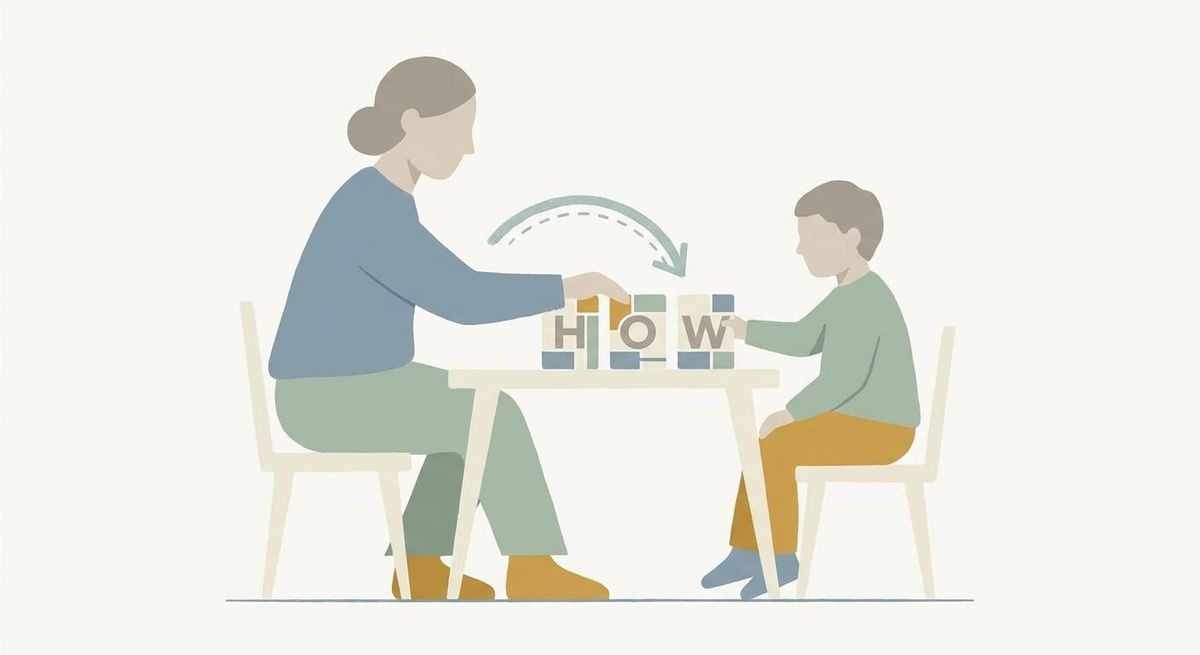
If your child is learning to read with an Orton-Gillingham approach, sight words can feel like a confusing piece of the puzzle.
You may hear that your child needs to memorize words like said, was, or one. But if you are also being told to focus on phonics, decoding, and sounding words out, it is easy to wonder which advice to follow.
The good news is that Orton-Gillingham sight words do not have to be taught as random flashcards or pure memorization. A structured approach can help your child notice what is regular in the word, what is unusual, and how to read and spell it with less frustration.
This guide will show you how to handle sight words in a way that fits with phonics and actually supports reading growth.
What are sight words in Orton-Gillingham?
In many homes and classrooms, the phrase sight words gets used to mean words a child is expected to know quickly. Some of those words are fully decodable. Others have one part that does not follow the pattern your child has learned yet.
In Orton-Gillingham, the goal is not to skip decoding. The goal is to help your child look closely at the word.
That means asking:
- Which parts can my child sound out?
- Which part is tricky or unexpected?
- How can we practice it so the word becomes familiar over time?
For example, in the word said, your child may be able to read the sounds /s/ and /d/ easily, but the vowel team in the middle does not say what they expect. Instead of treating the whole word like a mystery, you can teach the regular parts and flag the unusual part.
That keeps the word anchored to phonics instead of pulling your child away from it.
Do sight words mean my child should stop sounding words out?
No. For struggling readers, guessing from memory too early often creates more problems.
If a child is told to memorize every common word as a whole shape, they may start rushing, skipping details, or confusing similar-looking words. That is especially hard for children with dyslexia, who usually benefit from explicit and repeated practice.
With Orton-Gillingham sight words, the better path is this:
- Look at the word carefully
- Find the parts that are decodable
- Mark the part that is irregular
- Practice reading and spelling the word several times
- Use it in connected reading
This helps your child build word memory in a way that is still tied to sound, structure, and print.
How do you teach tricky words without rote memorization?
The key is to make the word less overwhelming.
Take one word at a time and walk through it slowly.
For example, if the word is was:
- Say the word out loud
- Have your child repeat it
- Look at each letter together
- Talk about which sound feels unexpected
- Practice reading it
- Practice spelling it
- Read it again in a short phrase or sentence
You can say something like, “This word says was. The w is doing what we expect. The s is doing what we expect. The vowel is the tricky part.”
That kind of language helps your child understand that the whole word is not random. Only one part needs extra attention.
You do not need a long list. In fact, shorter is usually better. Two or three tricky words practiced well will help more than ten rushed flashcards.
What does this look like in real life?
Let’s say your fourth grader is reading a decodable passage and keeps stopping at the word come. They may try to sound it out as /kome/ or guess a different word based on the first letter.
Instead of saying, “Just remember it,” you pause and break it down together.
You might say:
- “This word is come.”
- “The c says /k/ like we expect.”
- “The m says /m/ like we expect.”
- “The tricky part is the vowel sound.”
- “Let’s read it three times.”
- “Now let’s spell it.”
Then your child reads the sentence again with the word in place.
That small shift matters. Your child is not just trying harder to remember. They are learning how to study the word.
Over time, many high-frequency words become easier because they have been practiced through reading, spelling, and review, not just visual memorization.
Simple ways to practice Orton-Gillingham sight words at home
Home practice works best when it is short and calm.
Here are a few realistic ways to help:
1. Keep the list very small
Pick 2 to 4 words at a time. If the list is too long, your child may start mixing them up or shutting down.
2. Highlight the tricky part
Circle or underline the part that does not match what your child expects. This helps them focus on what actually needs extra practice.
3. Pair reading with spelling
Do not only show the word on a card. Have your child say it, read it, spell it, and use it in a sentence. That gives the brain more than one way to learn it.
4. Review words inside real reading
Once a word has been practiced on its own, look for it in a decodable passage or short sentence. That is where the word starts to stick.
When should you worry about sight words not sticking?
If your child forgets a tricky word from one day to the next, that does not automatically mean something is wrong.
Many struggling readers need more repetition than parents expect. What matters is whether the review is structured and whether the child is slowly building recognition over time.
It may be time to slow down if your child is:
- mixing up several practiced words
- guessing without looking through the word
- becoming upset during review
- forgetting words because too many were introduced at once
In that case, reduce the number of words and go back to a more explicit routine.
You might also find this helpful: How to Practice Dictation in Orton-Gillingham
A calmer way to handle sight words
Orton-Gillingham sight words do not need to become a battle between phonics and memorization. The goal is not to make your child guess faster. The goal is to help them understand words more clearly.
When you teach the regular parts, point out the tricky part, and keep practice short and structured, sight words start to feel more manageable.
If you want extra support at home, ReadGenie gives children structured reading practice with phonics-based lessons, repetition, and decodable text designed for struggling readers. You can explore it here: App Store and Google Play.



