How to Teach Dictation in Orton-Gillingham
If your child can read a pattern during practice but cannot spell it when writing, dictation may be the missing step. This guide shows how to teach dictation in Orton-Gillingham at home in a simple, manageable way.

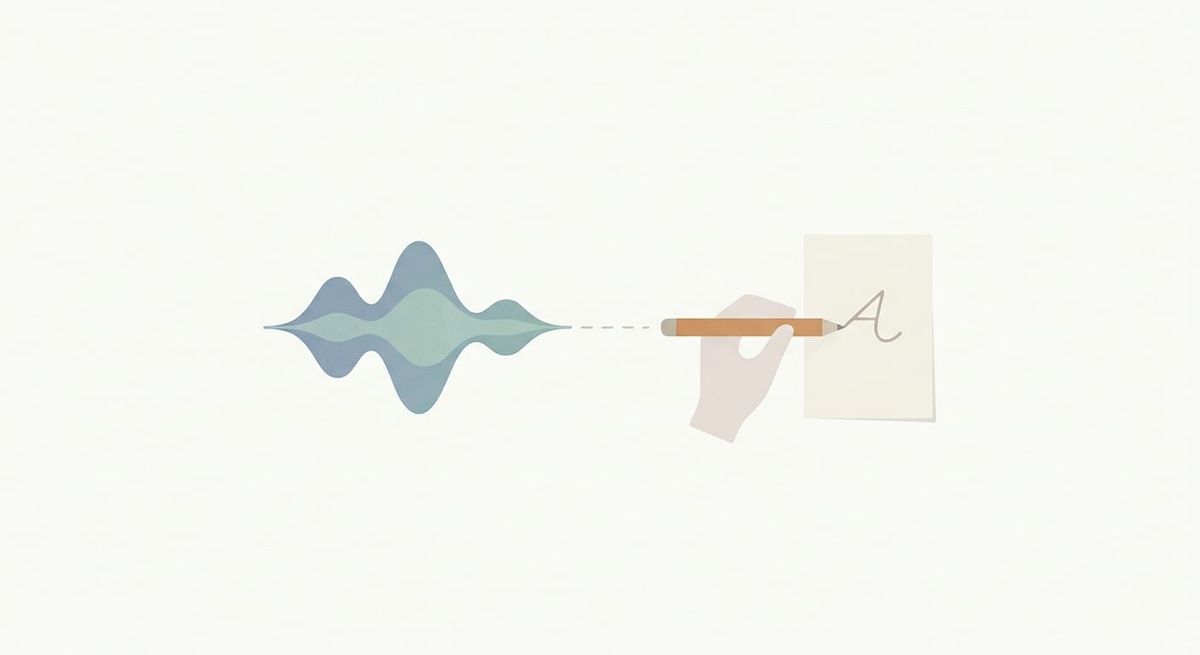
If your child can read words during practice but falls apart when it is time to spell them, you are not doing anything wrong. This is a very common gap for struggling readers.
A child may recognize a word on a card and still have trouble hearing each sound, choosing the right spelling pattern, and writing it down in order. That is where dictation helps.
If you are wondering how to teach dictation in Orton-Gillingham at home, the goal is not to turn your kitchen table into school. It is to give your child short, structured practice that connects sounds, letters, and writing.
What is dictation in Orton-Gillingham?
In an Orton-Gillingham lesson, dictation means your child listens to a sound, word, or sentence and writes what they hear. It is not just a spelling quiz.
Done well, dictation helps your child:
- hear sounds in order
- connect sounds to letters or letter teams
- practice the pattern they are learning
- remember words more deeply through writing
This matters because reading and spelling support each other. When a child writes a word from sounds, they have to process it more actively than when they only read it.
When should you start dictation?
You do not need to wait until your child is a strong speller. In fact, simple dictation often helps children who are still shaky.
Start once your child has already practiced a skill in reading first. For example, if they have been working on short a words like cat, map, and flag, you can begin dictation with those same patterns.
Keep it tightly connected to what they already know. Do not jump ahead to harder words just to make it feel more advanced. In Orton-Gillingham, success comes from practicing one taught pattern at a time.
How to teach dictation step by step
The easiest way to teach dictation is to move from small to large. Keep sessions short and predictable.
1. Dictate individual sounds
Say one sound and have your child write the matching letter or letters.
You might say:
- /m/
- /sh/
- /ă/
This helps your child connect speech sounds to print without the extra load of spelling a whole word.
2. Dictate a word
Choose words that match the pattern your child is practicing. Say the word once, then repeat it slowly if needed.
Ask your child to:
- repeat the word
- tap the sounds
- say the sounds in order
- write the letters that match each sound
- read the word back
For example, if the lesson focus is consonant blends, you might use stop, flag, or best.
3. Dictate a short sentence
Once single words feel manageable, move to a short sentence using familiar words.
For example:
- The flag is red.
- Stop at the rock.
This gives your child practice holding words in memory, spacing correctly, and writing connected text.
What if your child freezes or guesses?
This is usually a sign that the task is too hard, too long, or too unsupported.
If your child freezes during dictation, go back one step. Instead of asking for a whole sentence, ask for one word. Instead of one word, ask for just the sounds.
You can also support them with prompts like:
- “Say the word slowly.”
- “What sound do you hear first?”
- “Tap each sound.”
- “What pattern are we using here?”
Try not to rush in with the answer right away. A short pause plus a simple prompt often helps more than correction after correction.
A real-world example
Let’s say Maya is in fourth grade and has been practicing silent e words. She can read cape, stripe, and home on flashcards, but when her mom says “Write the word cape,” Maya writes cap.
That tells her mom something important. Maya is not fully connecting the long vowel pattern to spelling yet.
Instead of drilling more reading cards, her mom starts doing five minutes of dictation. First she dictates sounds, then a few silent e words, then one short sentence like “The cape is red.”
After a week of short practice, Maya starts remembering the final e more often. She is still learning, but now the lesson matches the skill that was breaking down.
Simple tips that make dictation easier at home
A few small changes can make dictation feel much more doable.
Keep it short
Five to ten minutes is enough for most children. Stop before your child is completely drained.
Use only taught patterns
If your child is learning vowel teams, do not mix in a bunch of unrelated challenge words. Keep practice focused.
Let your child say sounds out loud
Talking through the word helps many children hold the sounds in order.
Correct gently and clearly
If a word is wrong, do not just mark it incorrect. Help your child look at the exact sound or pattern that went off track, then try again.
Do you need sentences every time?
No. Many parents think dictation has to end with sentence writing every lesson. It does not.
Some days, sound dictation and three words are enough. The point is not to do more. The point is to give your child accurate practice with the skill they are learning.
That is especially important for children with dyslexia, who often need more repetition and a clearer sequence.
Make dictation feel successful, not stressful
Dictation works best when it feels structured and manageable. Your child does not need a long list of words. They need the right words, the right level of support, and enough repetition to build confidence.
If spelling keeps breaking down during reading practice, dictation may be the missing piece that helps everything click.
You might also find this helpful: How to Blend Sounds in Orton-Gillingham
And if you want extra support at home, ReadGenie gives children structured reading practice using Orton-Gillingham principles, decodable text, and built-in repetition. You can explore it here: App Store or Google Play.



