How to Teach Orton-Gillingham Phonogram Cards at Home
If you have heard that phonogram cards are part of Orton-Gillingham but are not sure how to use them at home, this guide shows what to do, what to avoid, and how to keep practice short and useful.

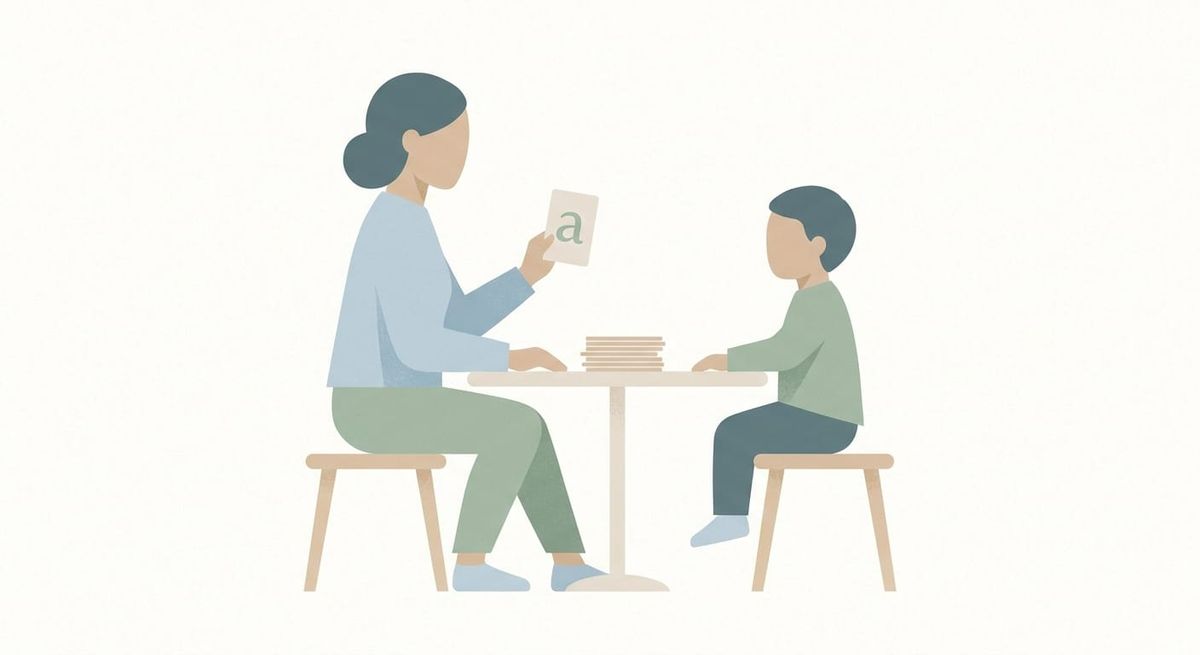
If you are helping your child with reading at home, phonogram cards can sound more complicated than they really are. Many parents hear about them from a tutor, a program, or an Orton-Gillingham lesson and then wonder, Am I supposed to drill these every day? What do I even say? What if my child hates flashcards?
The good news is that phonogram cards do not need to take long, and they do not need to feel like a test. When used well, they help your child quickly connect letters and letter patterns to sounds. That makes reading and spelling easier over time.
This guide will show you how to teach Orton-Gillingham phonogram cards at home in a way that is simple, short, and actually helpful.
What are phonogram cards in Orton-Gillingham?
Phonogram cards are cards that show a letter or letter pattern your child needs to know. That might be one letter like m, a digraph like sh, or a vowel team like oa.
The goal is not just to name the letters. The goal is for your child to look at the pattern and quickly say the sound or sounds connected to it.
That matters because many struggling readers can explain a rule one minute and then still freeze when they see the pattern in an actual word. Phonogram card practice helps build faster, more automatic recall.
For a parent at home, this means you are not trying to teach everything at once. You are helping your child review a small set of patterns until they feel familiar.
How many phonogram cards should you practice at once?
Less is usually better.
A common mistake is pulling out a giant stack and running through all of it. That can wear a child out fast, especially if reading already feels hard.
Instead, keep practice focused:
- Start with a small review set
- Include cards your child mostly knows
- Add only 1 or 2 less secure cards at a time
- Stop before your child gets overloaded
For many kids, 3 to 5 minutes is enough. The point is steady repetition, not a long session.
If your child is in grades 3 to 6 and already feels discouraged about reading, short success matters more than doing a lot.
What do you actually say during phonogram card practice?
This is the part many parents overthink.
Keep it simple. Show the card. Ask for the sound. If the phonogram can make more than one sound, have your child say the sounds they have been taught.
For example:
- You show sh
- Your child says /sh/
Or:
- You show c
- Your child says /k/, /s/ if that is how they have learned it
You can also flip the routine sometimes:
- You say the sound
- Your child points to or picks the matching card
That small change helps when a child gets stuck doing the same routine every day.
If your child misses a card, keep correction calm and quick. Say the sound, have them repeat it, then circle back to that card again after a few others.
What if your child knows the cards but still cannot use them in words?
This is a very common parent concern.
A child may do fine with phonogram cards and still struggle to read actual words like ship, road, or lunch. That does not mean the cards are pointless. It usually means your child still needs help connecting isolated patterns to real reading.
Phonogram cards are a review tool, not the whole lesson.
After a few cards, try a quick follow-up:
- Read 3 words with that pattern
- Build a word with tiles or paper slips
- Write one word that uses the sound
- Find the pattern in a decodable passage
This helps your child move from I know this card to I can use this when I read.
Should phonogram cards feel fast or slow?
In general, the cards should become quicker over time, but not rushed.
At first, your child may need a pause to think. That is okay. With repeated practice, you want retrieval to get smoother. If every card still feels effortful after a long time, the set may be too large, the patterns may not be sticking, or your child may need more practice applying them in words.
A useful question to ask is: Is my child getting more automatic, or just more frustrated?
If frustration is rising, scale back. Use fewer cards. Review older known patterns. End with success.
A real-world example
Let’s say Maya is in fourth grade and is working on sh, ch, th, and wh. Her mom has been showing all four cards plus ten older ones every night. Maya groans the minute the stack comes out. She mixes up wh and th, then shuts down.
Instead of pushing through the whole stack, her mom shortens the routine. They review just six cards total for three minutes. When Maya misses wh, her mom says the sound, has her repeat it, and then comes back to it twice more. After that, Maya reads three short words with wh.
A week later, Maya is still not perfect, but she is faster, calmer, and less likely to guess. That is useful progress.
Simple ways to make phonogram cards more effective at home
Here are a few realistic tips parents can try:
1. Keep the routine short
It is better to do a few minutes consistently than one long session once in a while.
2. Mix easy and hard cards
If every card is difficult, your child may start to feel defeated. Include patterns they can answer confidently.
3. Connect cards to real reading
After reviewing a pattern, use it in one or two words or a short decodable sentence.
4. Do not turn missed cards into a lecture
Correct, repeat, and move on. Too much explaining can make practice feel heavier than it needs to.
How do you know phonogram card practice is helping?
You may notice small signs before big ones.
Your child may:
- respond faster to familiar patterns
- need fewer reminders
- make fewer guessing errors
- read words with a target pattern more accurately
- feel less tense during review
That is often how progress starts. It may look subtle at first, but those small gains matter.
You might also find this helpful: What to Expect in an Orton-Gillingham Lesson at Home
Final thoughts
If you want to teach Orton-Gillingham phonogram cards at home, the goal is not to do a perfect lesson. It is to give your child short, clear review that strengthens sound-symbol connections over time.
Keep it simple. Keep it consistent. And if your child is tired or frustrated, do less, not more.
If you want extra support between practice sessions, ReadGenie gives kids structured phonics practice with repetition, decodable reading, and dyslexia-friendly routines based on Orton-Gillingham principles and the Science of Reading. You can check it out here: App Store and Google Play.



