When to Move Beyond CVC in Orton-Gillingham
If your child can read some simple words but still gets stuck, you may be wondering whether it is time to move beyond CVC words in Orton-Gillingham. Here is how to tell if your child is ready, when to slow down, and what to teach next.

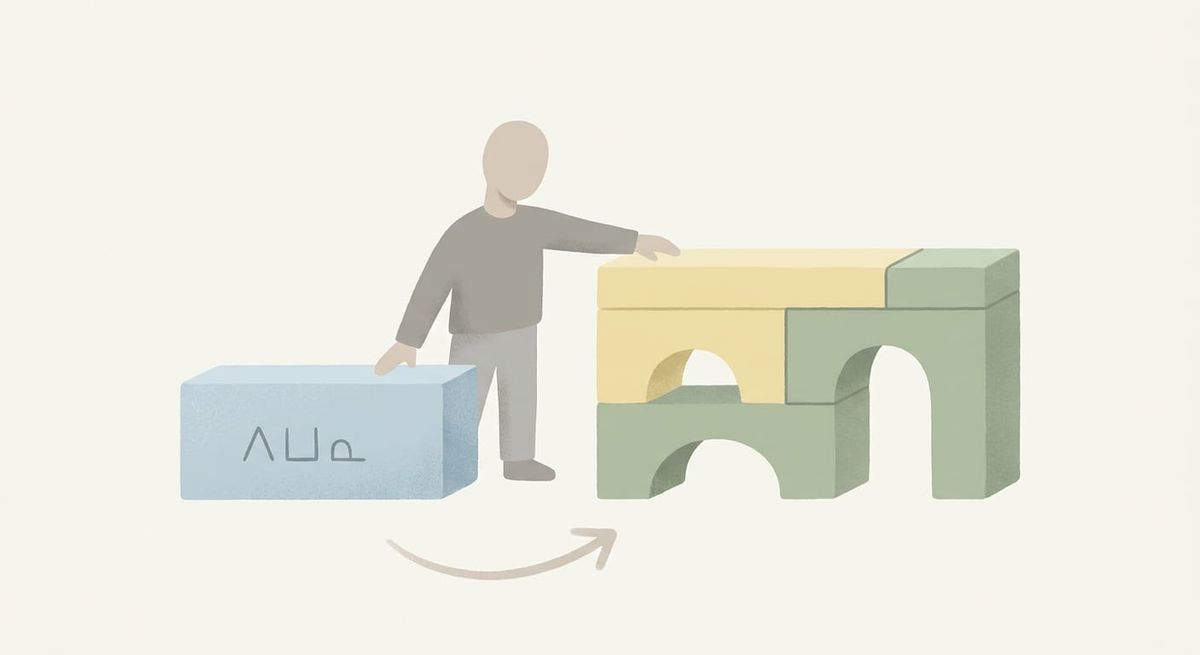
If your child is reading words like cat, hop, and sun a little more easily now, you might be asking the next big question: when to move beyond CVC in Orton-Gillingham.
This can be a tricky stage for parents. A child may read ten simple words correctly one day, then guess wildly the next. That makes it hard to know whether they are ready for the next step or still need more practice where they are.
The good news is that you do not need a perfect moment to move forward. You just need a few clear signs that your child is reading simple words with enough accuracy and confidence to handle a small increase in difficulty.
What does it mean to move beyond CVC?
CVC stands for consonant-vowel-consonant words like map, bed, and sit. These are often some of the first fully decodable words a child reads in structured phonics and Orton-Gillingham practice.
Moving beyond CVC usually means introducing slightly more complex patterns, such as:
- consonant blends like stop or flag
- digraphs like ship or chat
- ending blends like mask or hand
- simple longer words built from known patterns
The goal is not to leave CVC words behind forever. The goal is to build from them. Your child still needs review, but they also need new material once the base is strong enough.
How do you know your child is ready?
A child is usually ready to move past CVC words when they can do most of these things consistently:
- read familiar CVC words without freezing on every sound
- blend sounds together with less effort
- decode new CVC words, not just memorized ones
- make fewer guesses based on the first letter
- spell simple CVC words with reasonable accuracy
Notice the word consistently. Your child does not need to be perfect. But if every CVC word still feels like a heavy lift, it is probably too soon to move on.
One helpful test is to give a short mix of real and nonsense CVC words. If your child can read words like lat, mip, or sog, that shows they are decoding, not just remembering.
What if your child is right in the middle?
Many kids are not clearly ready or clearly not ready. They are in the middle.
That might look like this:
- they can read short-vowel words, but only slowly
- they do well with one vowel sound and fall apart with another
- they blend in isolation, but struggle in actual reading
- they can read, but spelling is still very weak
In that case, you do not need to choose between staying only on CVC words or jumping fully ahead. You can do both.
Try a split approach:
- spend most of the lesson reviewing CVC words
- introduce just one new pattern at a time
- keep the new material short and controlled
- go back to easier words before ending the session
This helps your child stretch without feeling lost.
Signs you should wait a little longer
Sometimes parents move on because their child is bored with simple words. But boredom and mastery are not always the same thing.
Pause before moving ahead if your child:
- guesses instead of sounding out
- confuses short vowel sounds often
- cannot blend three sounds smoothly
- reads a word correctly once, then cannot read a similar word
- becomes overwhelmed as soon as one extra sound is added
If that is happening, the issue may not be motivation. Your child may still need a stronger foundation.
More practice does not have to mean more time. Often it just means tighter practice with fewer words, clearer correction, and more repetition across several days.
A real-world example
Maya, a fourth grader with dyslexia, could read words like pet, fin, and rod during flashcard practice. Her mom assumed she was ready for harder words. But when they tried words like frog and sand, Maya started guessing from the first letter and got frustrated fast.
Instead of pushing ahead, her mom spent one more week on short, focused CVC review. They practiced blending with counters, read a few new CVC words each day, and added simple spelling with magnetic letters. By the end of the week, Maya was reading even unfamiliar CVC words more smoothly.
Then they introduced beginning blends, just a few at a time. This time, Maya handled them much better because the earlier skill was actually settled.
What should you teach next after CVC?
Once your child is ready, keep the next step small.
A good choice is usually one of these:
- beginning blends like slip, frog, trap
- digraphs like shop, thin, chop
- ending blends like fast, bend, milk
Pick one pattern, not three. Let your child see it, say it, build it, read it, and spell it before you add more.
This is where many home lessons go off track. Parents often introduce too much at once because the child seems ready for more. In Orton-Gillingham, slower and clearer usually works better.
Simple things to try at home
If you are unsure when to move beyond CVC in Orton-Gillingham, these small steps can help:
- Use a quick readiness check
Ask your child to read 8 to 10 CVC words, including a few they have not seen before. - Listen for decoding, not speed
A child can be slow and still be ready. What matters more is whether they are sounding out instead of guessing. - Add one new pattern only
If you move on, teach just one type of word change at a time. - Keep old words in the mix
Do not drop CVC review completely. Keep a few simple words in every practice session.
You do not have to rush the next step
It is normal to wonder if you are moving too slowly or too quickly. Most parents worry about both.
The best next step is usually not a big jump. It is a small, structured stretch from what your child can already do with support. If simple words are becoming more accurate, less effortful, and more transferable to new words, that is often your sign to begin.
You might also find this helpful: Signs Orton-Gillingham Is Working at Home
If you want extra support between lessons, ReadGenie gives children short, structured reading practice using decodable text, repetition, and Science of Reading principles. You can explore it here: APPSTOREURL and GOOGLEPLAYURL.



