Why Your 3rd or 4th Grader Reads a Word Correctly One Day and Forgets It the Next
If your child seems to relearn the same words again and again, there is usually a reason. Here is why word retention is hard for older struggling readers and what helps words stick.
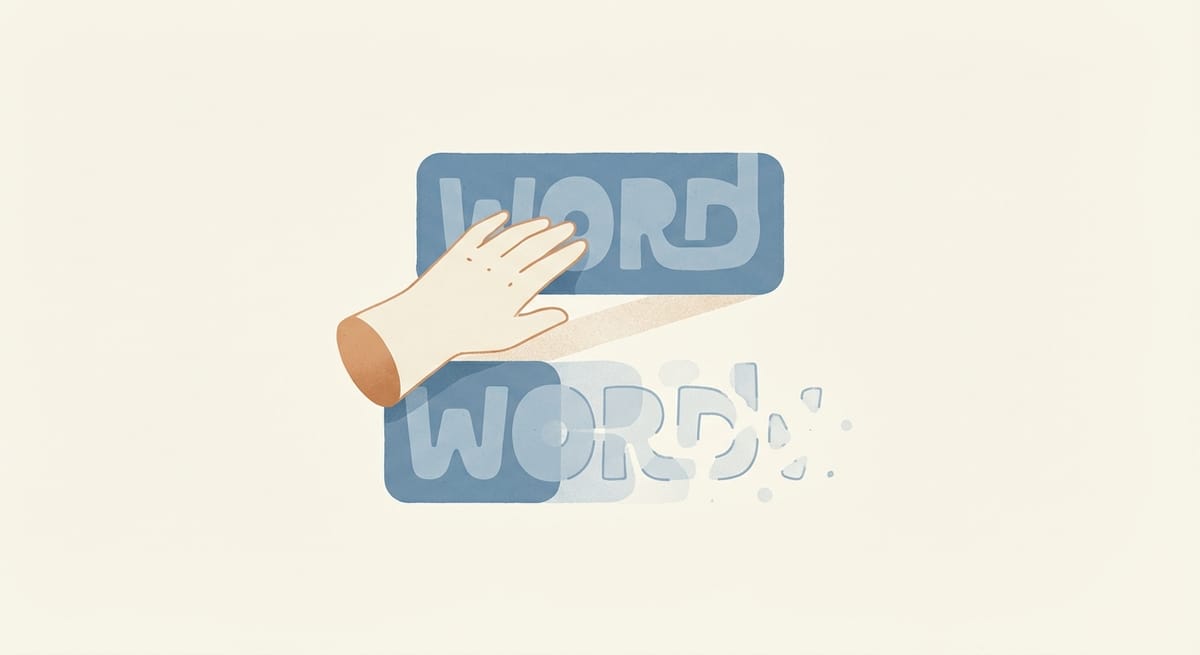
If you have ever thought, why my child forgets words they just learned, you are not imagining it. A lot of parents of struggling readers see the same confusing pattern. Their child reads a word correctly on Monday, misses it on Tuesday, and then seems to have to learn it all over again by Thursday.
That can make reading progress feel painfully slow.
The good news is that this usually does not mean your child is lazy, careless, or not trying. More often, it means the word is not fully locked in yet. In this post, we will look at why that happens and what helps words stick more reliably.
A word read once is not always a word learned
When a child reads a word correctly one time, it can look like they know it. But sometimes they are doing something much more fragile.
They might be:
- guessing from the first letter
- remembering the word from the sentence or picture
- recalling it for the moment but not storing it well
- sounding it out with effort but not connecting the spelling pattern strongly enough to remember it later
For many older struggling readers, reading a word correctly is only the first step. Retaining it takes repeated practice with the same sounds, spelling patterns, and word parts.
A practical way to think about it is this: recognition in the moment is not the same as reliable recall later.
Takeaway: If your child gets a word right once and then forgets it, that does not mean the lesson failed. It usually means they need more review than expected.
Why do some kids seem to relearn the same words over and over?
Weak word retention often happens when the reading process is still effortful. If a child has to use a lot of mental energy to decode, there is less left over to store the word in long-term memory.
This is especially common in older kids with dyslexia or other reading difficulties. They may know some phonics patterns, but not automatically. So each word can feel new, even when it technically is not.
A few things can make this harder:
- gaps in phonics knowledge
- shaky recall of sound-spelling patterns
- not enough repeated practice with the same kinds of words
- reading books that are too hard, which pushes the child to guess instead of decode
When this happens, the brain does not get enough clean, repeated practice to make the word stick.
Takeaway: If your child is stuck in a loop of forgetting, the issue is often not memory by itself. It is usually that the word has not been practiced enough in a way that supports accurate decoding.
What helps words stick?
Words are more likely to stay when children read them accurately, more than once, across several days. That is where repeated decoding practice and review cycles matter so much.
Instead of teaching a word once and moving on, it helps to come back to it in a structured way:
- decode the word aloud
- notice the sound-spelling pattern in it
- read it again in a short list
- read it in a sentence
- revisit it the next day and again later in the week
This kind of review helps the child connect the sounds, letters, and meaning. Over time, the word becomes less of a puzzle and more automatic.
Controlled text also helps. When a child reads passages made up mostly of patterns they have already been taught, they get more successful practice. That gives the brain more chances to store words correctly.
Takeaway: Words stick better when practice is accurate, repeated, and tied to patterns the child actually knows.
What does this look like in real life?
Let’s say your fourth grader reads the word strain correctly during homework. The next night, they read it as string. A parent might think, "We already did this. Why is this happening again?"
What may be going on is that your child has not fully secured the vowel team pattern ai, or they are still reading quickly and guessing from the beginning and ending of the word.
Now picture a different week. Your child practices train, brain, chain, strain in a short word list. Then they read a decodable passage with those same patterns. The next day, they review two of the words again. A few days later, they read strain correctly in a new sentence without help.
That is how growth often looks. Not in one big leap, but in small, repeated wins that build on each other.
Is it a memory problem or a reading problem?
Parents often ask this because it really does look like forgetting. But in many cases, the main issue is not general memory. It is that the word was never stored securely through strong decoding.
When a child learns a word by guessing or partial recognition, it is much easier to lose. When they learn it by mapping the sounds to the letters and seeing that pattern again and again, it has a much better chance of staying.
That is one reason structured phonics practice matters even for older readers. A third, fourth, or even seventh grader may still need direct work with decoding if word retention is weak.
Takeaway: If your child forgets reading words quickly, look first at how the word was learned and practiced, not just whether they "remembered" it.
Simple things to try at home
You do not need to turn your house into a classroom. A few small changes can help.
1. Review a few words across several days
Instead of doing a long list once, pick 3 to 5 words and revisit them briefly for a few days. Short review often works better than one big session.
2. Ask your child to read the word, not just memorize it
If they miss a word, guide them back to the sounds and spelling pattern. Try saying, "Let’s look at the middle part," or "What sound does this team make?"
3. Use text that matches what they have been taught
If the book or passage is packed with patterns they do not know yet, they are more likely to guess. Controlled or decodable text gives better practice.
4. Notice patterns, not just individual words
If your child is learning ight, group words like light, night, bright, and sight. That helps them build a stronger network instead of trying to remember each word in isolation.
A reassuring final thought
If your child seems to forget words they just learned, it does not mean they cannot become a stronger reader. It usually means they need more chances to decode the same patterns accurately, with review built in.
Slow progress can still be real progress. When practice is structured and words come back again and again in manageable text, they start to stick.
If you want extra support, ReadGenie gives kids structured phonics practice based on Orton-Gillingham principles, along with repetition and decodable reading that can help reinforce new words. It is available on iOS, Android, and Chromebook. You can find ReadGenie on the iOS App Store.