Why Your 4th or 5th Grader With Dyslexia Struggles to Read Nonsense Words
If your child can read familiar words but freezes on made-up ones, weak decoding may be the reason. Here’s what nonsense word reading reveals and how to help at home.

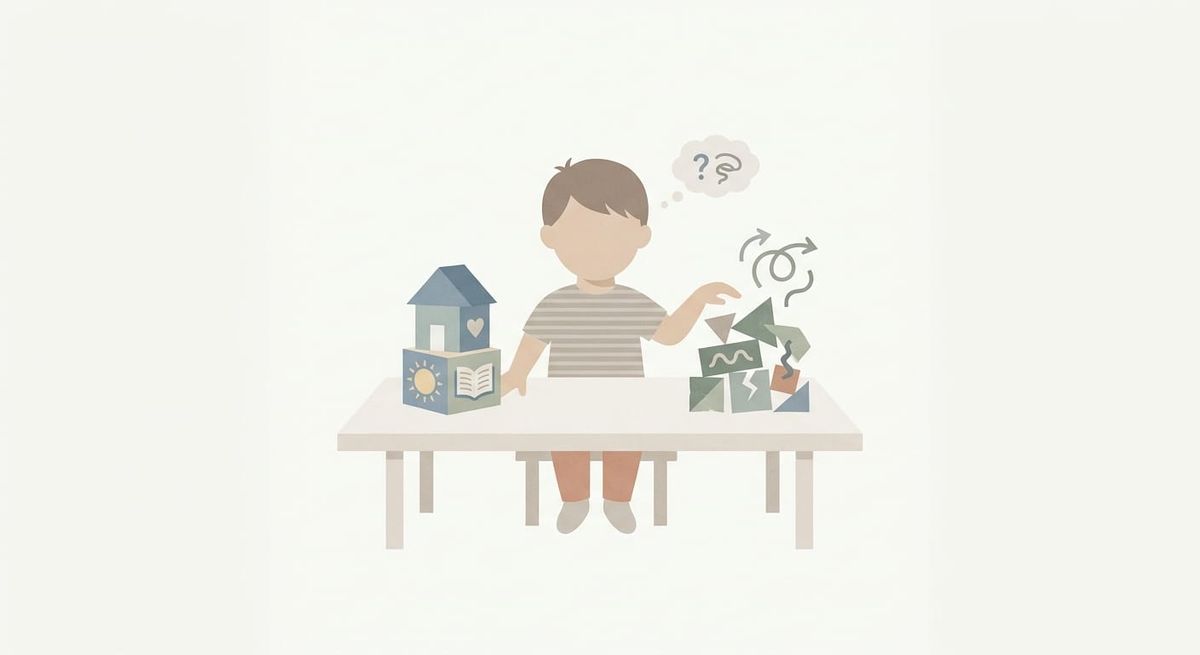
If your child can read plenty of real words but suddenly falls apart on made-up words like mip, shote, or splad, you are not imagining things.
This is a common pattern for a 4th or 5th grader with dyslexia. Nonsense words remove the chance to rely on memory, pictures, or context. They show whether a child can truly decode, sound by sound and pattern by pattern.
The hard part is that weak decoding can stay hidden for years. A child may memorize hundreds of real words and look like they are reading fine, until they meet an unfamiliar word and have no solid strategy to work through it.
This post will explain why nonsense words matter, what they reveal about reading skills, and a few simple ways to help at home.
Why do nonsense words trip kids up?
Real words give children extra support. They may recognize the word from memory. They may guess based on the first letter. They may use the sentence to figure it out.
Nonsense words take all of that away.
If a child sees lat or shig, they cannot pull the word from memory because it is not stored there. They have to do the actual decoding work:
- look at each letter or chunk
- connect letters to sounds
- blend the sounds in order
- read the whole word smoothly
For a child with dyslexia, this can be much harder than it looks. They may know some letter sounds, but not well enough to use them automatically. They may skip over the middle sound, confuse vowel patterns, or guess instead of blending.
That is why 4th grader with dyslexia nonsense words is such an important issue for parents to understand. Trouble with nonsense words often points to a decoding weakness, not laziness or lack of effort.
Takeaway: If your child misses nonsense words, the goal is not to make them memorize more words. The goal is to strengthen decoding.
What nonsense word reading actually reveals
Nonsense word reading can be surprisingly useful because it shows what your child does when memory is no longer enough.
It can reveal problems with:
- short vowel sounds
- vowel teams like ai, ee, or oa
- digraphs like sh, ch, and th
- blending sounds smoothly
- reading longer multisyllable patterns
- automatic recall of phonics skills
For example, a child might read the real word boat correctly because they have seen it many times. But when they see poat, they may say pot, boat, or just freeze. That tells you they may not really know how the oa pattern works.
A lot of parents find this confusing. They think, “My child read a page of a book last night. How can they not read bim?” The answer is that reading familiar text and decoding unfamiliar words are related, but not the same thing.
Takeaway: Nonsense words are not a trick. They are a window into whether phonics patterns are solid.
Is this a sign my child has been guessing?
Sometimes, yes.
Many older struggling readers become skilled compensators. They learn to survive by:
- memorizing whole words
- using the first letter and guessing
- relying on context
- skipping hard words
This can work for a while, especially in early elementary school when texts are more predictable. But by 4th and 5th grade, words get longer, vocabulary gets harder, and guessing stops working.
That is often when parents suddenly notice the problem more clearly.
A child may read house and people just fine, but struggle with splim or nateb. That does not mean nonsense words are unfair. It means the child may have been leaning heavily on memory rather than decoding.
Here is a simple real-world example:
Evan, a fifth grader, could read many words in his social studies book because he had seen them before. But when his tutor showed him nonsense words like mep, thoan, and splud, he guessed almost every one. He said map for mep and sound for thoan. Once he started practicing vowel patterns, blending, and reading decodable text, he stopped guessing as much. A few weeks later, he could read unfamiliar words more calmly because he had a process.
That shift matters. A child who can decode unfamiliar words is much better prepared for harder reading ahead.
Takeaway: If your child guesses at nonsense words, focus on building a step-by-step decoding habit.
What can you do at home to help?
You do not need to turn your kitchen table into a classroom. A few short, targeted activities can help more than long, stressful practice sessions.
1. Practice one phonics pattern at a time
Pick just one pattern your child needs, like short a, silent e, sh, or oa.
Write 5 to 8 words or nonsense words using that pattern:
- lat, shab, mack
- nake, fote, sive
- shoat, poaf, roat
Have your child read them slowly, then again more smoothly.
Why it helps: It trains the brain to notice the pattern instead of guessing.
2. Ask your child to tap and blend
If your child gets stuck, have them tap each sound with their fingers, then blend it together.
For mip:
- /m/
- /i/
- /p/
- mip
For shote:
- /sh/
- /o/
- /t/
- silent e
- shote
Keep it simple and calm.
Why it helps: It slows the word down enough for the child to process each sound.
3. Mix real and nonsense words together
Try a short list like this:
- shop
- shab
- mote
- vote
- lat
- mat
This helps your child use the same decoding skill on both familiar and unfamiliar words.
Why it helps: It reduces the habit of treating real words and made-up words differently.
4. Keep practice short and repeat often
Aim for 5 to 10 minutes, a few times a week.
Repetition matters. Children with dyslexia usually need more review, not more pressure.
Why it helps: Short practice is easier to stick with and less likely to end in frustration.
When should you be concerned?
If your child is in 4th or 5th grade and still cannot reliably sound out simple nonsense words with patterns they have already been taught, it is worth paying attention.
This does not mean your child is not smart. It usually means their foundational reading skills need more direct, structured practice.
Look for support that includes:
- explicit phonics instruction
- review of sound-symbol patterns
- guided blending practice
- decodable reading, not just leveled books
- repetition over time
Those pieces are especially important for older elementary students who have learned to hide decoding weaknesses.
The main thing to remember
When a 4th or 5th grader with dyslexia struggles to read nonsense words, the problem is usually not the nonsense words themselves. The struggle is telling you something important: your child may need stronger decoding skills.
That is actually useful information. Once you know what is going on, you can stop guessing and start helping in a more targeted way.
If you want extra support at home, ReadGenie gives children structured phonics practice using Orton-Gillingham principles, decodable passages, and repetition designed for struggling readers. ReadGenie is available on iOS through the Apple App Store, and on Android and Chromebooks through Google Play.



