How to Help a 3rd or 4th Grader With Dyslexia Read Consonant Blends Without Guessing
If your child skips or guesses blend sounds like st, bl, or cr, these simple decoding routines can help them read more accurately and with less frustration.

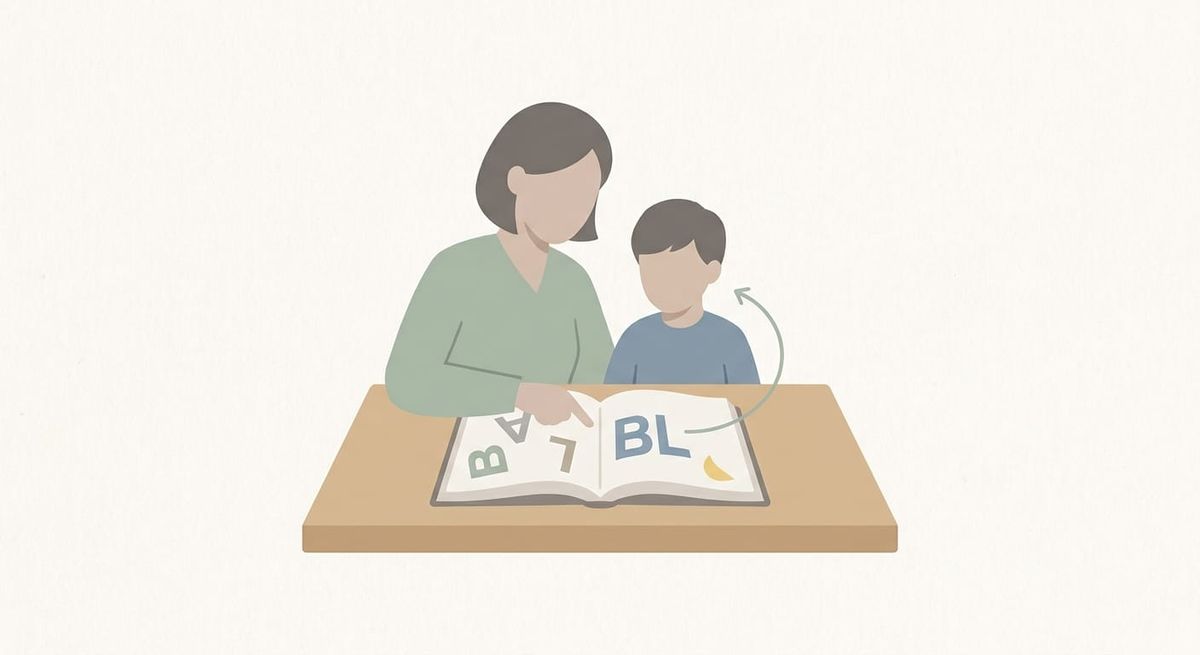
If your child is in 3rd or 4th grade and still stumbles over words like stop, black, or crash, you are not imagining the pattern. Many older elementary readers with dyslexia guess at words when they see consonant blends. They may say one sound, skip another, or replace the whole word with something that seems close enough.
That can make reading fall apart fast.
The good news is that blend problems can improve, even if your child missed that skill earlier on. If you want to help a 4th grader with dyslexia read consonant blends, the goal is not to drill random word lists or ask them to memorize more words. It is to teach them how to look at every sound in order and decode the word step by step.
In this post, you will learn why blends are so tricky, what to do when your child starts guessing, and a few simple ways to practice at home without turning reading time into a battle.
Why consonant blends trip up older readers
A consonant blend is when two or three consonants appear together and each sound is still heard, like st, bl, cr, or spr.
For a child with dyslexia, blends are hard because they increase the amount of sound processing needed in a very short space. Instead of reading one sound and moving on, your child has to hold multiple sounds in order and connect them smoothly to the rest of the word.
That is where guessing often starts.
A child might see stop and read top because the s gets dropped. Or they might see black and say back because the l was skipped. Sometimes they will look at the first letter and jump to a word they know, especially if they are tired or trying to read quickly.
This does not mean they are careless. It usually means the word is asking for more sound-by-sound control than they can manage automatically right now.
Practical takeaway: If your child guesses on blend words, treat it as a decoding weakness, not a motivation problem.
What should you do when your child guesses?
When a child guesses, it is tempting to say, "Look again" or just give them the word. But neither response teaches the missing skill.
A better approach is to slow the word down and guide your child through the sounds in order.
For example, if your child reads crab as cab, you can point to the word and say:
- "Let's get every sound."
- "/k/ /r/ /a/ /b/"
- "Now blend it together: crab."
Keep your tone calm and matter-of-fact. The goal is to show that the skipped sound matters.
It also helps to have your child touch or tap each sound as they say it. That gives them a physical routine to follow instead of relying on memory or quick guessing.
If the word still falls apart, go smaller:
- Read just the blend: cr
- Then add the vowel: cra
- Then read the full word: crab
Practical takeaway: When your child guesses, prompt them to decode from left to right and say every sound. Do not rush to the whole word.
Why memorizing blend words usually does not fix the problem
Some children can memorize a short list of blend words for a spelling test, then still miss those same patterns in books. That is because memorization is not the same as decoding.
If your child knows stop from memory but cannot read step, stick, or stamp, the blend pattern is not secure yet.
What helps more is repeated practice with the same sound pattern across different words:
- st: stop, step, stand, still
- bl: black, blend, blue, block
- cr: crab, crop, crack, crisp
This helps your child notice, "I know how this chunk works," while still reading the whole word sound by sound.
For a late-elementary reader, that kind of practice is often more effective than trying to build a huge sight word memory bank.
Practical takeaway: Practice one or two blend patterns at a time across several words instead of mixing lots of patterns together.
A real-life example of blend guessing and improvement
A 4th grader might read a sentence like this:
"The crab slid into the grass."
At first, it may come out something like:
"The cab slid into the gas."
Notice what happened. The child did not miss the whole sentence. They dropped part of the blend in crab and grass. That kind of reading can sound almost right at first, but it changes the words and hurts comprehension over time.
With short daily practice, the same child can learn to pause and decode more carefully:
- crab becomes /k/ /r/ /a/ /b/
- grass becomes /g/ /r/ /a/ /s/
After enough repetition, the child starts catching those blends more often in connected text, not just in isolated word practice.
That is the shift you are looking for. Not perfect reading overnight, but fewer skipped sounds and more accurate decoding.
What can you try at home this week?
You do not need long lessons. Ten focused minutes is often enough.
1. Practice just one blend family at a time
Pick one blend such as st, bl, or cr. Write 5 to 8 words with that blend on index cards or paper.
Example with bl:
- black n- block
- blue
- blank
- blend
Have your child read them slowly, saying every sound.
2. Use finger tapping or sound boxes
For each sound in a word, have your child tap a finger or move a token into a box.
For stop, they would tap:
- /s/
- /t/
- /o/
- /p/
This helps them hear that both letters in the blend need to be read.
3. Read short decodable phrases, not just single words
Once your child can read a few blend words, put them into short phrases like:
- black crab
- stop and clap
- crash on grass
Then move to a simple sentence. This helps the skill carry over into real reading.
4. Correct gently and the same way every time
If your child reads block as bock, do not lecture. Just point to the blend and say, "Get both sounds." Then read it together.
That consistency matters. A simple routine helps your child know what to do when a word gets hard.
When progress feels slow, what should you look for?
Blend mastery usually does not show up all at once.
You may first notice that your child:
- pauses instead of blurting out a guess
- catches a skipped sound after prompting
- reads blend words more accurately in practice
- makes fewer errors in short passages
Those are real signs of growth.
If you are trying to help a 4th grader with dyslexia read consonant blends, success often starts with accuracy before speed. Once your child can reliably read all the sounds in order, fluency has a chance to build.
Conclusion
If your child skips sounds in words like st, bl, or cr, the answer is usually not more guessing practice or more memorizing. It is steady, repeatable decoding practice that teaches them to read every sound from left to right.
Keep it short, simple, and consistent. That is often what helps older struggling readers make real progress.
If you want extra support, ReadGenie gives children structured practice with phonics, decodable text, and repetition based on Orton-Gillingham principles and the Science of Reading. It can be a helpful way to reinforce these skills at home.
ReadGenie is available on iOS through the Apple App Store, and on Android and Chromebooks through Google Play.



