How to Help a Child Blend Sounds in Orton-Gillingham
If your child can say each sound but still cannot read the whole word, blending may be the piece that is missing. This guide shows simple ways to help a child blend sounds in Orton-Gillingham practice at home.

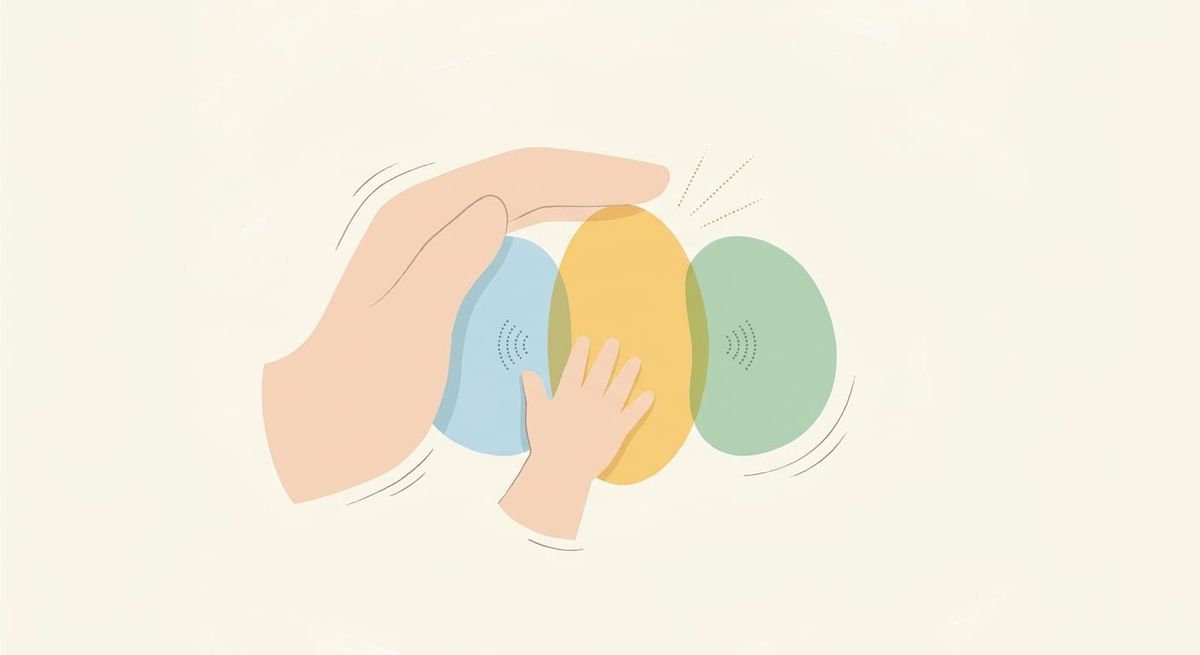
If your child can say each sound in a word but still cannot pull them together, you are not imagining the gap. A lot of parents see this exact pattern. Their child can look at m-a-p and say /m/ … /a/ … /p/, but when it is time to read the word, everything stalls out.
This is one of the most frustrating parts of early decoding practice because it can feel like your child is so close. The good news is that blending is a skill you can support directly. In Orton-Gillingham, children often need more explicit practice with how sounds move together, not just practice naming the sounds one by one.
This post will help you understand why blending breaks down and how to make it easier at home.
Why blending can feel harder than it looks
Blending sounds asks your child to do several things at once. They have to look at the letters, say the sounds accurately, hold those sounds in order, and then push them together smoothly enough to recognize the word.
For a child with dyslexia, that is a lot.
Sometimes the problem is not that your child does not know the sounds. The problem is that they are pausing too long between them. When the sounds come out as separate pieces, the word never really forms. A child might say /s/ … /i/ … /t/ correctly and still not hear sit.
Other times, the sounds are not firm enough yet. If your child hesitates on one sound, swaps a sound, or loses track of the order, blending becomes much harder.
That is why it helps to treat blending as its own skill instead of assuming it will happen automatically.
What does good blending practice look like?
Good blending practice is short, direct, and very supported. You are not asking your child to figure it out alone. You are showing them how to move from separate sounds to a whole word.
Start with very simple words that your child can mostly decode already, such as map, sit, lip, hop. Say the sounds with your child, but keep them close together.
Instead of:
/m/ … /a/ … /p/
Try:
/mmmaaap/
Then shorten the stretch until the word comes together more naturally.
You can also slide your finger under the letters as your child says the sounds. This gives them a visual cue that the sounds are supposed to move forward together, not stay chopped apart.
The goal is not speed right away. The goal is smoother connection.
Should you say the word for your child?
Sometimes yes, but use it carefully.
If your child has tried to blend a word and is getting stuck, it is okay to model it. In fact, that can be more helpful than letting them sit in frustration. You might say, "Listen to me blend it," and then model the word slowly.
After that, have your child try again with your support.
What usually helps most is this sequence:
- Say each sound together
- Stretch the sounds into each other
- Model the full blend if needed
- Let your child repeat it
This keeps practice from turning into guessing or shutdown.
If you find that your child only gets the word after you say it every time, go simpler. Use easier words, fewer words, or more review before expecting independent blending.
A real-world example
Let’s say your child is reading the word slam.
They look at it and say /s/ /l/ /a/ /m/, but then they shrug and say, "I don't know."
A parent might assume the word is too hard, but the issue may actually be blending. So instead of moving on, you point to each sound and say, "/sllllaaam/." Then you say it again a little more naturally: "slam."
Next, your child repeats it with you.
On the next word, slip, you do the same thing, but with a little less help. After a few words, your child starts to hear how the sounds are traveling together. That is the shift you are looking for.
Small supported repetitions often work better than long practice sessions.
Simple ways to help blending at home
Here are a few realistic things to try during Orton-Gillingham practice:
1. Use fewer words
If your child is struggling to blend, do not hand them a long list. Pick 3 to 5 words and work on those well.
2. Choose words with familiar patterns
Blending is easier when the sounds themselves are not brand new. Review with words built from patterns your child already knows.
3. Slide, do not chop
Use your finger, a card, or even your voice to make the sounds feel connected. Try to reduce long pauses between sounds.
4. Stop before frustration spikes
If your child starts guessing, groaning, or checking out, end the practice or go back to an easier level. Blending improves more with calm repetition than with pushing through overload.
What if your child can blend in one lesson but not the next?
That is very common.
Blending is not always steady at first. A child may do it successfully one day and seem to lose it the next. That usually means the skill still needs more review, not that the last lesson failed.
Try to keep practice consistent and brief. It is better to do a few minutes of supported blending several times a week than one long session that leaves your child drained.
You might also find this helpful: How to Handle Guessing in Orton-Gillingham Reading Practice
Final thoughts
If your child knows the sounds but cannot quite read the word, blending may be the missing step. That does not mean they are not making progress. It usually means they need more modeling, more connected practice, and less pressure.
Keep it simple, keep it short, and help the sounds travel together.
If you want extra support at home, ReadGenie gives children structured reading practice with systematic phonics, review, and decodable text designed to build real confidence over time. You can explore it here: App Store or Google Play.



