How to Help a Dyslexic Child Read Multisyllabic Words
If your child can handle short words but freezes on longer ones, there are simple ways to help. This guide shows parents how to break multisyllabic words into smaller, readable parts.

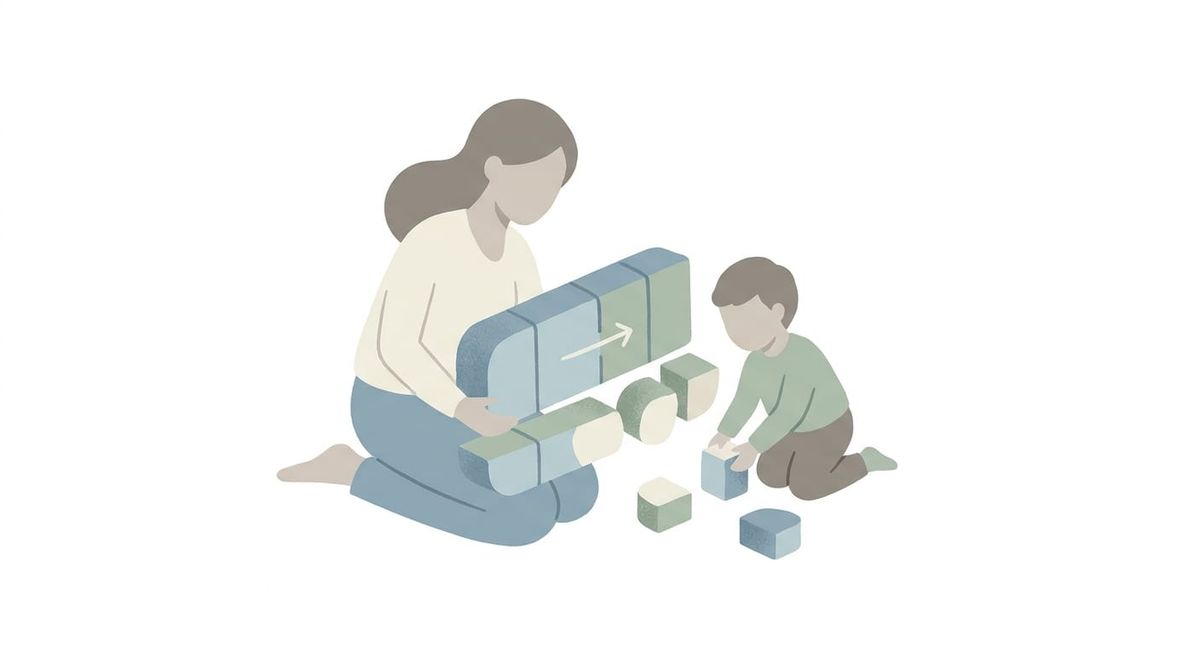
When a child with dyslexia gets to a long word, the whole page can suddenly feel harder.
Maybe your child reads sun, picnic, or basket just fine, but then hits a word like remember, fantastic, or computer and either guesses, skips it, or gives up. That is a frustrating place for both of you.
The good news is that long words do not have to stay overwhelming. In this post, you will learn how to help your child read multisyllabic words by breaking them into smaller parts, slowing the process down, and giving them a repeatable routine they can actually use.
Why long words feel so hard
For many struggling readers, long words look like one giant chunk. Instead of seeing parts they can decode, they see too many letters at once.
A child with dyslexia may have trouble with:
- holding all the sounds in order
- noticing vowel patterns
- separating a word into syllables
- reading accurately without guessing
This is why a child might read a short word carefully but rush through a longer one and say something that only loosely matches what is on the page.
The goal is not to make them memorize more big words. The goal is to teach them how to take a big word apart.
What does it mean to break a word into parts?
When you help a dyslexic child read multisyllabic words, you are teaching them to look for smaller chunks inside the word.
That might include:
- syllables
- vowel sounds
- prefixes like un- or re-
- suffixes like -ing or -ful
- familiar base words
For example, the word sunset is easier because a child can hear sun and set.
The same idea applies to longer words.
- remember can be broken into re-mem-ber
- fantastic can be broken into fan-tas-tic
- computer can be broken into com-pu-ter
Your child does not need to do this perfectly at first. What matters is learning that a long word is not one impossible blob.
What should I say when my child gets stuck?
In the moment, many parents want to give the word right away. Sometimes that is fine, especially if your child is tired. But if you want to build skill, it helps to use the same prompts each time.
Try saying:
- "Let’s look for the parts you know."
- "Can you find the vowels first?"
- "Cover part of the word and read one chunk at a time."
- "Start with the first syllable."
- "Now put the parts together slowly."
Keep your tone calm and matter-of-fact. If your child feels like every hard word is a test, they are more likely to shut down.
A simple routine often works better than a long explanation.
A step-by-step routine parents can use at home
You do not need to be a reading specialist to help. You just need a clear process.
1. Start with one long word
Pick one word from your child’s reading that caused trouble. Do not start with a whole list.
Write it on paper in large print.
2. Mark the vowels
Ask your child to underline or highlight the vowels. This helps them notice where the syllables may divide.
For computer, they would see o, u, and e.
3. Break the word into chunks
Draw light slash marks between the parts: com / pu / ter.
If your child is not sure where to divide it, guide them. The point is to show that the word has parts, not to turn it into a grammar lesson.
4. Read each part slowly
Have your child say each chunk one at a time.
com
pu
ter
If needed, repeat the chunks more than once.
5. Blend the parts together
Now ask your child to say the word again, more smoothly.
Move from slow and choppy to more natural.
6. Go back to the sentence
Always return to the original sentence so the word is read in context.
That last step matters. It helps the word feel useful, not isolated.
A real-world example
Let’s say Maya is in fourth grade. She can read many one-syllable words and some shorter two-syllable words, but when she sees adventure, she says animal and keeps going.
Her mom stops and says, "Let’s slow it down."
Together, they underline the vowels and break the word into ad / ven / ture. Maya reads each chunk, then blends them: adventure.
The first try is shaky. The second is better. By the third try, she reads the whole sentence correctly.
That may seem small, but it is a big shift. She is no longer guessing. She is decoding.
Simple things that help at home
If you want to help your child read multisyllabic words more confidently, keep it simple and consistent.
Use a finger or index card
Cover part of the word so your child only sees one chunk at a time. This lowers visual overload.
Practice with words from real reading
Use words from books, homework, or passages your child is already reading. That makes practice feel more relevant.
Keep practice short
Five minutes of focused practice is better than a long session that ends in frustration.
Repeat successful words
Go back to the same word later that day or the next day. Repetition helps the pattern stick.
When should I worry about guessing?
If your child regularly replaces long words with shorter ones, skips parts of words, or says something that matches only the first letter or two, guessing may be covering up a decoding problem.
That does not mean your child is lazy or not trying. It usually means the word is too hard to process all at once.
Teaching them how to break words apart gives them another option.
You might also find this helpful: Why Your Child Guesses at Words Instead of Reading Them
Conclusion
If your child struggles with long words, start smaller than you think. One word. One routine. One calm prompt at a time.
When a child learns how to break a big word into parts, reading starts to feel more doable. That confidence can grow faster than parents expect.
If you want extra support, ReadGenie gives kids structured practice with phonics patterns, repetition, and decodable reading built for struggling readers. You can explore it here: App Store and Google Play.



