How Long Should an Orton-Gillingham Lesson Be?
If reading practice ends in frustration, the problem may not be the routine itself. It may be that the lesson is simply too long for your child right now. Here is how to tell what length works best and how to adjust it.

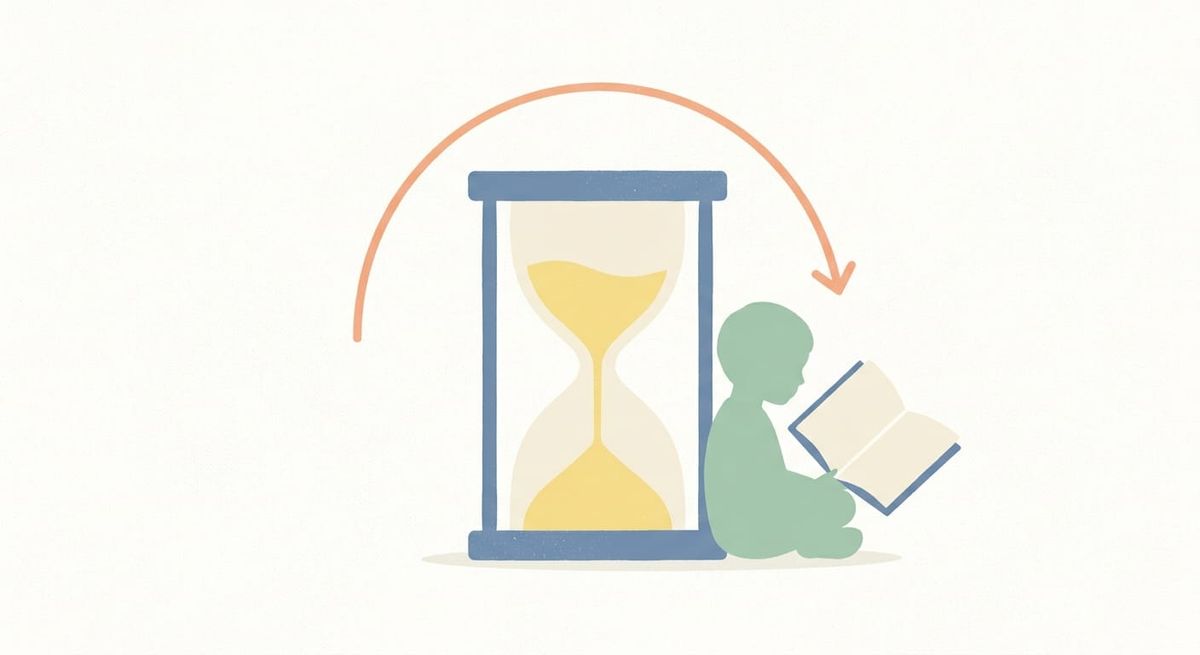
If your child starts reading practice fine but falls apart ten minutes later, you are not doing anything wrong. A lot of parents assume a longer lesson means better progress. Usually, it means the opposite.
With Orton-Gillingham, the goal is not to keep going as long as possible. The goal is to stop while your child can still focus, respond, and feel successful. The right lesson length depends on your child’s stamina, age, and how hard the material feels right now.
Here is how to figure out what that looks like at home.
There is no perfect lesson length for every child
Parents often want a number. That makes sense. It feels easier to plan if you know whether the answer is 10 minutes, 20 minutes, or 45.
But the best answer is this: the lesson should be long enough to get meaningful practice, but short enough that your child can still do the work well.
For many children doing Orton-Gillingham style practice at home, that means somewhere around 15 to 25 minutes. Some children do best with 10 focused minutes. Others can handle 30 minutes if the lesson is broken into small parts.
What matters most is not the clock. It is the quality of attention.
If your child is still blending carefully, reading accurately, and staying regulated, the lesson length is probably reasonable. If they start guessing, rushing, slumping, or arguing, the lesson may be too long even if it does not seem long to you.
How do you know the lesson is too long?
Most children do not say, "This lesson has exceeded my cognitive stamina." They show you in other ways.
Watch for signs like:
- more guessing instead of sounding out
- silly mistakes on patterns they usually know
- rubbing eyes, slumping, or getting fidgety
- sudden frustration over small corrections
- asking how much longer every few minutes
- shutting down near the end of practice
These signs do not always mean your child is refusing to try. Often, they mean their brain is tired.
If this keeps happening around the same point in the lesson, that is useful information. It may mean you need to stop earlier or split practice into two shorter sessions.
What lesson length works best at home?
A good starting point is to think in ranges.
For children who tire quickly
Start with 10 to 15 minutes. Keep the lesson simple and end before frustration builds. This works well for children who are still building confidence or who have a long school day behind them.
For children with moderate stamina
Try 15 to 20 minutes. This is often enough time for a quick review, one new or current skill, and a short decodable reading task.
For children who can handle more
You may be able to go 20 to 30 minutes, especially if the lesson includes movement, writing, and reading in small chunks.
If you are doing this at home, shorter is often better than ambitious. A solid 15-minute lesson done consistently will usually help more than a 40-minute lesson that ends in tears and gets skipped the next day.
Should you stop even if you did not finish the plan?
Yes. Finishing the plan is less important than protecting the quality of practice.
This is a hard shift for parents. If you prepared review cards, word reading, spelling, and a passage, it is tempting to push through all of it. But once your child is mentally spent, the extra minutes often stop being productive.
Instead of asking, "Did we finish everything?" ask, "Did my child get good practice on the most important part?"
That question leads to better decisions.
You can always carry one part over to the next day. You do not need to force every lesson into a fixed box.
A real-life example
Let’s say Maya is in fourth grade and struggles with vowel teams. Her mom plans a 25-minute Orton-Gillingham practice session after dinner.
The first 10 minutes go well. Maya reviews sound cards, reads a short word list, and spells three words correctly. But by minute 15, she starts saying words too fast and guessing instead of tapping sounds. When her mom corrects her, Maya groans and says, "I hate this."
At first, it looks like resistance. But the pattern happens three nights in a row at about the same point.
So her mom changes the plan. She cuts practice to 15 minutes and ends with one short decodable paragraph instead of a full passage. A few days later, Maya is calmer, more accurate, and less likely to melt down.
The skill did not change. The lesson length did.
Simple ways to find the right lesson length
If you are not sure where to start, try this:
- set a timer for 15 minutes and stop there for one week
- write down how your child seemed during the last 3 minutes
- notice whether mistakes increase near the end
- shorten or extend by 5 minutes based on what you see
This gives you a more honest answer than guessing.
You can also rotate the hardest part earlier in the lesson. If your child needs the most focus for spelling or blending, do that before fatigue sets in.
What matters more than length?
Consistency matters more than length.
A child who gets calm, structured practice four or five times a week will usually make better use of it than a child who does one long exhausting session.
Keep the routine predictable. Stop while your child still has some success. Let practice feel doable enough that you can come back tomorrow.
You might also find this helpful: How to Pace Orton-Gillingham Lessons at Home
Conclusion
The best Orton-Gillingham lesson length is the one your child can handle well, not the one that looks impressive on paper.
If practice keeps ending badly, try making it shorter before assuming the method is not working. Small changes in lesson length can make a big difference in effort, accuracy, and confidence.
If you want extra support, ReadGenie can help you build consistent, structured reading practice with decodable text, repetition, and step-by-step skill work at home. You can explore it here: App Store and Google Play.



