How to Correct Mistakes in Orton-Gillingham Without Shutting Your Child Down
If your child gets upset every time you correct a reading mistake, you are not alone. This guide shows parents how to step in during Orton-Gillingham practice in a calm, useful way that helps without shutting a child down.

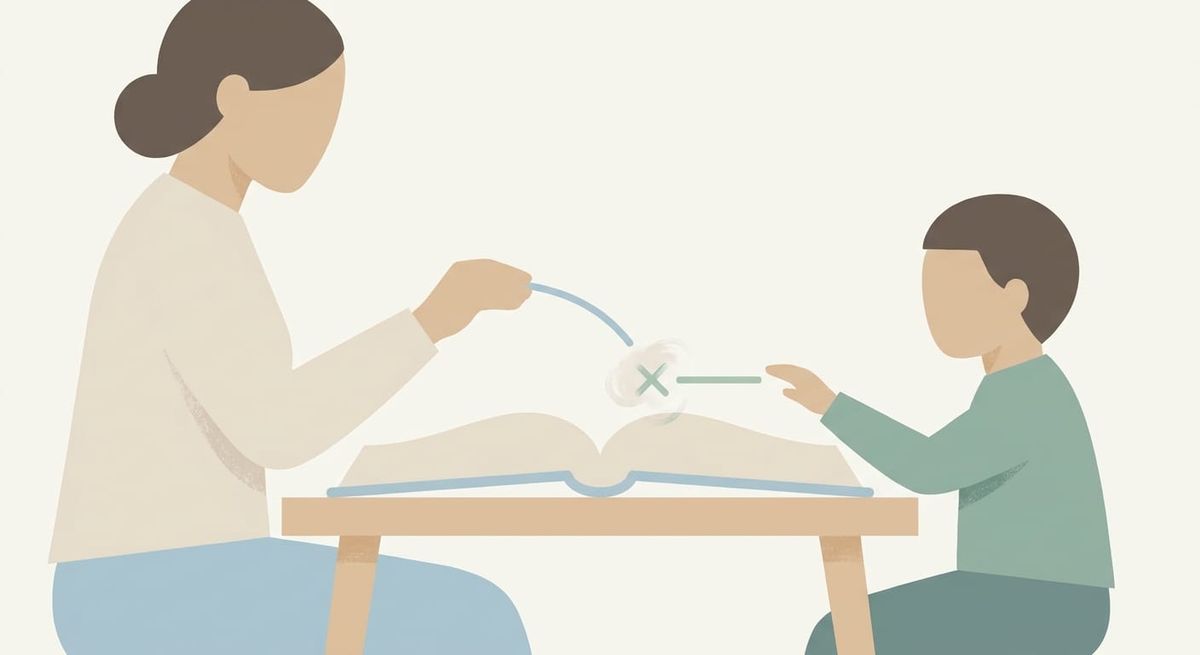
If reading practice at home keeps turning tense the moment your child gets something wrong, you are not imagining it. A lot of parents want to help, but in the moment, it is hard to know what to say. Correct too quickly, and your child may feel defeated. Wait too long, and they may keep practicing the mistake.
If you are wondering how to correct mistakes in Orton-Gillingham style practice at home, the goal is not to jump on every error. The goal is to help your child notice what went wrong, use the right strategy, and leave the practice feeling capable.
Why correction matters so much in Orton-Gillingham
Orton-Gillingham is structured and explicit. That means mistakes are not something to ignore, but they also are not something to turn into a big deal. A correction should help your child get back to the skill you are practicing.
When correction works well, your child learns that:
- mistakes are part of learning
- there is a clear way to fix them
- they do not have to guess
- reading practice can still feel safe
That last part matters more than many parents realize. If your child starts expecting every mistake to lead to stress, they may rush, freeze, or avoid trying altogether.
Want corrections to feel calmer?
ReadGenie helps struggling readers improve their reading, spelling and handwriting with Orton-Gillingham practice at home. Your child reads out loud, the app listens, and it helps with the exact sound they missed.
Try ReadGenie free for 7 daysOr get the app on the App Store or Google Play
When should you correct right away?
Not every mistake needs the same response. Some errors should be corrected immediately, especially if your child is practicing a specific phonics pattern and reads the word in a way that skips that pattern.
For example, if your child is working on vowel teams and reads boat as bat, that is a good time to stop and guide them back to the vowel team. The purpose of the practice is accuracy with that pattern.
You should usually step in right away when your child:
- guesses based on the first letter
- skips part of the word
- says the wrong sound for a pattern they already know
- reads a practiced word incorrectly more than once
- keeps going without noticing the error
On the other hand, if your child makes a small mistake and then self-corrects, that is a good sign. Try not to interrupt those moments too quickly. Self-correction is a skill worth protecting.
Is it ever okay to just tell my child the word?
Yes. If your child has tried, had a prompt or two, and is still stuck, tell them the word. Have them say it, then read it again in the sentence. More struggle on one word rarely teaches more, and it can drain the rest of the session.
The same goes for a word with a pattern your child has not been taught yet. There is nothing there for them to decode, so give the word and keep going.
What to watch is how often it happens. If you supply the word quickly every time, some children learn to wait. They glance at a hard word, pause, and let you do the work. If you notice that, hold back for a few calm seconds and give one prompt before you step in.
What should you say when your child gets a word wrong?
This is where many parents get stuck. It helps to think of correction as a short prompt, not a long explanation.
Instead of saying, "No, that is wrong," try language that points your child back to the process.
You can say things like:
- "Try that again and look at every sound."
- "Start at the beginning."
- "What sound does this team make?"
- "Tap the sounds first."
- "Let’s slide through the whole word."
- "Check the middle sound."
These prompts work because they keep the child doing the thinking. In Orton-Gillingham practice, you want to guide, not rescue.
If your child still cannot get the word after a prompt or two, model it simply. Then have them repeat it and read it again in context. That keeps the correction clear without dragging the moment out.
Should every kind of mistake get the same correction?
No. The most useful prompt points to the exact part of the word that went wrong. A general "look again" sometimes works, but a child gets more out of a cue that matches the mistake.
- If your child guesses from the first letter, cover the word and reveal it from left to right. Then ask, "Does that match every sound?"
- If your child drops an ending and reads jump for jumped, point to the ending and say, "Read the base word, then the ending."
- If your child says each sound but never gets to the word, have them say the sounds again, closer together, while you sweep a finger under the word.
- If your child misreads a red word, say, "That is a red word. Let's say it together."
- If your child knows a pattern on its own but freezes on it inside a word, read one similar word first and then go straight back to the original.
Spelling mistakes work the same way. If your child writes jumpt for jumped, point to the ending and remind them that this ending is spelled e-d, even when it sounds like /t/.
After any of these, have your child read the whole word again and then reread the sentence, so the fix connects back to real reading.
How do you correct mistakes without causing shutdowns?
Many struggling readers are already bracing for failure before they even start. If your child has dyslexia or has spent a long time feeling behind, correction may feel bigger to them than it looks to you.
A calm structure helps. Try this simple sequence:
- Pause without sounding alarmed.
- Give one short prompt.
- If needed, point to the part that matters.
- Model the word briefly.
- Have your child say it and reread it.
- Move on.
The key is to stay neutral. Not cold, just steady. You do not need a long speech. You do not need to pile on praise after every correction either. What helps most is predictability.
When your child knows mistakes will be handled the same calm way every time, practice starts to feel less threatening.
A real-world example
Let’s say Mia is a fourth grader practicing the word chimp. She looks at it and says, "chip."
Her dad could respond in a few different ways. If he says, "No, read it more carefully," Mia may feel corrected but not helped. If he immediately says the whole word for her, she misses the chance to work through it.
A more useful response would be: "Try it again. Check the end."
Mia looks back, notices mp, and says the word correctly.
That small moment matters. She was prompted to go back to the word, look closely, and fix the error herself. That is exactly the kind of response that builds stronger reading habits over time.
Practical tips parents can try during reading practice
Here are a few simple ways to make correction feel more productive at home.
Use the same correction language every time
Pick two or three prompts and stick with them. If your wording changes constantly, your child has to process your instructions instead of the reading task.
Correct the skill you are working on
If today’s practice is focused on one phonics pattern, keep your corrections centered there. You do not need to fix everything at once.
Keep the pace moving
Long correction moments can make one word feel enormous. Help, reset, reread, and continue.
Notice self-corrections out loud
If your child fixes a mistake independently, name it. You can say, "You caught that yourself," or "Nice job going back to check the middle." That reinforces the habit you want.
What if your child gets upset every time you correct them?
If correction leads to immediate frustration, tears, or refusal, the problem may not be correction itself. It may be that the work is too hard, the session is too long, or your child is carrying a lot of reading anxiety.
In that case, pull back and simplify. Use easier words. Shorten practice. End while your child is still successful. A child who feels safe enough to try again will make more progress than a child who is constantly overwhelmed.
You might also find this helpful: How to Stop Guessing in Orton-Gillingham Reading Practice
What if my child keeps making the same mistake?
A mistake that keeps coming back usually means the pattern is not solid yet. It does not mean your child is careless or not paying attention.
Start by asking whether it was a one-time slip or a repeat. Reading ship as shop once may just be a tired moment. Mixing up short i and short o across several words points to a skill that needs more review.
When it is a repeat, more correction in the middle of a story usually is not enough. Practice the pattern on its own, read a short list of similar words, and stay with that pattern for a few days before moving on. If your child keeps guessing from the first letter, go back to reading sound by sound. If endings keep disappearing, practice words with suffixes. The errors are telling you what to teach next.
Final thoughts
Knowing how to correct mistakes in Orton-Gillingham practice can make home reading time feel much less tense. Your child does not need perfect practice. They need calm, clear support that helps them recover from mistakes without feeling defeated.
Short prompts, steady routines, and realistic expectations can go a long way.
Make practice at home easier
Short daily sessions of reading, spelling and handwriting practice, built with Orton-Gillingham teachers. It works alongside tutoring and school support. The first 7 days are free.
Try ReadGenie free for 7 daysOr get the app on the App Store or Google Play