How to Correct Reading Mistakes During Orton-Gillingham Practice
If your child gets stuck or reads the wrong word during practice, it can be hard to know what to do next. This guide shows parents how to correct reading mistakes during Orton-Gillingham practice in a way that supports learning without adding pressure.

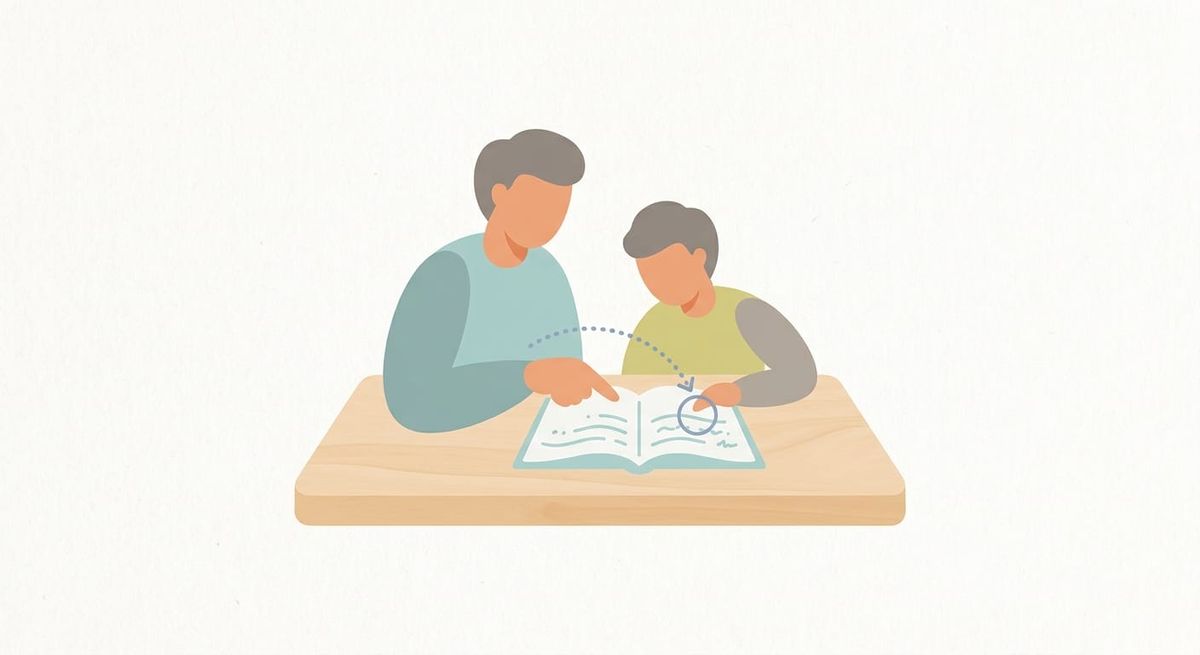
When your child reads a word wrong, skips a sound, or freezes in the middle of a passage, it is easy to second-guess yourself. Do you stop them right away? Do you let it go? Do you tell them the word so practice keeps moving?
If you are using an Orton-Gillingham approach at home, the way you respond to mistakes matters. Good correction helps your child notice the pattern, try again, and feel supported instead of embarrassed.
This guide will show you how to correct reading mistakes during Orton-Gillingham practice in a simple, calm way.
Why correction matters during Orton-Gillingham practice
Orton-Gillingham is built on explicit, structured teaching. That means practice works best when your child is not guessing their way through words.
If a child keeps reading a word incorrectly and no one steps in, the mistake can start to stick. But if every error turns into a lecture, practice can quickly feel tense.
The goal is not to jump on every tiny slip. The goal is to give quick, useful feedback that helps your child connect sounds, patterns, and meaning.
A good correction usually does three things:
- stops the error before it becomes a habit
- points your child back to the sound or pattern they know
- gives them a chance to read the word correctly themselves
Should you correct every mistake?
Not always in the same way.
Some mistakes need an immediate correction. Others just need a short pause and a prompt.
It usually helps to step in right away when your child:
- guesses based on the first letter
- skips part of the word
- swaps sounds in a pattern they have already learned
- reads a decodable word incorrectly more than once
You can be a little lighter when your child:
- self-corrects quickly
- loses their place but fixes it on their own
- stumbles on a word that includes a pattern they have not been taught yet
A simple rule is this: if the mistake shows that your child is not using the pattern correctly, pause and help. If they are already noticing and fixing it, give them a moment.
What should you say when your child gets a word wrong?
Keep your wording short and predictable.
Long explanations in the middle of reading practice usually make kids feel more overwhelmed. A short prompt is easier to use and easier for your child to recognize.
You might say things like:
- "Try that again."
- "Start at the beginning of the word."
- "Say each sound."
- "What vowel sound do you see?"
- "Read it slowly."
- "Check the middle."
If your child still cannot get it, guide them through the word step by step. Point to each sound or chunk, have them say it, then blend it.
For example, if your child reads ship as shop, you might say:
- "Look at the middle sound."
- Have them say /i/.
- Go back and read the whole word.
That keeps the correction tied to the actual skill instead of turning into a vague "look closer."
A simple correction routine parents can use
When you are tired and your child is frustrated, it helps to have one routine you use over and over.
Try this:
1. Pause quickly
Do not wait through three more wrong guesses. Stop early and calmly.
2. Prompt, do not lecture
Use a short cue like "sound it out" or "check the vowel."
3. Break the word into parts if needed
Point to each sound, syllable, or chunk your child knows.
4. Have your child read the whole word again
This matters. The goal is not just hearing the right answer. The goal is saying it correctly.
5. Return to the sentence
Once they read the word, have them go back and read the full sentence smoothly.
This routine keeps correction brief and keeps the child doing the thinking.
What if your child gets upset when corrected?
This is common, especially for older kids who already feel discouraged about reading.
Sometimes the issue is not the correction itself. It is the feeling of being watched, interrupted, or reminded that reading is hard.
A calmer approach can help. Keep your voice neutral. Stay matter-of-fact. Try to sound like a coach, not a critic.
Instead of saying, "No, that is wrong," you can say:
- "Let’s try that one again."
- "You got part of it. Check the middle."
- "That word has a pattern you know."
It also helps to correct fewer words per session if your child is getting overloaded. A short, successful session teaches more than a long, tense one.
A real-world example
Maya is in fourth grade and has started Orton-Gillingham-style practice at home after school. When she reads decodable passages, she often guesses at longer words instead of slowing down.
One day she reads sunset as sunshine because she sees the first part and jumps ahead.
Instead of giving her the word right away, her mom says, "Start again and read both parts." Maya reads sun. Then she reads set. Then she blends the whole word: sunset.
Her mom has her reread the sentence, and this time it makes sense.
That small correction does two useful things. It stops the guessing habit, and it reminds Maya that longer words can be solved in parts.
Practical tips for smoother corrections at home
Here are a few ways to make correction feel easier for both of you:
Use the same prompts every time
If you always say something different, your child has to process your directions instead of focusing on the word. Pick two or three go-to prompts and stick with them.
Correct the process, not the child
Focus on what to do next, not on what went wrong. "Check the vowel" works better than "You are not paying attention."
Keep sessions short enough that your child can stay engaged
Many kids do better with 10 to 15 focused minutes than with a longer session that ends in frustration.
Notice effort out loud
If your child slows down, goes back, or self-corrects, say so. "I like how you went back to the beginning of the word" reinforces the habit you want to build.
When should you give the word?
If your child has tried with support and is still stuck, it is okay to give the word.
The point of home practice is not to trap your child in a struggle. If the word is beyond what they have learned, or frustration is building fast, tell them the word, have them repeat it, and move on.
Just try not to do that too quickly on words they actually can decode with a little prompting.
One small shift can make practice more effective
Many parents think helping means giving the answer fast so reading feels easier. But during Orton-Gillingham practice, the better move is usually a short prompt, a second try, and a chance for your child to read the word correctly.
That is often where real learning happens.
You might also find this helpful: What to Do During an Orton-Gillingham Session at Home
The way you correct mistakes can change the whole feel of practice at home. When corrections are calm, short, and tied to the pattern your child is learning, reading time becomes more useful and less stressful.
If you want extra support, ReadGenie gives kids structured phonics practice with decodable passages, repetition, and a clear path forward. You can explore it here: App Store and Google Play.



