How to Help With Nonsense Words in Orton-Gillingham
If your child can read familiar words but falls apart on nonsense words, you may be wondering what that means. This guide explains why nonsense words matter in Orton-Gillingham and how to help without adding stress.

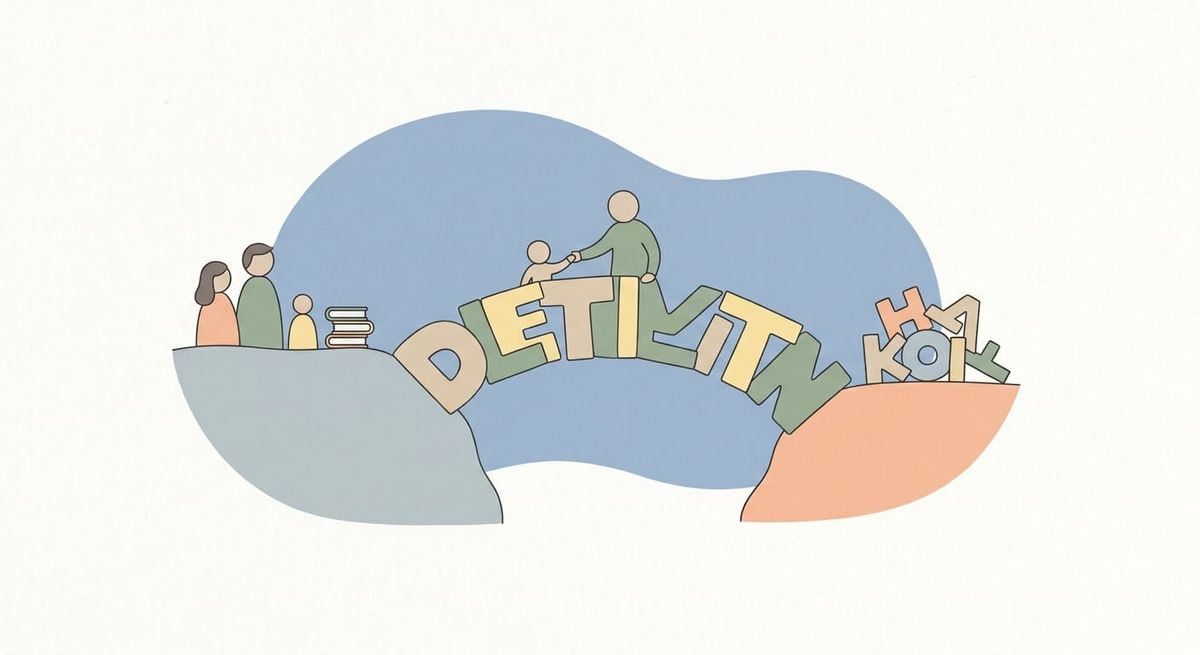
If your child can read a word like cat but gets stuck on lat or mip, it can feel confusing. You might wonder why their reading practice includes made-up words at all. You might even worry that it is making things harder.
The good news is that nonsense words in Orton-Gillingham are there for a reason. They help show whether a child is truly decoding or just remembering a word by sight. If your child struggles with them, that does not mean they are failing. It usually means they need slower, clearer practice with a specific skill.
This guide will help you understand what nonsense words are doing in Orton-Gillingham and how to make them feel more manageable at home.
Why do nonsense words show up in Orton-Gillingham?
Nonsense words are used to check whether your child can apply a phonics pattern without relying on memory.
When a child reads a real word, they may already know it from hearing or seeing it before. That can hide weak decoding. But when they read a made-up word, they have to use the sounds and patterns they have actually learned.
That is why nonsense words in Orton-Gillingham can be so helpful. They answer a simple question: Can your child read the pattern, or are they guessing from memory?
For example, if your child has learned closed syllables and short vowel sounds, they may be asked to read words like dap, sut, or mig. Those are not vocabulary words. They are practice words that reveal whether the phonics skill is sticking.
What if my child hates nonsense words?
A lot of children do.
Some kids feel annoyed because the words are silly. Some feel exposed because they cannot lean on memory. Some start guessing faster because they want to escape the task.
If your child hates nonsense words, that usually points to one of three things:
- the pattern is not secure yet
- the words are being presented too quickly
- your child is used to reading familiar words by memory instead of sound
The goal is not to force more and more nonsense words. The goal is to use a small number of them to see where the breakdown is happening.
If your child starts shutting down, go back to a very small set. You only need a few words to learn a lot.
What nonsense words can tell you about reading
Nonsense words are useful because they make weak spots easier to see.
If your child reads lat as lot, the short vowel may not be secure. If they read mep as map, they may be guessing based on the first sound and a familiar word shape. If they can sound out each part slowly but cannot blend the whole word, blending may be the skill that needs more support.
This is why nonsense words in Orton-Gillingham should not be treated like a trick or a test. They are more like a flashlight. They help you notice what your child needs next.
A simple way to watch for patterns is to ask:
- Are they missing the middle vowel?
- Are they skipping a sound?
- Are they saying a real word instead?
- Are they able to sound it out but not blend it?
Once you see the pattern, your next step becomes much clearer.
How to practice nonsense words without overwhelm
Keep practice short and calm. For most children, 3 to 5 nonsense words is enough in one sitting.
Start with words that match a pattern your child already knows. If they are working on closed syllables, stay with simple consonant-vowel-consonant words. Do not mix in too many new demands at once.
Here is a simple routine:
- Show one word at a time.
- Have your child say each sound.
- Help them blend the sounds slowly.
- If they guess, cover the word and go sound by sound.
- End after a few successful tries.
You can also make nonsense words feel less loaded by calling them “sound words” or “practice words.” For some children, that small wording shift helps.
A real-life example
Ethan, a fourth grader, could read many common short vowel words just fine. But when his mom showed him teg, he said top. When she showed him bim, he said big.
At first, it looked like he had forgotten short vowels. But after a few more examples, the real issue became clear. He was looking at the first letter and then jumping to a real word he already knew.
So they changed the routine. Instead of longer word lists, his mom used three nonsense words at a time. She had him tap each sound, then blend slowly. After a week of short practice, he started reading the full word instead of guessing.
The breakthrough was not harder practice. It was more targeted practice.
Simple things parents can try
If your child struggles with nonsense words in Orton-Gillingham, try these:
- Use fewer words. A short set is often more effective than a full page.
- Stick to one pattern. Do not mix several phonics skills together.
- Slow the pace down. Pause between sounds if blending is hard.
- Praise the process. Focus on careful sounding out, not speed.
If your child gets one wrong, avoid saying, “No, that is wrong.” Try, “Let’s read it sound by sound together.” That keeps the moment calmer and more useful.
When should you worry?
Usually, you do not need to worry if nonsense words are hard at first. They are supposed to be more demanding than familiar real words.
What matters is the pattern over time. If your child improves with short, supported practice, that is a good sign. If they keep guessing the same way, it may mean the underlying phonics skill needs review before moving on.
That does not mean you have to stop everything. It just means you may need to tighten the focus.
You might also find this helpful: How to Correct Guessing in Orton-Gillingham
Final thoughts
Nonsense words in Orton-Gillingham are not there to frustrate your child. They are there to show whether decoding is really happening.
If your child struggles with them, take that as useful information, not a sign to panic. Short, calm, focused practice can make a big difference.
If you want extra support at home, ReadGenie gives children structured phonics practice with repetition and decodable reading in a way that feels manageable. You can explore it here: App Store and Google Play.