How to Keep Orton-Gillingham Sessions Short at Home
If home reading practice keeps getting too long or ending in frustration, short Orton-Gillingham sessions may work better. Here is how to keep them focused and helpful.

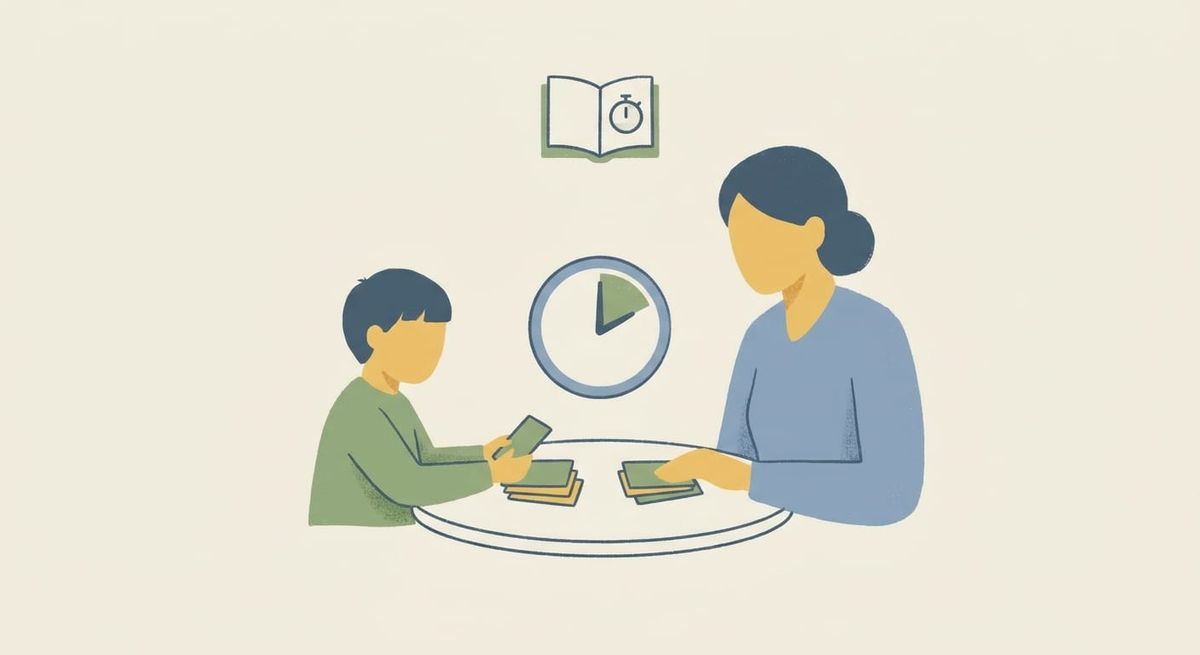
If your child needs reading help at home, it is easy to assume longer practice will lead to faster progress. But for many struggling readers, especially kids with dyslexia, long sessions often backfire. They get tired, shut down, or start guessing just to get through it.
Short Orton-Gillingham sessions at home can work very well when they are focused and consistent. You do not need an hour. In many cases, 10 to 15 clear minutes is far more useful than 40 frustrated ones.
This post will show you how to keep practice short without making it feel pointless.
Why shorter sessions often work better
Orton-Gillingham is built on explicit, structured practice. That does not mean a parent has to do a long lesson at the kitchen table every day. It means the time you spend should be purposeful.
When sessions are too long, a child may:
- lose attention
- start making careless mistakes
- rely on guessing instead of sounding out
- become more emotional than productive
Short sessions help protect energy and confidence. They also make it easier for you to stay consistent, which matters more than squeezing in a perfect lesson once in a while.
A simple goal is to stop while your child can still be successful. That helps practice end on a better note and makes the next session easier to start.
How short should Orton-Gillingham practice be?
For many kids, 10 to 15 minutes is enough for home practice. Some children do well with 20 minutes, but only if the session stays focused and the material is at the right level.
A good rule is to watch your child more than the clock. If accuracy drops fast, frustration rises, or your child starts rushing, the session is probably too long.
You do not need to fit everything into one sitting. A short session can still include:
- quick review of sounds or patterns
- word reading
- one spelling task
- a short decodable passage
That is enough to reinforce learning without overload.
What do you actually do in 10 to 15 minutes?
A short session works best when you follow the same basic flow each time. Predictability helps kids know what to expect.
Here is one simple example:
1. Review for 2 to 3 minutes
Go over a few sounds, word cards, or phonics patterns your child already knows.
2. Practice a target skill for 3 to 4 minutes
Work on one pattern only, such as vowel teams, suffixes, or multisyllable decoding.
3. Read words for 2 to 3 minutes
Use a small list of words that match the skill you are practicing.
4. Spell a few words for 2 to 3 minutes
Have your child say the sounds and write the word. Keep the list short.
5. Read a short decodable passage for 2 to 3 minutes
Choose a passage that gives practice with the same pattern.
This kind of structure keeps the session moving. It also prevents the common problem of spending the whole time on one task until everyone is worn out.
What if my child still resists even short sessions?
Sometimes resistance is not about laziness or attitude. It is a sign that practice feels too hard, too long, or too unpredictable.
If your child pushes back, ask yourself:
- Is the text too difficult?
- Am I trying to cover too much in one sitting?
- Does my child know exactly what will happen during practice?
- Am I stopping before frustration takes over?
Small changes can make a big difference. Shorter sessions, easier review, and clearer routines often lower the stress right away.
It can also help to give the session a clear ending point. Saying, "We are doing five words and one short passage," feels more manageable than saying, "Let’s do reading."
A real-world example
Marcus, a fourth grader, dreaded home reading practice. His mom kept trying 30-minute sessions because she wanted to help him catch up. But by the 15-minute mark, he was slumped over, skipping words, and arguing about every correction.
They switched to 12-minute sessions four days a week. Each session had the same routine: quick review, five word cards, three spelling words, and one short decodable paragraph. Within two weeks, Marcus was fighting it less. He was not suddenly reading everything with ease, but he was more accurate and less drained.
That is often what progress looks like first. Less resistance. Better focus. Fewer guessing habits. Then reading growth becomes easier to build.
Practical tips to keep sessions short and helpful
Here are a few ways to make short practice actually work:
- Set a timer: A visible endpoint helps your child trust that practice will not drag on.
- Plan before you sit down: Pick the words, pattern, and passage in advance so you do not waste time deciding.
- Do less, but repeat more often: A few strong practice items done consistently are better than a huge list once a week.
- Stop while it is still going okay: Do not wait for a full meltdown to end the session.
Build consistency before you build length
Many parents worry that short sessions are not enough. But a short session you can actually repeat is far more useful than an ideal plan that keeps falling apart.
If your child is still getting used to home reading practice, focus on building a routine first. Once that feels steady, you can decide whether a little more time makes sense.
You might also find this helpful: How Often Should You Do Orton-Gillingham at Home?
Conclusion
Short Orton-Gillingham sessions at home can be enough to support real progress. The key is not doing more and more. It is keeping practice structured, targeted, and manageable for your child.
When reading feels hard, shorter and calmer is often the better place to start.
If you want extra support, ReadGenie gives kids structured reading practice with decodable passages, repetition, and skills grounded in Orton-Gillingham and the Science of Reading. You can explore it here: App Store and Google Play.



