How to Teach Open and Closed Syllables in Orton-Gillingham
If your child can read some short vowel words but gets confused when the vowel sound changes in words like go, he, or robot, open and closed syllables may be the missing piece. This guide shows how to teach open and closed syllables in Orton-Gillingham in a simple, parent-friendly way.

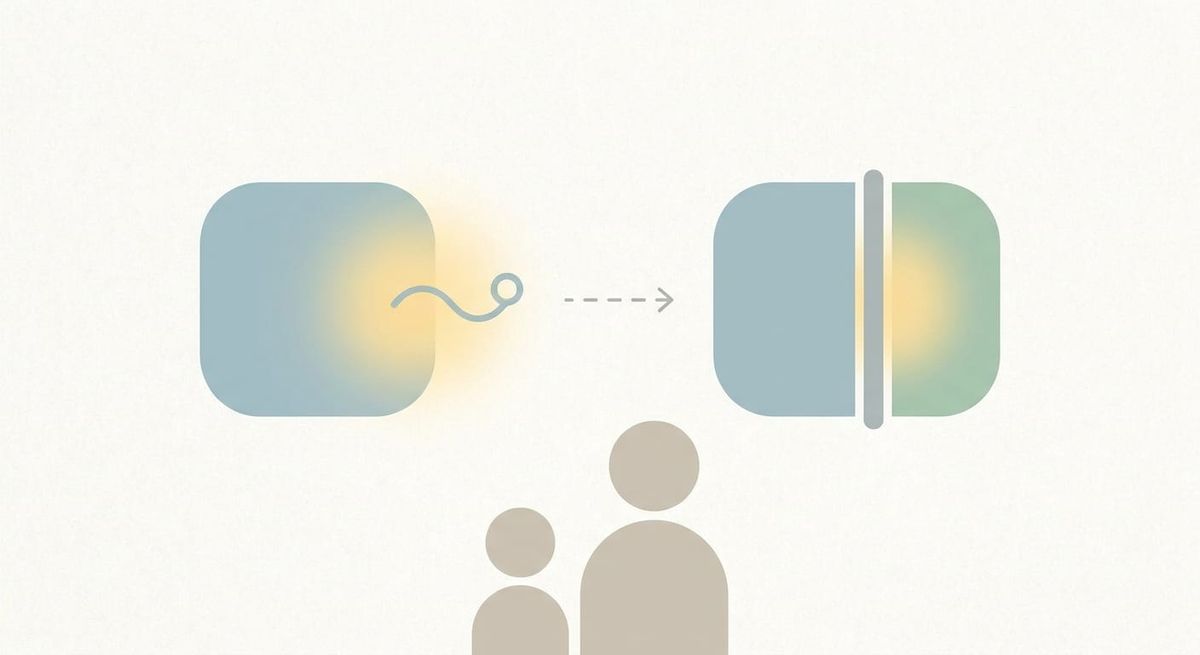
If your child can read words like cat and bed but gets stuck on words like go, he, or baby, it may not be a guessing problem. Often, the missing piece is understanding open and closed syllables.
This matters because many struggling readers do not know why a vowel says its short sound in one word and its long sound in another. When you teach open and closed syllables in Orton-Gillingham, you give your child a simple rule they can actually use while reading.
In this guide, you will learn what open and closed syllables are, when to teach them, and how to practice them at home without making things feel overwhelming.
What are open and closed syllables?
A closed syllable ends in a consonant. The vowel is usually short.
Examples:
- cat
- bed
- nap
- pic-nic
An open syllable ends in a vowel. The vowel is usually long.
Examples:
- go
- he
- me
- ba-by
This idea helps explain why ro in robot sounds different from rob in robin. That contrast is powerful for kids who keep trying to memorize words one by one.
Instead of telling your child, “Just remember it,” you can show them a pattern.
When should you teach this skill?
Open and closed syllables usually make sense after your child has some comfort with:
- consonant sounds
- short vowels
- simple closed syllable words
- blending CVC words
If your child is still working hard to read words like map, sit, or hot, it is usually better to build that skill first. But if they can read simple short vowel words and are starting to see longer words, this can be a very useful next step.
A good sign your child is ready is that they can read basic one-syllable words, but they get confused when the vowel sound changes in longer words.
How do you teach open and closed syllables in Orton-Gillingham?
Keep it simple and explicit. You do not need a long lecture. You want your child to see, hear, say, and read the pattern many times.
1. Teach one pattern at a time
Start with closed syllables if your child does not know them well yet.
You might say:
“When a syllable ends with a consonant, the vowel is usually short.”
Use a small set of words like:
- cat
- ten
- rub
- pic-nic
Then introduce open syllables.
You might say:
“When a syllable ends with a vowel, the vowel is usually long.”
Use words like:
- go
- he
- no
- ba-by
Keep your word list controlled. Too many examples at once can make the lesson feel fuzzy.
2. Compare the two patterns side by side
This is often where the concept clicks.
Try pairs like:
- rob and ro-bot
- kit and ti-ger
- mad and la-dy
Have your child read the first syllable and notice what happens to the vowel sound.
You can ask:
- “Does this syllable end in a vowel or consonant?”
- “Is it open or closed?”
- “What sound do we expect the vowel to make?”
That kind of guided thinking is more helpful than correcting too quickly.
3. Mark syllables visually
Many kids need to see the difference.
You can write a word like robot and split it into ro | bot.
Then ask your child to mark:
- the first syllable as open
- the second syllable as closed
Do the same with words like:
- tiger
- music
- hotel
- begin
Use simple lines, circles, or colors if that helps. The goal is not to make it fancy. The goal is to make the pattern visible.
What if your child keeps forgetting?
That is normal.
For many kids with dyslexia, a new concept does not stick after one lesson. They may understand it in the moment and still miss it the next day. That does not mean the lesson failed. It usually means they need more review with the same pattern in slightly different words.
Go back to short practice rounds:
- read 4 to 6 words
- sort words into open or closed syllables
- read one or two two-syllable words
- stop before your child is worn out
Small, repeated practice is usually more effective than doing too much at once.
A real-world example
Let’s say your child can read nap, pet, and shop without much trouble. Then they see tiger and guess wildly.
A parent might think, “He knows the sounds, so why can’t he read the word?”
But once you split it into ti | ger, the problem becomes clearer. The first syllable is open, so the i says its long sound. The second syllable is different. Now your child has a reason for the pronunciation instead of a word to memorize.
That kind of moment can lower frustration fast. The child starts to see that longer words are not random.
Simple ways to practice at home
Here are a few realistic ways to reinforce the skill:
Make a quick word sort
Write a few words on index cards and sort them into open and closed.
Examples:
- me
- no
- cat
- sun
- baby
- robot
Keep it short. Five minutes is enough.
Practice with syllable scooping
Write two-syllable words and scoop each syllable underneath.
Try:
- ti-ger
- mu-sic
- ro-bot
- ba-by
Then ask which syllable is open and which is closed.
Use the same language each time
Consistency helps.
Try phrases like:
- “Ends in a consonant, vowel is short.”
- “Ends in a vowel, vowel is long.”
When the wording stays stable, the rule is easier to remember.
Why this skill matters for older struggling readers
If your child is in grades 3 to 6 and still reading slowly, open and closed syllables can be an important missing link. A lot of older struggling readers have learned bits and pieces of phonics, but they do not have a clear system for attacking longer words.
This skill helps with:
- decoding two-syllable words
- understanding vowel patterns
- reducing guessing
- building confidence with unfamiliar words
It is a small concept, but it supports much bigger reading growth over time.
You might also find this helpful: How to Teach Closed Syllables in Orton-Gillingham
If your child is still shaky on short vowel words, that post is the best place to strengthen the foundation before adding open syllables.
Final thoughts
When you teach open and closed syllables in Orton-Gillingham, you are helping your child make sense of vowel sounds instead of guessing from memory.
Keep the lessons short, explicit, and repetitive. If it does not click right away, that is okay. For many struggling readers, progress comes from clear teaching plus lots of calm review.
If you want extra support at home, ReadGenie gives kids structured phonics practice with decodable reading and built-in repetition based on Orton-Gillingham principles. You can explore it here: App Store or Google Play.



