How to Correct Errors in Orton-Gillingham
If your child reads a word wrong and you are never quite sure whether to jump in, wait, or tell them the answer, you are not alone. This guide shows how to correct errors in Orton-Gillingham at home in a calm, structured way that helps your child learn from mistakes without feeling defeated.

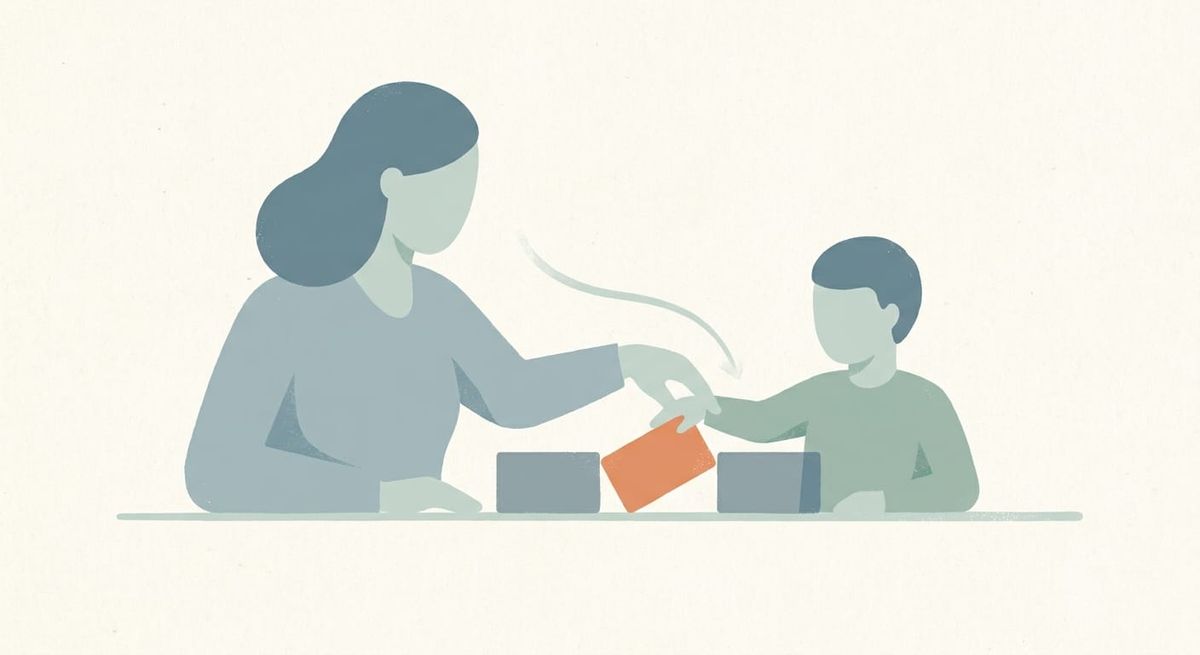
If your child makes mistakes during reading practice, it can be hard to know what to do in the moment. You may not want to interrupt too fast, but you also do not want them to practice the wrong word. Many parents end up bouncing between giving the answer right away and saying nothing at all.
The good news is that error correction in Orton-Gillingham does not need to be complicated. The goal is not to catch your child doing something wrong. The goal is to help them go back, look more carefully, and use the skill they are learning.
This post will show you how to correct errors in Orton-Gillingham in a way that feels calm, clear, and useful at home.
Why error correction matters
When a child reads a word incorrectly and keeps going, the brain gets less practice connecting letters to sounds in an accurate way. If that happens often, guessing can start to replace real decoding.
A gentle correction helps your child stop, look again, and work through the word with support. That matters especially for kids with dyslexia, who often need more repetition and more explicit feedback.
Good error correction should do three things:
- stop the incorrect response from sticking
- guide the child back to the print
- help them get the word right with as much independence as possible
In other words, you are not just fixing a mistake. You are teaching your child how to recover from one.
What should you say when your child gets a word wrong?
Try to keep your response short and consistent. Long explanations in the middle of reading practice usually make things harder.
Instead, use simple prompts like:
- “Try that again.”
- “Look at all the letters.”
- “Start at the beginning.”
- “What sound does this part make?”
- “Read the whole word.”
These prompts work because they direct attention back to the word instead of away from it.
If your child still cannot get it after a brief prompt, it is okay to support more directly. You might tap the sounds, cover part of the word, or say one sound and let your child finish the rest. If needed, you can give the word, then have your child repeat it and read it again in the sentence.
A simple pattern to follow is:
- pause
- prompt
- support
- reread
That keeps correction structured without making it feel heavy.
When should you correct right away?
Most decoding errors should be corrected right away, especially if your child is practicing a skill they are still learning. Immediate correction helps prevent the wrong pattern from settling in.
You should usually step in when your child:
- guesses a word from the picture or first letter
- skips sounds or syllables
- changes the word to something that makes sense but is not printed
- reads a taught pattern incorrectly
- rushes past the mistake without noticing
There are a few times when you might let a tiny error go for the moment, such as during a second reading for fluency when the meaning is still clear. But during skill practice, accuracy comes first.
If you are unsure, this is a helpful rule: correct the errors that connect to the lesson goal.
How do you correct without causing frustration?
This is the part many parents worry about most. If your child already feels sensitive about reading, even a small correction can feel big.
The tone matters as much as the words. Try to sound calm and matter-of-fact, not urgent or disappointed. You are not announcing failure. You are helping them take another look.
It also helps to correct quickly instead of turning the mistake into a long conversation. A fast reset is often easier on your child than a big explanation.
You can say things like:
- “Close. Let’s look again.”
- “You got part of it. Start here.”
- “Let’s tap this one out.”
What to avoid:
- “No, that’s wrong.”
- “We just did this.”
- “You know this one.”
- “Slow down” over and over without support
Those phrases can make a child feel ashamed or flooded. Clear help works better than pressure.
A real-world example of Orton-Gillingham error correction
Let’s say your child is reading the word storm and says store.
Instead of immediately saying, “No, it says storm,” you could walk them through it like this:
- “Try that again.”
- “Look at the end of the word.”
- “What sound does m make?”
- “Now read the whole word.”
Your child says, “storm.”
Then you have them reread the sentence.
That small sequence does a lot. It helps your child notice where the error happened, fix it using print, and then return to connected reading.
Here is another example. A child reads chip as chimp because they glance too quickly and add a sound that is not there. You might say:
- “Check the middle.”
- “Point to each sound.”
- “Now blend it.”
Again, the goal is not speed. The goal is accurate reading with attention to the full word.
Simple tips parents can use at home
You do not need a perfect script. A few steady habits can make a big difference.
1. Use the same prompts each time
Pick two or three correction phrases and stick with them. Familiar language helps your child know what to do.
2. Keep practice short
If your child is making more and more errors, fatigue may be part of the problem. Ten focused minutes is often better than a long, draining session.
3. Reread after the correction
Once your child gets the word right, have them reread the word or sentence. This helps the correct response stick.
4. Notice effort, not just accuracy
You can say, “I like how you went back and checked the ending,” or “You fixed that by looking at all the letters.” That reinforces the habit you want.
What if your child keeps making the same mistake?
If the same kind of error shows up again and again, that usually means the skill needs more direct review. It does not mean your child is lazy or not paying attention.
For example:
- if they confuse vowel teams, go back to that pattern
- if they skip endings, practice reading words with suffixes or final consonants
- if they guess from the first letter, slow down and return to sound-by-sound reading
Repeated errors are useful information. They show you what needs more teaching, not more pressure.
You might also find this helpful: How to Fix Guessing Words in Orton-Gillingham
Conclusion
Learning how to correct errors in Orton-Gillingham can make home reading practice feel much less stressful. You do not need to respond perfectly every time. What helps most is being calm, consistent, and focused on guiding your child back to the word.
A short prompt, a little support, and a chance to reread can turn mistakes into real learning.
If you want extra support, ReadGenie gives kids structured, systematic reading practice with decodable text, repetition, and skills that build step by step. You can explore it on the App Store or Google Play.



