How to Help a Child Decode Multisyllable Words in Orton-Gillingham
If your child can read simple words but gets stuck on longer ones, multisyllable decoding may be the missing skill. This guide shows parents how to help in a clear, structured way at home.

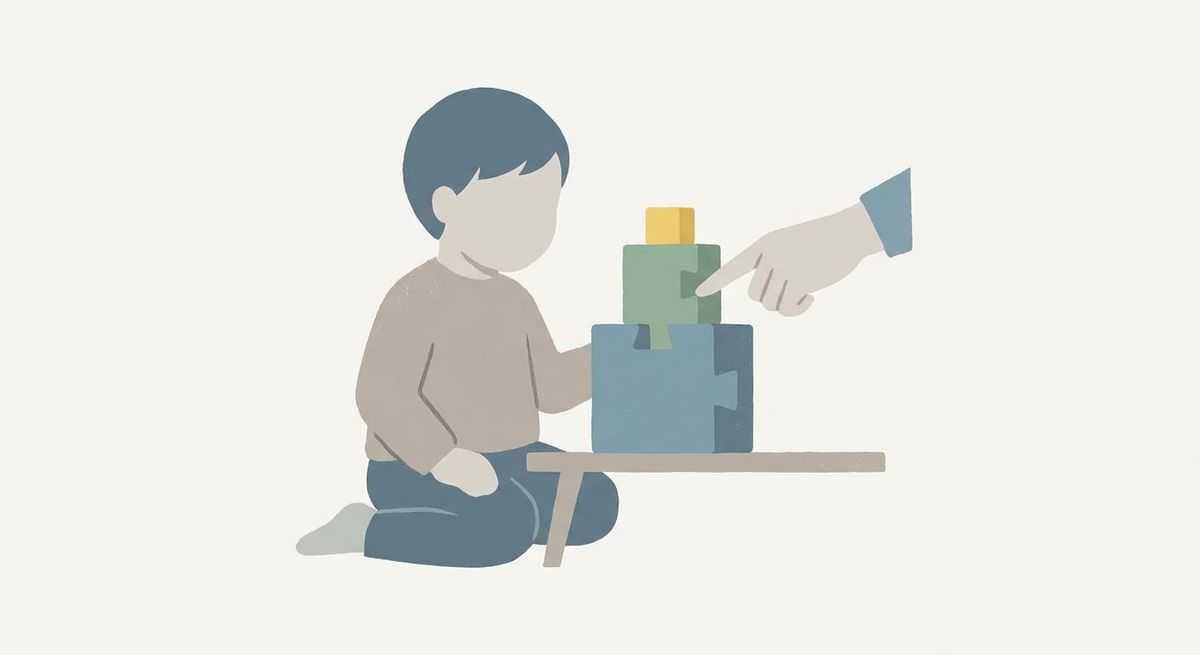
If your child can read words like sunset or robot one day but then guess wildly at fantastic or napkin the next, you are not imagining things. Longer words often make struggling readers panic. They may know many of the sounds, but they do not yet know how to work through the word in a calm, step-by-step way.
This is where multisyllable decoding matters. In Orton-Gillingham, children are taught to break bigger words into manageable parts instead of guessing from the first letter or the picture in their head. If you want to help your child decode multisyllable words in Orton-Gillingham at home, the goal is not speed. The goal is teaching a process they can use again and again.
Why longer words trip kids up
Many children with dyslexia can read short, familiar words but lose confidence when the word gets longer. That usually happens for a few reasons:
- they try to read the whole word at once
- they do not notice the syllable breaks
- they have weak recall of vowel patterns
- they rush and start guessing
A long word can feel like a wall. But when your child learns to look for chunks, that wall starts to look more manageable.
What does multisyllable decoding look like in Orton-Gillingham?
In simple terms, it means teaching your child to move through a longer word in parts.
A parent-friendly routine looks like this:
- Spot the vowels in the word.
- Mark or scoop the syllables.
- Read one syllable at a time.
- Blend the parts together.
- Check whether the word sounds right.
For example, with the word napkin, your child might:
- spot the two vowels
- divide it as nap / kin
- read each part
- blend it into napkin
That process gives them something to do when they get stuck. Instead of freezing, they have a plan.
Do children need all the syllable types first?
Not perfectly. But they do need some foundation.
Before practicing longer words, it helps if your child can do most of these things:
- blend simple one-syllable words
- read closed syllables like pic or mag
- read some open syllables like go or me
- recognize familiar vowel teams or silent e patterns
- slow down enough to sound through parts
If those pieces are still shaky, multisyllable work may feel too hard right now. In that case, go back and strengthen the simpler patterns first.
Start with short two-syllable words
A common mistake is starting with words that are too long. If your child is just learning this skill, begin with easy two-syllable words that use patterns they already know.
Good practice words might include:
- sunset
- robot
- picnic
- cobweb
- reptile
Try covering part of the word with your finger so your child only looks at one syllable at a time. Then uncover the next part and blend.
You can also say:
- “Find the vowels first.”
- “Let’s break it into parts.”
- “Read this chunk, then this chunk.”
- “Now say it smoothly.”
That language is simple, repeatable, and less stressful than saying, “Just sound it out,” when the word feels overwhelming.
A real-world example
Let’s say your child sees the word pumpkin and immediately says, “I don’t know.”
Instead of giving the word right away, you could walk through it together:
- “Let’s find the vowels.”
- “Now let’s break it: pump / kin.”
- “Read the first part.”
- “Read the next part.”
- “Put it together.”
At first, your child may need a lot of support. After a week or two of short practice, you may notice they start looking for chunks on their own. That is a big win. It means they are learning a strategy, not just memorizing a list.
How can parents practice this without turning it into a battle?
Keep it short and predictable. Ten minutes is plenty.
Here are a few simple ways to practice:
1. Use only a few words at a time
Pick 3 to 5 multisyllable words for one session. Too many words can make your child feel flooded.
2. Choose words with known patterns
If your child is learning closed syllables and silent e, use words that mostly match those patterns. Do not mix in lots of new concepts at once.
3. Mark words together
You can lightly draw a line between syllables or scoop under each part. This helps your child see that the word is made of pieces.
4. Praise the process, not just the answer
Say things like:
- “You broke that word into parts.”
- “You went back and fixed your guess.”
- “You looked for the vowels first.”
That kind of feedback builds independence.
What if my child still guesses at long words?
That usually means the word is too hard, the pace is too fast, or the child needs more modeling.
If guessing keeps happening:
- go back to easier two-syllable words
- model the process out loud first
- reduce the number of words in each session
- revisit the syllable patterns your child already knows
Progress here is often slow at first. That is normal. The skill is not just reading a hard word once. It is learning how to approach hard words in a repeatable way.
Practical tips to try this week
- Practice 3 two-syllable words a day instead of doing a long word list.
- Ask your child to find the vowels before reading the word.
- Cover one syllable and read the word chunk by chunk.
- Stop the session while your child is still calm, even if you want to do more.
Keep building one layer at a time
If you want to help your child decode multisyllable words in Orton-Gillingham, think small at first. You do not need to jump straight to long, academic words. Start with words your child can handle, teach a clear routine, and repeat it often enough that the process begins to feel familiar.
You might also find this helpful: How to Teach Open Syllables in Orton-Gillingham
Longer words get easier when children stop seeing them as one big blur. With the right support, they can learn to break words apart, read them step by step, and feel more confident doing it.
If you want extra support at home, ReadGenie gives children structured phonics practice with repetition and decodable reading based on Orton-Gillingham principles and the Science of Reading. You can explore it here: App Store and Google Play.



