How to Help a 3rd or 4th Grader With Dyslexia Stop Reversing b and d While Reading
If your child keeps confusing b and d while reading, it does not mean reading practice is failing. Here is how to help with structured, reading-focused support.

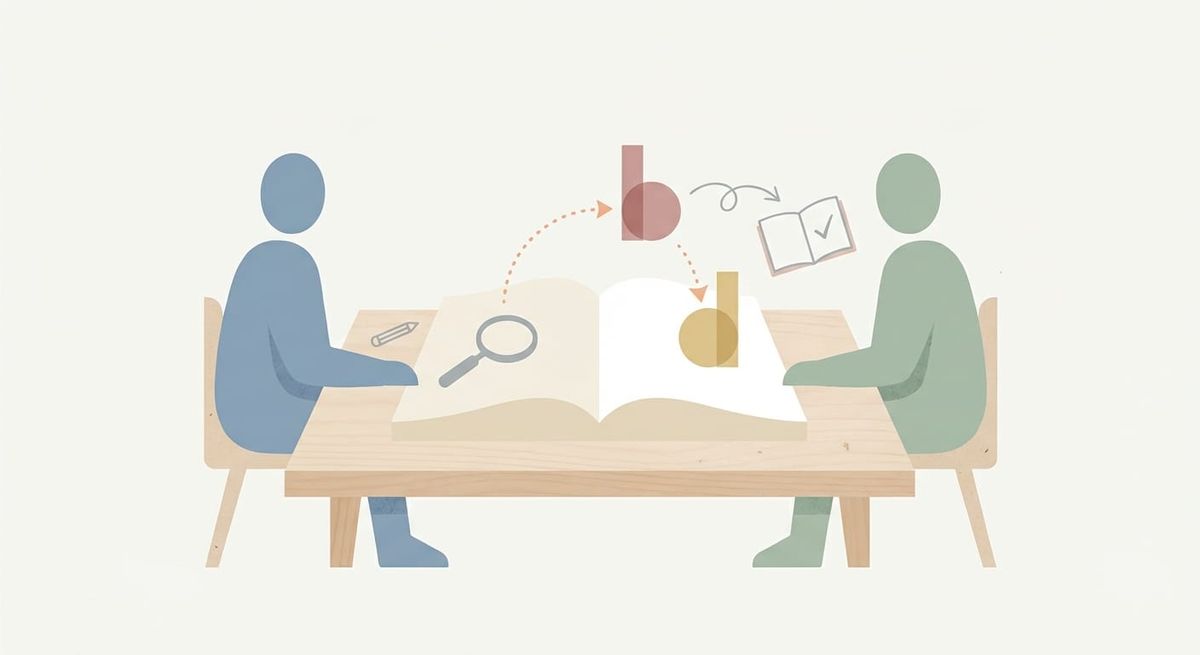
If your 3rd or 4th grader still mixes up b and d while reading, you are probably wondering if something is being missed.
Maybe your child can read a word correctly one day and then call it something different the next. Maybe they see big as dig, or bad as dad, even after plenty of practice. That can feel discouraging, especially when your child is trying.
The good news is this: letter reversals during reading do not automatically mean your child is not learning. For many children with dyslexia, especially in older elementary school, b and d confusion usually means they still need more direct practice linking the letter shape, sound, and word pattern together.
This post will show you how to stop b and d reversals in reading using reading-based strategies that actually fit how struggling readers learn.
Why older kids still reverse b and d while reading
A lot of advice about b and d reversals focuses on handwriting. But for older kids with dyslexia, the problem is often bigger than writing the letters correctly.
They may know the alphabet. They may even be able to say, "This is b" when you point to it by itself. But once the letter appears inside a word, and they are trying to read smoothly, the brain has to do several things fast:
- recognize the letter shape
- connect it to the right sound
- hold the sounds in order
- blend the whole word
If any part of that process is shaky, b and d can get mixed up.
That is why random reminders like "bed has a headboard and footboard" do not always stick. Memory tricks can help a little, but they usually are not enough on their own.
Practical takeaway: If your child reverses b and d during reading, focus less on handwriting drills and more on accurate sound-symbol reading practice inside words.
Does mixing up b and d mean reading practice is not working?
Not necessarily.
In fact, many children improve in reading overall while still making this one common error. A child might be getting better at decoding longer words, recognizing spelling patterns, or reading with more confidence, yet still stumble over b and d when reading quickly.
That usually means the skill is developing but not automatic yet.
Think of it like this: your child may understand the difference during a slow practice task, but lose it when reading connected text. That is a sign they need more repetition and better-targeted practice, not that all progress has stopped.
One parent might notice something like this:
"When my son reads word cards, he gets bat, bag, and bed right. But in a passage, he starts calling bad 'dad' and dig 'big.'"
That pattern is common. Single-word reading is easier because there is less pressure. In a sentence or passage, the child has to keep moving, and old confusions can pop back up.
Practical takeaway: Look at when the reversals happen. If your child does better in isolation than in text, they probably need more repeated decoding practice before reading connected passages.
What kind of practice helps most?
The most helpful approach is structured phonics practice with repetition.
For a child with dyslexia, it helps to practice b and d in a clear, organized way instead of hoping they will sort it out through more reading alone.
That kind of practice often works best when it goes in this order:
- Practice the letters and sounds directly
Review b says /b/ and d says /d/ with the child looking, saying, and hearing each one. - Read short words that contrast the two letters
Try pairs like bat/dad, big/dig, rib/rid, dab/bad. - Use the words in phrases and short sentences
This helps the child keep accuracy while reading something a little more connected. - Move into decodable text
Passages should give the child many chances to read words with b and d correctly, without too many harder patterns at once. - Repeat on purpose
Re-reading the same word list or passage over a few days can be more effective than constantly switching to new material.
The goal is not just recognition. The goal is automatic recognition during real reading.
Practical takeaway: Choose practice that lets your child read b and d in words, phrases, and decodable passages, not just as isolated letters.
What does improvement look like in real life?
Improvement is usually gradual.
A 4th grader named Maya might start out reading these words:
- bad as dad
- bend as dend
- rub as rud
At first, her parent has to stop her often and ask her to look again at the first letter. She gets frustrated because she feels like she already knows it.
Instead of drilling random flashcards, they spend a week doing short, focused practice:
- reviewing b and d sounds
- reading a small set of contrast words
- reading a short decodable passage with many b and d words
- re-reading that same passage the next day
By the end of the week, Maya still makes a few mistakes. But now she catches some on her own. She pauses at bag, starts to say dag, then corrects herself and keeps going.
That self-correction matters. It shows the child is building a more stable connection between the letter and the sound.
So if your child is not perfect yet, look for smaller signs of progress too:
- fewer reversals in the same passage
- better accuracy when reading slowly
- self-correcting without being told
- less frustration during practice
Practical takeaway: Do not judge progress only by whether reversals are gone. Notice whether your child is becoming more accurate, more aware, and more consistent.
Simple things to try at home
You do not need hour-long lessons at home. Short, consistent practice is usually more helpful.
Here are a few things to try:
1. Use a small word list with both letters
Pick 6 to 10 simple words that include b and d.
Examples:
- bat
- bed
- big
- bud
- dab
- did
- bad
- dig
Have your child read them slowly, pointing to each letter as they say the sounds.
2. Practice with short decodable sentences
Make or find simple sentences like:
- The big dog dug.
- Dad had a bad bag.
- Ben did his job.
This helps your child read the letters correctly in context without too much extra difficulty.
3. Re-read the same passage for a few days
Many parents think they should always use new reading material. But repetition helps. If your child reads a short decodable passage with b and d words three days in a row, accuracy often improves.
4. Slow it down when mistakes start
If your child starts guessing, have them go back and read the word sound by sound. A calm prompt like, "Check the first letter," is more helpful than immediately giving the word.
Practical takeaway: Keep practice short, targeted, and repeatable. Ten focused minutes can do more than a longer, scattered session.
When should you be concerned?
If your child is in 3rd or 4th grade and still reversing b and d, it is worth paying attention to, especially if they also:
- struggle to sound out unfamiliar words
- guess based on the first letter
- avoid reading
- read much more slowly than classmates
- have a history of dyslexia or reading difficulty
But the reversal itself is not the whole story. What matters most is whether your child is getting the kind of instruction that helps them connect sounds, letters, and words in a structured way.
If they are not, the answer is usually not "more of the same." The answer is better-targeted reading practice.
Conclusion
If your child keeps mixing up b and d, try not to panic. It does not mean reading practice has failed. It usually means your child still needs more direct, repeated practice reading those letters accurately inside words and passages.
When you focus on structured phonics, decodable text, and repetition, many kids do improve. It may take time, but it is a skill that can get stronger.
If you want extra support at home, ReadGenie can help. It gives children structured phonics practice based on Orton-Gillingham principles and the Science of Reading, with repetition and decodable passages built in. ReadGenie is available on iOS through the Apple App Store, and on Android and Chromebooks through Google Play.