How to Help With Letter-by-Letter Reading in Orton-Gillingham
If your child reads one sound at a time and struggles to blend words smoothly, this guide explains how to help with letter by letter reading in Orton-Gillingham without adding pressure.

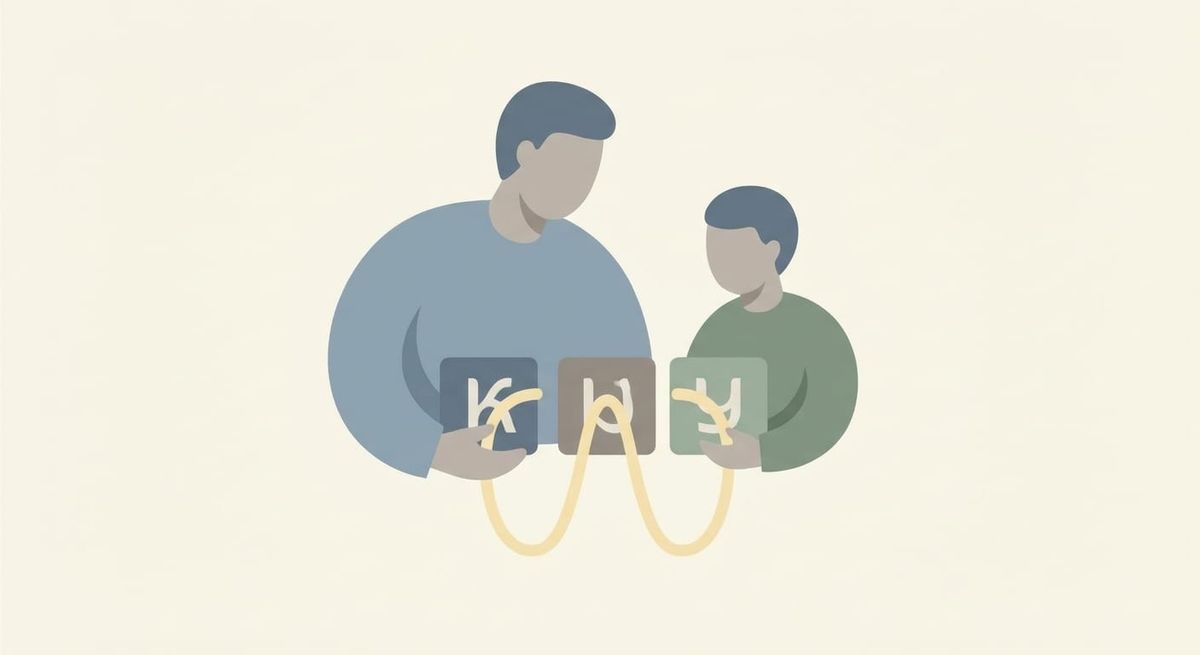
If your child reads words one sound at a time like /c/ … /a/ … /t/ and rarely gets to cat smoothly, you may feel stuck. They are trying. You are helping. But reading still sounds slow, choppy, and tiring.
The good news is that letter by letter reading in Orton-Gillingham is common, especially when a child is still learning how to connect sounds into a whole word. It does not always mean the lesson is wrong. More often, it means your child needs more support with blending, review, and pacing.
This guide will help you tell what is going on and what to do next at home.
Why does my child read one letter at a time?
Reading letter by letter usually means a child can access some of the sounds, but cannot yet pull them together automatically. They may know the individual parts of the word, but the whole process still takes too much effort.
A few common reasons this happens are:
- the sounds are not fully automatic yet
- blending is still weak
- the word pattern is a little too new
- the child is using so much energy on accuracy that nothing is left for smoothness
- they are feeling pressure and slowing down to avoid making a mistake
This is why speeding a child up usually does not help. In Orton-Gillingham, accuracy comes first. Smoothness grows after the child gets enough successful practice with the same types of words.
Still reading letter by letter?
ReadGenie helps struggling readers improve their reading, spelling and handwriting with Orton-Gillingham practice at home. Your child reads out loud, the app listens, and it helps with the exact sound they missed.
Try ReadGenie free for 7 daysOr get the app on the App Store or Google Play
When is letter-by-letter reading a sign to slow down?
Sometimes parents worry that every slow word means something is going wrong. That is not always true. A child may read this way for a while when a skill is still settling in.
It is usually a sign to slow down if your child:
- reads most words sound by sound, even familiar ones
- loses the word before finishing it
- says each sound correctly but guesses the full word wrong
- gets through one word and then seems drained
- becomes frustrated with simple decodable text
If that is happening, the goal is not to push longer reading. The goal is to make the step between sounding out and blending feel easier.
What helps letter by letter reading in Orton-Gillingham?
The most helpful fix is usually not more random practice. It is more targeted practice with the exact skill breaking down.
1. Shorten the word list
If your child is working on a new pattern, use fewer words. Five strong reads are better than twenty exhausting ones. This keeps practice accurate and gives your child a better chance to notice the pattern.
2. Use continuous blending when possible
For some words, it helps to stretch the first sound into the next sound instead of stopping after each one. For example, instead of /m/ … /a/ … /p/, try mmmaaap and then say map.
This does not work for every sound, but when it does, it helps a child feel the word instead of treating it like three separate tasks.
3. Tap first, then read
Have your child tap each sound, then sweep their finger under the whole word and read it. That small shift matters. It separates sound identification from word reading.
A lot of children get stuck because they are trying to do both at once.
4. Reread the same words
If your child reads a word correctly once, do not assume it is learned. Go back and reread the same word list. The second or third pass is often where reading starts to sound smoother.
That repeated success helps the brain store the pattern.
A real example of what this can look like
A fourth grader might read the word ship as /sh/ … /i/ … /p/ and then pause so long that the word is lost. A parent may think, "He knows the sounds, so why can he not read the word?"
In many cases, the issue is not the sound knowledge itself. It is the blending load.
If that parent switches to a shorter list of sh words, has the child tap the sounds first, then reread the same five words twice, the child may start reading the second round more smoothly. Not perfect. Just smoother.
That is real progress.
Should you correct every choppy read?
Not always. If the word is accurate, you do not need to interrupt every slow read. Let your child finish, then decide whether to repeat the word more smoothly together.
You can say things like:
- "You got it. Let’s read that one again smoothly."
- "Now try it as a whole word."
- "Tap it, then sweep and read."
This keeps the correction focused and calm. The goal is to build a better habit without making your child feel like every word is wrong.
Simple things to try this week
Here are a few realistic ways to support letter by letter reading in Orton-Gillingham at home:
- Practice for 5 to 10 minutes instead of stretching a lesson too long
- Use word lists with one pattern at a time
- Reread the same list before moving to a new one
- End with one short decodable passage so your child can apply the pattern in connected text
Small adjustments like these often help more than adding extra worksheets or longer sessions.
If your child is reading accurately but not smoothly
This is often the stage where parents start worrying that progress is too slow. But if your child is decoding accurately, even in a choppy way, that is still an important step forward.
Smooth reading usually comes after the pattern becomes more familiar. The answer is often not to skip ahead. It is to stay with the skill long enough for reading to feel easier.
You might also find this helpful: How to Help With Orton-Gillingham Fluency Practice
Conclusion
Letter by letter reading in Orton-Gillingham usually means your child is still building the bridge from sounds to whole words. That bridge can take time. With shorter practice, more rereading, and direct blending support, reading often starts to sound less effortful.
Your child does not need more pressure. They need the right kind of repetition.
Make practice at home easier
Short daily sessions of reading, spelling and handwriting practice, built with Orton-Gillingham teachers. It works alongside tutoring and school support. The first 7 days are free.
Try ReadGenie free for 7 daysOr get the app on the App Store or Google Play