How to Practice Dictation in Orton-Gillingham
If you have heard the word dictation in Orton-Gillingham and pictured a stressful spelling test, you are not alone. This guide shows parents how to use short, structured dictation practice at home in a way that supports reading and spelling without adding pressure.

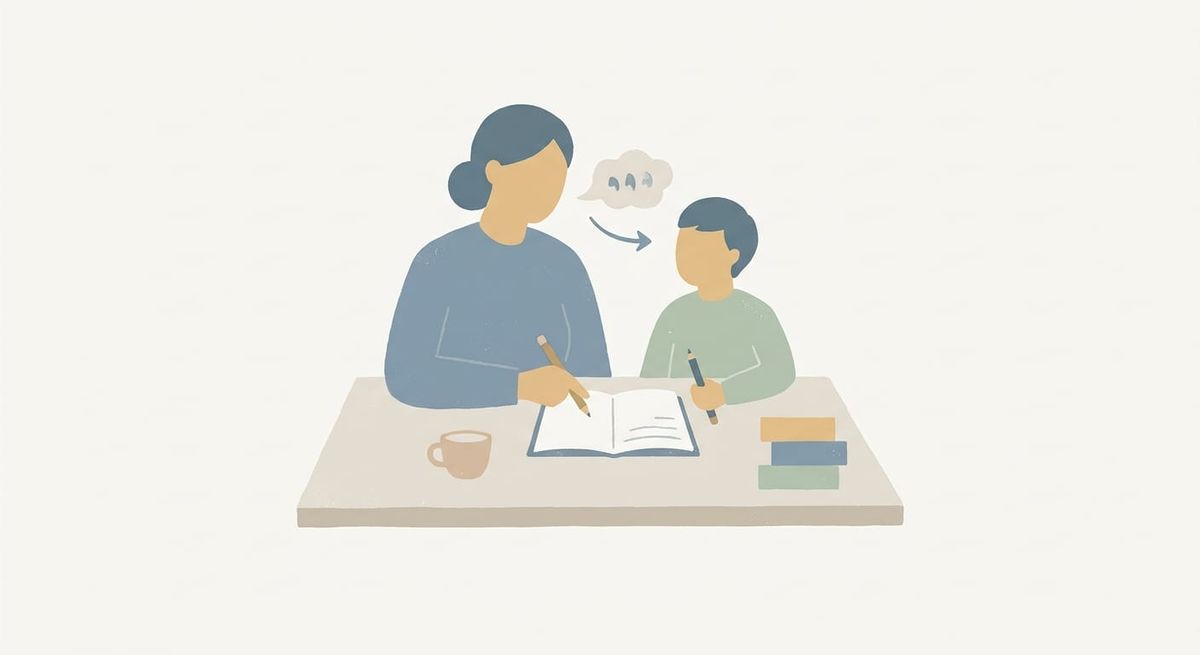
If your child is learning with an Orton-Gillingham approach, you may hear the word dictation and immediately think of red-marked spelling tests. That is usually the part parents worry about.
But dictation in Orton-Gillingham is not about catching mistakes. It is a way to help your child connect sounds, letters, spelling patterns, and handwriting in one short routine.
If you are wondering how to practice dictation in Orton-Gillingham at home, this guide will help you keep it simple, calm, and useful.
What does dictation mean in Orton-Gillingham?
In Orton-Gillingham, dictation means your child listens to a sound, word, or sentence and writes what they hear. The goal is not speed. The goal is to help them think through the sounds and patterns they have already been taught.
A short dictation routine often moves in this order:
- sound dictation
- word dictation
- sentence dictation
For example, you might say the sound /sh/ and your child writes sh. Then you might say ship and your child writes the whole word. Later, you might say a short sentence like The ship is big and your child writes it one part at a time.
This gives your child practice in hearing sounds, mapping them to letters, and using known patterns in connected writing.
Practicing dictation at home?
ReadGenie helps struggling readers improve their reading, spelling and handwriting with Orton-Gillingham practice at home. Your child reads out loud, the app listens, and it helps with the exact sound they missed.
Try ReadGenie free for 7 daysOr get the app on the App Store or Google Play
Why is dictation helpful for struggling readers?
Many kids with dyslexia can sometimes read a pattern before they can spell it. Dictation slows the process down and makes them actively pull the pattern back out of memory.
That matters because reading and spelling support each other. When a child writes a word by sound and pattern, they get extra practice with:
- phonemic awareness
- sound-symbol connection
- recall of phonics rules
- letter formation
- sentence-level attention
In other words, dictation is not just spelling practice. It helps strengthen the same skills your child needs for reading.
How can you do dictation at home without making it stressful?
The biggest mistake parents make is turning dictation into a quiz. Home practice works better when it feels guided, short, and predictable.
Start with patterns your child already knows. If they are working on closed syllables, silent e, vowel teams, or r-controlled vowels, choose words that match that level. Do not jump ahead to harder words just to make practice feel more impressive.
Keep the routine short. For many kids, 5 to 10 minutes is enough.
A simple home routine might look like this:
- Say 3 sounds and have your child write the matching letters.
- Say 3 to 5 words using familiar patterns.
- Say 1 short sentence using words your child can mostly spell.
- Review mistakes calmly and briefly.
You can also say the word in a sentence first if meaning helps. For example: boat. The boat is on the water. boat.
That extra context can help your child hear the correct word without guessing.
What should you say when your child gets stuck?
This is where many parents feel unsure. If your child freezes, avoid saying, “You know this,” or “Try harder.” That usually adds pressure, not clarity.
Instead, guide them back to the process.
You might say:
- “Say the word slowly.”
- “What sound do you hear first?”
- “What vowel pattern do you hear?”
- “Does that look like a word you have practiced before?”
If the word is still too hard, scaffold it. You can tap the sounds together, give the first sound, or remind them of the pattern they are working on.
The goal is support, not struggle.
What do my child's dictation mistakes tell me?
Each mistake points to the skill that needs work. A child who writes shep for ship may not be hearing the vowel sound. Writing cip for chip can mean the ch pattern is not locked in yet. If your child often leaves sounds out, they may need more practice pulling a word apart into its sounds before they write it.
Shop written as sop is a common one. Have your child say the word slowly and listen to the first sound. Many children then notice that sh is one sound written with two letters, and they can fix the word themselves.
When a word has several errors, fix the one tied to the pattern you are practicing and let the rest go for today. If the same mistake keeps coming back, don't make the list longer. Go back and practice that one skill more directly.
A real-life example of dictation helping
Let’s say Maya is a fourth grader who can read words like cake, bike, and home, but when she spells them, she leaves off the silent e. Her parent assumes she understands the pattern because she can read it.
During dictation, Maya hears the word bike and writes bik. That quick moment shows exactly where the breakdown is. She can recognize the word while reading, but she is not yet secure in spelling the silent e pattern on her own.
So instead of moving on, her parent gives her three more silent e words during practice that week, plus one short sentence like I ride my bike home.
After several short sessions, Maya starts adding the final e more consistently. That is the value of dictation. It shows what your child truly knows and gives them a chance to practice it in an active way.
Simple dictation tips that actually help
Here are a few ways to make dictation more effective at home:
Keep a small routine
Use the same order each time so your child knows what to expect. Predictability lowers stress.
Stay with taught patterns
Pick words that match what your child has already learned. Dictation is for practice, not surprise testing.
Make corrections right away
Brief, calm correction helps your child connect the right pattern while it is still fresh.
Stop before your child is worn out
If attention is fading, end the session. A short successful practice is better than a long frustrated one.
When should you use sentence dictation?
Sentence dictation is helpful once your child can handle word dictation with some confidence. It adds another layer because they need to remember spacing, capitalization, punctuation, and spelling all at once.
Keep sentences short at first. A good sentence uses mostly familiar words and one or two target patterns.
Examples:
- The cat is on the bed.
- I hope you ride home.
- The bird sat on the fork.
You want the sentence to feel manageable. If your child melts down during sentence dictation, go back to words for a while and rebuild from there.
Do we need a dictation sentence every time?
No. Some days a few sounds and three words are plenty. The point is accurate practice with the skill your child is learning, not getting through every step of the routine.
On days you do a sentence, look for red words first. If the sentence includes a red word your child can't fully sound out, point it out ahead of time and practice it once or twice before you start. Then say the whole sentence, and repeat it in small parts if your child needs that.
How often should we do dictation?
A few short sessions a week is usually enough, often two to four. A calm five-minute routine done regularly tends to help more than one long session on the weekend.
Dictation usually fits after a quick review and before reading connected text. Your child writes the pattern first, then sees it again in reading. If your child already gets tutoring or reading intervention, home dictation can reinforce the patterns they have been taught without adding much to their day.
You do not need to do a lot for dictation to work
Parents sometimes assume they need a full lesson plan for home practice. You do not. A pencil, paper, and a short list of carefully chosen sounds, words, or sentences can be enough.
What matters most is that the practice is structured and matched to your child’s current level.
You might also find this helpful: How to Correct Mistakes in Orton-Gillingham Without Shutting Your Child Down
Final thoughts
When done well, dictation in Orton-Gillingham is not a harsh spelling test. It is a simple way to help your child connect what they hear, read, and write.
If you keep it short, stick to familiar patterns, and guide mistakes calmly, dictation can become one of the most useful parts of home practice.
Make practice at home easier
Short daily sessions of reading, spelling and handwriting practice, built with Orton-Gillingham teachers. It works alongside tutoring and school support. The first 7 days are free.
Try ReadGenie free for 7 daysOr get the app on the App Store or Google Play