How to Know If Your Child Is Ready for Dictation in Orton-Gillingham
If your child can read a pattern during practice but freezes when asked to spell it, you may be wondering whether dictation should come next or whether it is too soon. This guide helps you tell if your child is ready for dictation in Orton-Gillingham and how to start in a way that feels manageable.

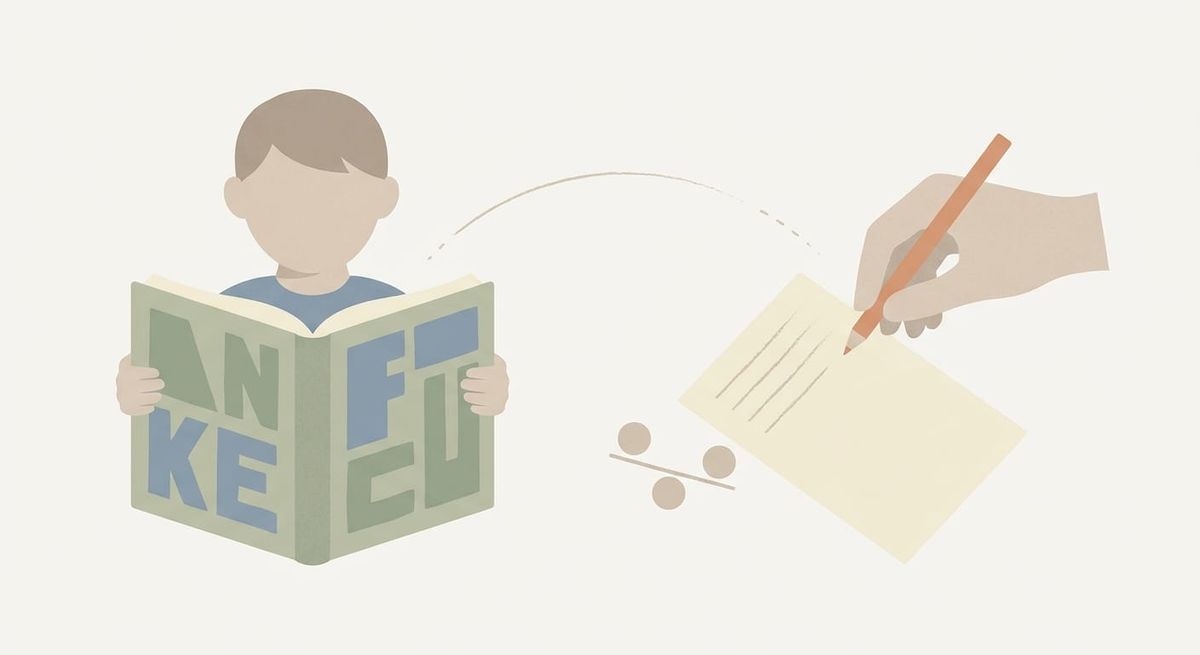
If your child can read a phonics pattern during practice but falls apart when it is time to spell it, you may be wondering what to do next. Many parents hear that dictation is part of Orton-Gillingham, but it can be hard to tell when to add it.
The good news is that you do not need perfect spelling before you begin. You just need a few signs that your child is ready for dictation in Orton-Gillingham. In this post, you will learn what those signs look like, how to avoid starting too early, and how to make the first few sessions feel calm instead of stressful.
What does dictation do in Orton-Gillingham?
Dictation helps your child connect sounds, letters, reading, and spelling. Instead of only recognizing a pattern while reading, your child has to pull it back out and write it.
That matters because some children look like they know a skill when they are reading a list, but they are still relying on memory, guessing, or support from you. Dictation shows whether the pattern is starting to stick.
It also slows the process down in a useful way. Your child has to listen, segment the sounds, choose the letters, and write them in order. That gives you a much clearer picture of what feels solid and what still needs review.
How can you tell if your child is ready?
A child is usually ready for dictation when they can do most of these things with a new or recently taught pattern:
- read simple words with that pattern with reasonable accuracy
- hear and say the sounds in order
- write the basic letters for sounds they already know
- handle short practice without shutting down right away
Your child does not need to be fast. They do not need to spell every word correctly. They just need enough familiarity with the pattern to attempt it.
For example, if your child has been learning silent e and can read words like cap, cape, kit, and kite with some consistency, dictation may be a good next step. If they still confuse the pattern every single time while reading, more reading practice should come first.
Signs it may be too early
Sometimes the issue is not that dictation is bad. It is just being introduced before the foundation is there.
It may be too early if your child:
- cannot yet read the target pattern in simple words
- struggles to hear individual sounds in a word
- forgets sound-symbol matches they have already practiced many times
- becomes so overwhelmed by writing that the reading goal gets lost
If that is where your child is right now, that is okay. Go back to a smaller step. Practice reading the pattern, building words with tiles, saying sounds aloud, or writing just one sound at a time.
Starting dictation too early can make a child feel like they are failing at a skill they have barely begun to learn. Starting when they are almost ready usually works much better than starting the moment you introduce a concept.
What should early dictation look like?
The first few dictation sessions should be short and simple. This is not the time for long sentences or a full page of spelling words.
Start with one of these:
- 3 individual sounds
- 3 short words with a known pattern
- 1 very short phrase if single words are going well
Say the word slowly if needed. Ask your child to repeat it. Have them tap the sounds before writing. Then let them write just what they hear.
If they make a mistake, treat it like information, not failure. You can say, “Let’s listen again,” or “What sound do you hear in the middle?” That keeps the focus on the process instead of on getting everything right the first time.
A real-world example
Maya, a fourth grader, could read words with vowel teams during flashcard practice, but she melted down when her mom asked her to spell them. It looked like she was not ready for dictation at all.
But when her mom stepped back, she noticed something important. Maya could read the words rain, sail, and team correctly. She could also say the sounds in order when she moved slowly. The hard part was holding the whole word in mind while writing.
So instead of dropping dictation completely, they made it smaller. Her mom dictated just three words, one at a time, and had Maya tap the sounds first. After a week of very short practice, Maya was still not perfect, but she was no longer panicking. She was beginning to connect what she could read to what she could spell.
That is often what readiness looks like. Not mastery. Just enough footing to try.
What can you do if you are not sure?
If you are unsure whether your child is ready for dictation in Orton-Gillingham, try these simple checks:
Can your child read the pattern in isolation and in words?
If they can only do it with a lot of prompting, wait a bit longer.
Can your child hear the sounds in a simple word?
Before writing, say a word like ship or cake and ask for the sounds. If that feels very hard, build phonemic awareness first.
Can your child write a few known sounds without stress?
If handwriting is a major battle, keep dictation tiny so the writing load does not take over the lesson.
Simple ways to ease into dictation
Here are a few realistic ways to begin without making it feel heavy:
- Keep it to 3 to 5 minutes at first
- Dictate only words with patterns your child has already practiced in reading
- Let your child tap or say sounds aloud before writing
- Stop while your child still has energy, not after they are frustrated
Small wins matter more than long lessons here.
You do not need to wait for perfect
Many parents hold off on dictation because they think their child should be fully confident first. In reality, dictation is often the step that helps confidence grow.
If your child can read a pattern with some consistency, hear the sounds in simple words, and attempt writing without total overwhelm, they may be ready to begin. Keep it short, supportive, and focused on skills they already know.
You might also find this helpful: How to Practice Dictation in Orton-Gillingham
Dictation does not need to be a big leap. For many children, it works best as a small next step.
If you want extra support at home, ReadGenie gives children structured phonics practice with decodable reading, repetition, and dyslexia-friendly routines parents can actually use. You can explore it here: App Store and Google Play.



