How to Teach Magic E in Orton-Gillingham
If your child can read words like cap and kit but gets stuck on cape and kite, magic e may be the next phonics pattern to teach. This guide shows how to introduce it in a simple, structured way at home.

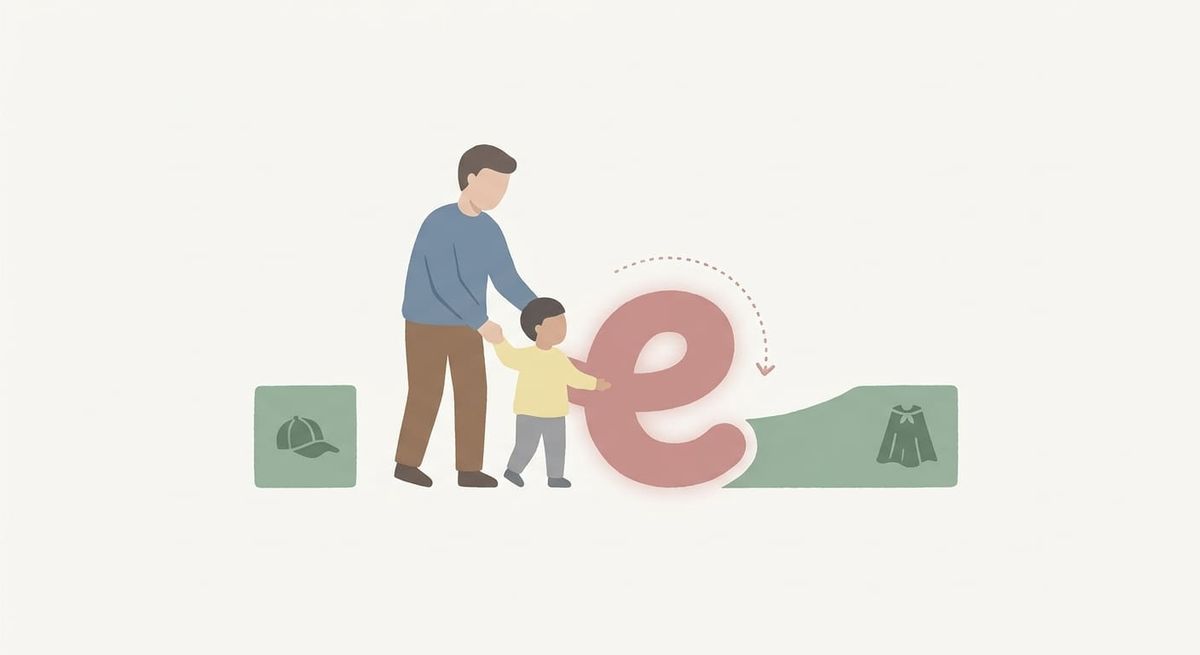
If your child can read short vowel words like cap, kit, and hop but gets confused by cape, kite, and hope, they may be ready for the next step. This is often the point where parents start wondering how to teach magic e in Orton-Gillingham without making reading practice feel harder than it needs to.
The good news is that this pattern can be taught in a very clear, manageable way. You do not need a long lesson or a big workbook. You just need a simple sequence, a few good word examples, and enough review for the pattern to stick.
What is the best way to teach magic e in Orton-Gillingham?
The best way is to teach it as a new syllable pattern with one clear job. The child learns that the final e is not there to make its own sound. It changes the vowel before it.
Start with one vowel at a time instead of mixing everything together. For example, begin with a_e words like:
- cap → cape
- mad → made
- tap → tape
- hat → hate
This helps your child notice what changed. Only one sound shifts, and the final e stays silent.
In an Orton-Gillingham style lesson, keep the teaching direct:
- Read a known short vowel word
- Add the final e
- Read the new word
- Say what changed
You can say something simple like, The e is silent, but it makes the vowel say its name.
That is often much easier for a child to hold onto than a longer explanation.
Teach one pattern before adding more
A common mistake is moving from short vowels to all silent e words at once. That can feel like too much, especially for a child with dyslexia.
Instead, teach in a small sequence:
1. Start with CVC to CVCe changes
Use pairs your child can compare easily:
- kit → kite
- hop → hope
- tub → tube
- fin → fine
2. Practice reading and spelling the same pattern
Do not only read the words. Have your child build or write them too. Reading helps with decoding. Spelling helps the pattern stick.
3. Stay with one vowel long enough for accuracy
If your child is still guessing on ae, do not jump to ie and o_e yet.
4. Add mixed review later
Once one or two magic e patterns feel solid, mix them with closed syllable words so your child has to really look at the whole word.
That contrast matters. It helps them stop guessing from the first letter.
What should a magic e lesson look like at home?
A short lesson is enough. For many children, 10 to 15 minutes works well.
Here is a simple home routine:
Review old patterns
Read 5 to 8 short vowel words your child already knows.
Teach the new pattern
Introduce 3 to 5 magic e words with the same vowel pattern.
Build words
Use letter tiles, index cards, or paper. Build cap, then change it to cape. Build pin, then change it to pine.
Read a short word list
Keep the list controlled. Do not add rule breakers too early.
Do one quick dictation
Say a word like cake and have your child tap sounds, say letters, and write it.
This kind of lesson is simple, but it gives your child multiple chances to see how the pattern works.
What if my child keeps forgetting the silent e?
This is very common. It usually does not mean the lesson failed. It usually means the child needs more repetition and a clearer contrast between patterns.
If your child reads kite as kit or spells hope as hop, slow down and go back to comparison practice.
Put the words side by side:
- kit / kite
- hop / hope
- cub / cube
- man / mane
Ask:
- Which word has the silent e?
- Which vowel is short?
- Which vowel is long?
The goal is not to catch mistakes. The goal is to help your child notice the pattern in print.
You can also underline the vowel and circle the final e for a while. That visual support can help when the pattern is still new.
A real-world example
Maya, a fourth grader, could read short vowel words without much trouble. But every time she saw a word like bike or note, she guessed. Sometimes she read bike as bit. Other times she skipped the whole word.
Her mom stopped trying to teach a long list of silent e words all at once. Instead, they worked on i_e words only for several days. They built pairs like kit/kite and fin/fine, read a short list, and wrote two words at the end of each lesson.
After a week, Maya was still not perfect, but she had started checking the end of the word before guessing. That was real progress. She was not just memorizing words. She was learning what to look for.
Simple tips for teaching magic e at home
Here are a few practical ways to make this easier:
- Use word pairs often. Comparing hop and hope is more powerful than reading hope by itself.
- Keep practice short. A calm 10-minute lesson usually works better than a long one.
- Mix reading and spelling. If your child only reads the pattern, it may not stick as well.
- Do not rush into exceptions. Let the main pattern feel solid first.
Keep the pattern clear before making it complicated
When parents look up how to teach magic e in Orton-Gillingham, they are often worried about doing it wrong. You do not need to make it fancy. What helps most is a clear pattern, a small number of words, and enough review for your child to feel successful.
Once your child starts reading magic e words more accurately, you can slowly expand into longer words and less predictable examples.
You might also find this helpful: How to Teach Magic E Exceptions in Orton-Gillingham
If you want extra support between lessons, ReadGenie gives children structured practice with phonics patterns, decodable reading, and built-in repetition designed for struggling readers. You can explore it here: App Store and Google Play.



