How to Teach Multisyllable Words in Orton-Gillingham
If your child can read short words but gets stuck on longer ones, multisyllable words may be the next big hurdle. This guide shows parents how to teach multisyllable words in Orton-Gillingham with clear, practical steps they can use at home.

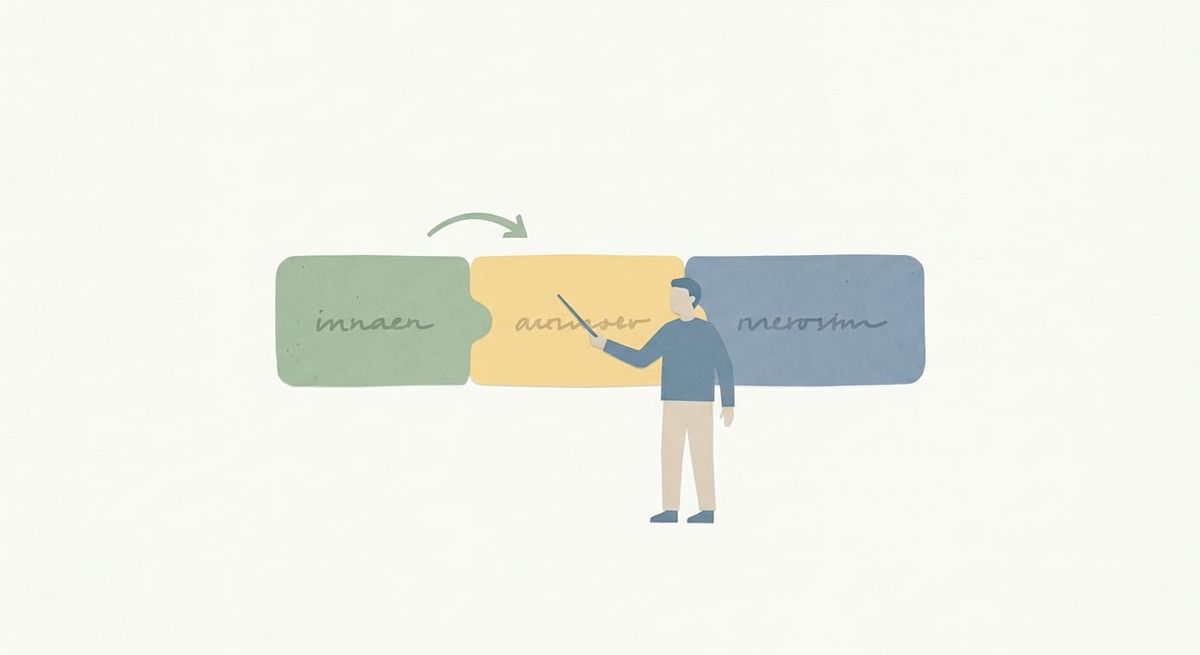
If your child can read cat, ship, or make but shuts down when a word gets longer, you are not imagining the jump. For many struggling readers, one-syllable words feel manageable, but multisyllable words can make everything fall apart.
The good news is that this skill can be taught step by step. If you want to teach multisyllable words in Orton-Gillingham, you do not need to start with huge word lists or long lessons. You need a simple way to help your child break longer words into parts they can actually read.
Why multisyllable words feel so hard
A longer word asks your child to do several things at once. They have to notice vowel patterns, find chunks, remember syllable types, blend smoothly, and keep the whole word in mind.
That is a lot for a child with dyslexia or weak decoding skills.
Often, the problem is not that the child has never seen the word before. The problem is that they do not yet know how to attack it. When children guess based on the first letter or skip the middle of the word, they usually need a more structured routine.
What should a child know first?
Before you teach multisyllable words in Orton-Gillingham, make sure your child has a workable base with:
- short vowels
- consonant digraphs and blends
- magic e
- common vowel teams
- basic syllable types, especially open and closed syllables
Your child does not need to be perfect. But if one-syllable decoding still breaks down often, longer words will feel frustrating fast.
A good sign of readiness is this: your child can read controlled one-syllable words with more decoding than guessing.
How do you teach multisyllable words step by step?
The goal is not to hand your child a long word and hope they figure it out. The goal is to show them a repeatable process.
Here is a simple sequence parents can use at home.
1. Start with two-syllable words only
Do not jump straight to long academic words. Start with controlled two-syllable words such as sunset, robot, napkin, or hotel.
Pick words that match patterns your child already knows. If they know closed syllables, start there. If they know open syllables and magic e, include those next.
2. Mark the vowels
Have your child find the vowels first. In a word like napkin, they would spot a and i.
This matters because every syllable has a vowel sound. Finding the vowels helps your child see that the word likely has two parts.
3. Divide the word into chunks
At first, you can do this with your child instead of expecting independence right away.
For example:
- nap/kin
- sun/set
- ro/bot
- mu/sic
Use simple syllable division patterns early on. Keep the focus on words your child can actually decode after the split.
4. Read each syllable, then blend the whole word
After dividing the word, have your child read one chunk at a time.
For napkin, they read nap then kin. Then they blend: napkin.
If they get stuck, guide them back to the syllable, not the whole word. That keeps the task small and manageable.
5. Revisit the word in connected reading
Once your child can read a word in isolation, try it again in a phrase or sentence. This helps the skill carry over into real reading.
For example: The napkin is on the table.
That last step matters. Some children can decode a practice word on a card but still miss it in a sentence.
What if my child still guesses?
Guessing is common when a child feels overwhelmed. It usually means the word is too hard, the routine is not automatic yet, or the child is rushing.
If your child guesses, pause and bring them back to the process:
- Find the vowels
- Split the word
- Read each part
- Blend it together
Keep your correction calm and brief. You do not need a long explanation every time.
You can say something like, “Let’s chunk it,” or “Read this part first.”
That simple prompt is often more useful than telling the child the word right away.
A real-world example
Let’s say Maya can read short words like shop, crash, and home, but freezes on sunset and picnic. Her parent used to jump in and say the whole word after a few seconds because reading time felt so tense.
Instead, they started using a short multisyllable routine. First, Maya found the vowels. Then she drew a line between the syllables. Then she read each part and blended the word.
At first, she needed help on every word. After a week of short practice, she started saying, “I see two parts,” before anyone prompted her. That is the kind of progress to look for. The goal is not instant fluency. The goal is a better strategy.
Simple ways to practice at home
If you want to teach multisyllable words in Orton-Gillingham without making home practice feel heavy, keep it simple.
Use a short word list
Choose 4 to 6 two-syllable words that follow patterns your child already knows. Do not mix too many new things at once.
Write slash marks between syllables
This makes the structure visible. Many children benefit from literally seeing the chunks: pic/nic, ro/bot, sun/set.
Practice for just a few minutes
Five to ten focused minutes is often enough. Stop before your child is exhausted.
Reuse the same words across a few days
Repetition helps the process become more automatic. New words every day can be too much.
When should you move to harder words?
Once your child can handle simple two-syllable words with support, you can slowly add more variety. That might include:
- mixed syllable types
- longer vowel team words
- three-syllable words
- words from school reading
Move forward when your child is using the process more independently, not just when they get a word right once.
If they still need heavy prompting, stay with easier words a little longer.
A helpful next step
You might also find this helpful: How to Teach Open and Closed Syllables in Orton-Gillingham
That post can help if your child still needs a stronger foundation before longer words start to click.
Conclusion
When longer words trip your child up, it does not always mean reading is getting worse. Often, it means your child is ready for a more explicit strategy.
If you teach multisyllable words in Orton-Gillingham by showing how to find vowels, split syllables, and blend in steps, reading can start to feel less like guessing and more like solving.
If you want extra structured practice, ReadGenie gives children decodable reading support built on Orton-Gillingham principles, systematic phonics, and repetition. You can explore it here: App Store or Google Play.



