How to Know When to Move to the Next Orton-Gillingham Lesson
If your child is doing Orton-Gillingham practice at home, one of the hardest parts is knowing when to keep reviewing and when it is safe to move on. This guide shows what to look for so you can make that call with more confidence.

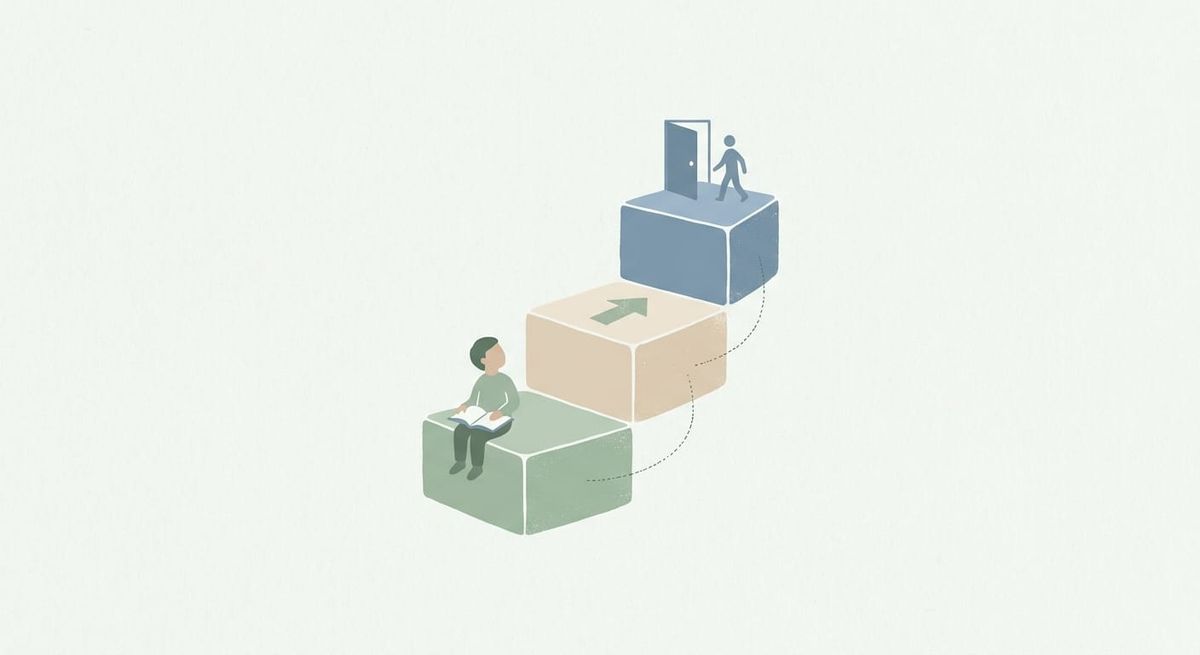
If you are helping your child with Orton-Gillingham style practice at home, there is a good chance you have asked yourself the same question more than once: Are we ready to move on, or do we need more review?
That can be hard to judge. If you move too fast, your child may start guessing or falling apart on new material. If you stay too long, practice can feel stale and frustrating.
The good news is that you do not need a perfect formula. You just need a few clear signs that your child is showing enough control, not just on one good day, but across several practice sessions.
What does “ready to move on” actually mean?
In Orton-Gillingham, moving on does not mean your child has mastered a skill forever. It means they can use the pattern with enough accuracy and support that adding one small new step is reasonable.
A child is often ready to move on when they can:
- read the target pattern correctly most of the time
- spell or build words with that pattern with limited help
- explain the pattern in simple words
- use the skill across more than one activity, not just one drill
For example, if you have been working on closed syllables, your child does not need to be flawless. But if they can read words like napkin, sunset, and rabbit with steady accuracy, that is different from only getting cat and dog right in a word list.
Should you move on if your child still makes mistakes?
Usually, yes. Some mistakes are normal.
The bigger question is what kind of mistakes your child is making.
If your child makes an occasional error, corrects it, and keeps going, that often means the skill is still developing in a healthy way. But if your child is:
- guessing often
- forgetting the same pattern every session
- needing heavy prompting on nearly every word
- melting down as soon as the task gets a little harder
then it is probably too soon to move ahead.
A good rule of thumb is this: if review helps your child recover quickly, you may be close to ready. If review still feels shaky every time, stay with the current lesson a bit longer.
Look for consistency, not one strong day
One solid practice session can feel exciting, especially after a rough week. But in most cases, it is better to wait for consistency before adding something new.
Try looking for the same signs across two to four sessions:
- your child reads the target words with less hesitation
- they need fewer reminders
- they are less likely to confuse the pattern with older ones
- they can handle short decodable text that includes the skill
This matters because some children can perform well when the task is very fresh, very short, or heavily supported. What you really want to know is whether the learning is starting to stick.
What if practice is getting easy?
If practice feels easy, that does not always mean it is time to jump ahead fast. It may simply mean your child is finally gaining confidence.
Still, there is a difference between healthy comfort and complete autopilot.
You may be ready for the next Orton-Gillingham lesson if your child:
- finishes familiar work quickly without strain
- reads words accurately without sounding out every single one from scratch
- transfers the pattern into sentences or short passages
- seems slightly bored because the work no longer feels challenging
In that case, the best next step is usually a small move forward, not a big leap. Add one new pattern, one new word type, or one new level of text difficulty. Keep older material in review so your child does not lose it.
A real-world example
Let’s say Maya has been practicing vowel-consonant-e words like cake, hope, and shine. During the first few sessions, she mixes them up with short vowel words and needs lots of reminders.
After a week, she can read the words in isolation pretty well. Her parent wonders if it is time to move on.
But when Maya reads a short decodable passage, she still stumbles on words like made and home and goes back to guessing. That tells her parent something important: the skill is improving, but it is not steady enough yet.
So instead of introducing a brand-new pattern, her parent spends a few more sessions on mixed practice. They review the vowel-consonant-e pattern in word reading, word building, and short connected text. A few days later, Maya reads the same kind of passage with much less help.
That is a stronger sign she is ready for the next step.
Simple ways to decide during home practice
If you are not sure whether to review or move on, try these:
1. Use the “less help” test
Ask yourself: Does my child need less support than they did a few days ago? If the answer is yes across several tasks, that is meaningful progress.
2. Check the skill in more than one format
Do not rely on flashcards alone. See whether your child can use the pattern in reading, spelling, and a short decodable passage.
3. Move one step, then watch closely
If you think your child may be ready, introduce just one small new step. If they stay steady, keep going. If everything suddenly falls apart, pull back and review.
4. Keep old skills in the rotation
Moving on should not mean dropping old material. Quick review helps new learning stay connected to what your child already knows.
You do not need to get the timing perfect
Parents sometimes worry that one wrong decision will set their child back. It usually does not work that way.
If you move on a little early, you can slow down and review. If you stay a little long, you can adjust once your child is clearly ready. What matters more is paying attention to effort, accuracy, and consistency instead of chasing perfection.
You might also find this helpful: How to Track Orton-Gillingham Progress at Home
When you are deciding when to move to the next Orton-Gillingham lesson, think in small steps. Look for a skill that is becoming more steady, less effortful, and more usable in real reading. That is usually your sign that it is safe to move forward.
If you want extra support at home, ReadGenie gives children structured practice with phonics patterns, decodable reading, and repetition designed for struggling readers and kids with dyslexia. You can explore it here: App Store or Google Play.



