Boxcar Children Reading Level: Lexile 580L, AR 3.9, Guided Reading O
The Boxcar Children by Gertrude Chandler Warner is Lexile 580L, AR level 3.9 with 2 AR points and Guided Reading O. Most kids read it alone in 3rd grade, and its short sentences and simple words make it a strong longer chapter book for struggling readers in grades 3 to 5.

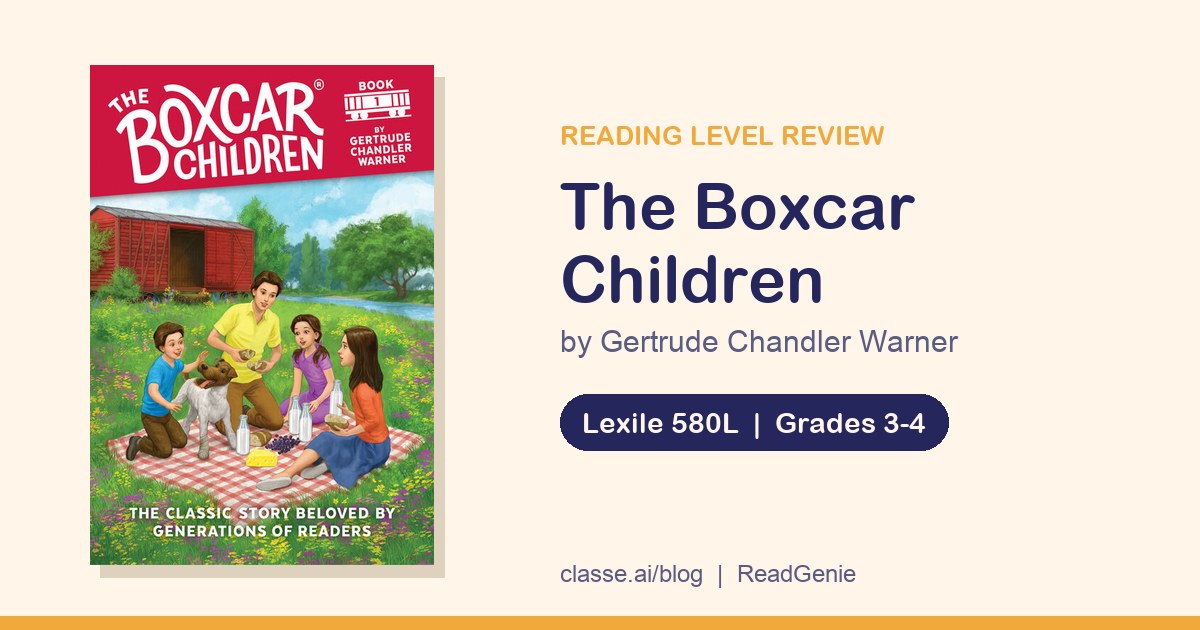
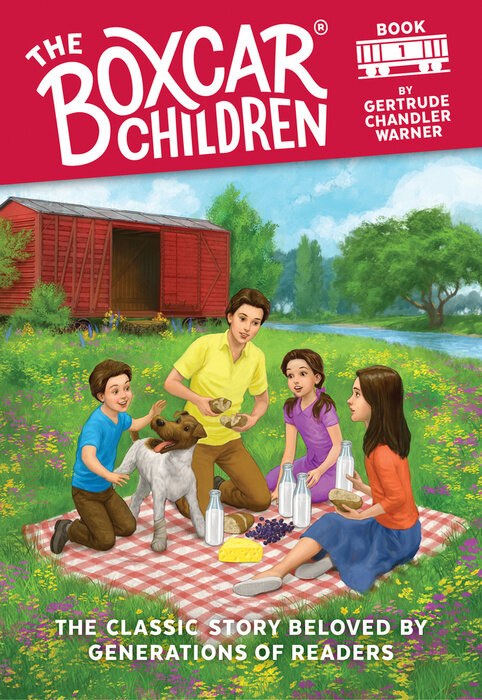
The Boxcar Children, the first book in Gertrude Chandler Warner's series, has a Lexile measure of 580L, an AR (ATOS) book level of 3.9 worth 2 AR points and a Guided Reading level of O. Most kids can read it on their own in 3rd grade, and it stays a comfortable read through 4th. For a child in grades 3 to 5 who is behind, it is one of the easiest longer chapter books on the shelf, because almost every word is one or two syllables and the sentences stay short from start to finish.
Four orphaned siblings, Henry, Jessie, Violet and Benny, run away one night instead of going to live with a grandfather they have been told is cruel. In the woods they find an old railroad boxcar and turn it into a home. They pull dishes out of the town dump, build a swimming pool, adopt a dog named Watch, and Henry earns money doing odd jobs in town. Kids love the idea of four children making a real home with no grown-ups in charge. Warner first published the story in 1924 and rewrote it in a shorter, simpler form in 1942, and that 1942 text is the one in stores and classrooms today. The series now runs to more than 200 books.
The Boxcar Children reading level at a glance
| Lexile measure | 580L (Penguin Random House) Also listed as 590L and 590L (ABDO 2021 library binding) |
|---|---|
| ATOS / AR book level | 3.9 (TeachingBooks) |
| AR points | 2.0 (TeachingBooks) |
| Guided Reading (Fountas & Pinnell) | O (Albert Whitman & Company, Boxcar Children reading levels chart) |
| Flesch Reading Ease (0-100) | 95.5 ReadGenie estimate |
| Flesch-Kincaid grade | 2.0 ReadGenie estimate |
| Interest level | Grades 2-5 (ages 7-10) (Penguin Random House) Also listed as Grades 2-6 and Grades 2-6 and Grades 1-6 |
| Approximate grade band | Grades 3-4 (ages 8-10) ReadGenie |
| Length | 176 pages, ~17,087 words |
| Format | Chapter book |
| Good for struggling readers? | ★★★★★ 4/5 |
| Dyslexia-friendly rating | ★★★★★ 4/5 |
We couldn't find a published DRA level or grade level equivalent for this book.
Is The Boxcar Children a struggle for your child right now? ReadGenie gives struggling readers short daily Orton-Gillingham practice at home, out loud, with help on the exact sound they missed.
Try ReadGenie and get this book freeScores checked 2026-11-26. Different leveling systems don't always agree, so we show each published value with its source and mark our own estimates. Links to every source are under How we rate books.
What grade level is The Boxcar Children?
The Boxcar Children reads at about a 3rd to 4th grade level. A typical child can read it independently during 3rd grade, and it should feel easy by 4th. Second graders often love it as a read-aloud.
The three official measures agree more closely than they do for most books. An ATOS level of 3.9 means the text is about as hard as what an average student reads near the end of 3rd grade. Guided Reading level O is usually taught in the middle of 3rd grade, and the series' longtime publisher, Albert Whitman, put it at grades 3 to 4 in its own leveling chart. A Lexile of 580L sits in the middle of the typical 3rd grade range. A couple of catalogs list 590L instead, which makes no practical difference.
Our own readability check on the first two chapters came out much easier than any of the official levels. Sentences average a little over eight words, and only 1 percent of the words have three or more syllables. The formula placed the text near a 2nd grade level. So why do the official levels run higher? Length is a big part of it. The book is about 17,000 words across 13 chapters, roughly twice as long as many early chapter books, and kids have to keep four siblings, a dog and a handful of townspeople straight across all of it.
If your child likes book 1, the next ones won't be a jump. Albert Whitman's chart puts all 19 books Warner wrote at Guided Reading level O.
Is The Boxcar Children good for struggling readers?
Yes. We rate The Boxcar Children 4 out of 5 for struggling readers. The words are easy, the sentences are short, and the story feels like it belongs to older kids, since the oldest brother is 14 and does real work. The hurdles are length, old-fashioned wording in places, and pages that are mostly text.
What makes it work is how small the vocabulary is. In the first two chapters, about 2,200 words of text use only around 410 different words. The same words come back again and again, so a child who works hard on a word in chapter 1 sees it many more times before the book ends. That repetition is exactly what a struggling reader needs to build speed.
The story does the rest. Running away at night, hiding from a grandfather, sleeping in a haystack during a storm, then turning a boxcar into a house with things nobody else wanted. Kids want to know if the children will be found, and that question carries them through.
A few things to watch for.
- The 1942 wording sounds old in places, with words like supper, laundry and workbag
- One chapter title uses queer in its old meaning of strange, which is worth a quick explanation
- The middle chapters are quiet, with a lot of cooking, cleaning and building
- At 176 pages it can look long to a child used to shorter books, so reading chapter 1 together helps
This book is a great match for a 3rd, 4th or 5th grader reading a year or two behind. It doesn't look like a little-kid book, and finishing it feels like a real accomplishment. A child who still needs pictures on most pages may do better starting with the graphic novel version, which the same chart lists at Guided Reading N.
Is The Boxcar Children good for kids with dyslexia?
Overall: ★★★★★ 4/5
| Factor | Score | Why |
|---|---|---|
| Sentence length | 4/5 | Sentences in chapters 1 and 2 average 8.3 words, and about half are under eight. A few run past 20 words. |
| Vocabulary load | 5/5 | About 410 different words in the first 2,200, and only 1 percent have three or more syllables, such as bakery, delicious and grandfather. |
| Decodability | 4/5 | Most words follow common patterns. Irregular words like bread, knife, clothes, people and loaves need a quick preview. |
| Text density and layout | 3/5 | A small 5 by 7.5 inch paperback with plain type and lots of short dialogue lines. We could not see the print layout, so this is scored as a typical chapter book. |
| Pictures that carry meaning | 2/5 | The publisher lists black-and-white illustrations by L. Kate Deal, but the words carry the story and the chapter 1 and 2 sample has none. We couldn't see how often they appear in print. |
| Chapter length | 3/5 | About 1,300 words a chapter, roughly 10 to 15 minutes for a reader at level O. |
| Engagement for reluctant readers | 4/5 | Running away at night, hiding, a thunderstorm and setting up a secret home pull kids in fast, though the middle slows down. |
| Audiobook / read-along support | 4/5 | Oasis Audio publishes an unabridged audiobook read by Aimee Lilly (2013), available through library apps. |
We rate it 4 out of 5 for dyslexic readers. Easy vocabulary, short sentences and an unabridged audiobook all help. Long chapters and thin picture support keep it from a higher score.
Vocabulary is where this book stands out. Nearly every word is short and common, words like bread, home, cart, woods and night. The handful of longer words in the opening chapters, such as bakery, delicious and grandfather, are words kids already know by ear. A dyslexic reader spends very little energy on unfamiliar words, which leaves more for decoding.
Sentences are short too, about eight words on average. About half of them have fewer than eight words, and a lot of the text is the children talking to each other in quick lines. Only a few sentences run long.
The chapters are the hard part. Each one is about 1,300 words, so a reader at level O needs 10 to 15 minutes per chapter. For a child who tires quickly, split each chapter in half and stop at a natural break.
Picture support is thin. The publisher lists black-and-white illustrations by L. Kate Deal, but the words carry the story, and kids have to build most scenes in their heads.
Oasis Audio publishes an unabridged audiobook read by Aimee Lilly, and many libraries carry it through their reading apps. Hearing a chapter first and then reading it works very well with this book, since the vocabulary repeats so much.
Words and phonics patterns to practice first
The Boxcar Children is a good fit for a child who knows short vowels, silent e and the common vowel teams and is ready to work on compound words and endings.
Closed syllables with short vowels show up on every page, in bed, big, nest, hill, pump and shut. These are quick wins for a tired reader.
Silent e appears in cake, home, five, pine, smile and woke. Pair each with a closed syllable word so your child hears the vowel change.
Vowel teams come up in sleep, street, rain, road, soap and moon. Road and soap make a good pair for the oa sound.
R-controlled vowels appear in dark, cart, morning, horse, first and store.
Compound words are one of the best things to practice before this book. Farmhouse, haystack, workbag, nearby, tonight and someone all show up early, and each one breaks into two short words a child can already read.
The -ed ending makes three different sounds in this book, as in jumped and pumped, smiled and opened, wanted and waited. Sorting them by sound before reading saves a lot of stumbles.
Pre-teach these words before reading: Jessie, Violet, Greenfield, laundry, delicious, bakery, bread, knife, loaves, clothes, toward and people. If your child stalls on vowel teams or endings like -ed, a few minutes a day of Orton-Gillingham practice on those exact patterns with ReadGenie can turn this into a book they read on their own.
How to read The Boxcar Children with your child
Before you start, name the four children from oldest to youngest, Henry, Jessie, Violet and Benny. Mention that a dog named Watch joins them later. Knowing the cast keeps your child from stopping on names in the middle of sentences.
Read chapter 1 aloud together, or take turns by page. It is the hungriest and most worried part of the book, and once your child knows the children's plan, the rest reads more easily.
One chapter a night finishes the book in about two weeks. Chapter 3, when the children find the boxcar, is a natural place to stop and talk about what they would do in that spot.
Keep a running list of everything the children find or make, from dishes out of the dump to the swimming pool they build. Kids enjoy watching the list grow, and it gives them a reason to read closely.
When an old-fashioned word comes up, like supper or laundry, just explain it and keep going. The point is to keep the story moving.
Using The Boxcar Children in the classroom or tutoring
For teachers, the book works well as a level O guided reading text, and the 13 chapters split into five or six sessions. The publisher's educator guide frames the series around problem solving, kindness and found family, which makes for easy discussion prompts. Have students draw a map of the boxcar and everything around it, adding the woods, the dump and the town as they appear. The 1942 wording also opens a quick lesson on how word meanings change over time, starting with the word queer in the chapter titles.
For tutors, the first two chapters are full of compound words. Pull farmhouse, haystack, workbag and tonight and have the student split each into two words before reading. Sort jumped, smiled and wanted into the three sounds of -ed. Treat bread, knife, clothes and people as heart words, since they don't follow regular patterns. End each session by having the student reread a page of dialogue, and time a second read at the next session. The short lines make timed rereads easy to track.
Content notes for parents
This is a gentle book. The four children are orphans whose parents have died, and they choose to run away and live on their own, which some young kids find a little sad at first. Near the end Violet gets sick and a doctor steps in, which leads to a happy ending with their grandfather. Common Sense Media rates the series for ages 7 and up and lists no violence or bad language. The 1942 text uses a few old-fashioned words, including queer in its old meaning of strange.
Should your child read it?
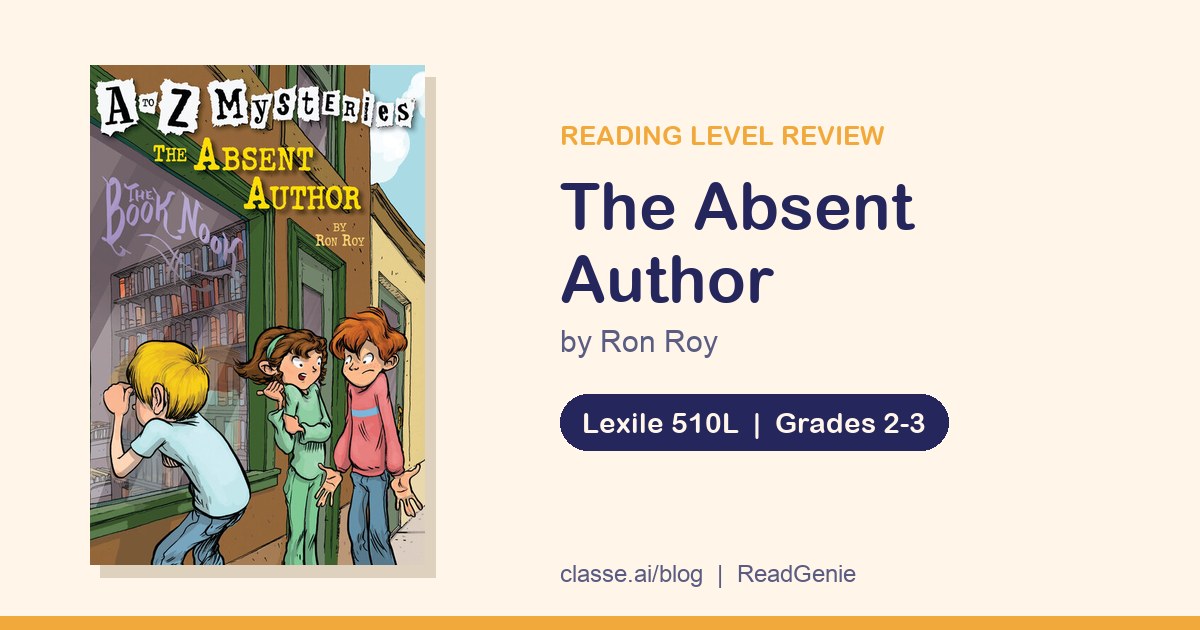
If your child is in 3rd grade and reading near grade level, The Boxcar Children is a great longer chapter book to try. A struggling 4th or 5th grader can read it as a real classic that their parents and grandparents probably read too. If it feels like too much right now, start with The Absent Author or the Boxcar Children graphic novel. When it feels easy, Encyclopedia Brown and My Side of the Mountain are good next steps.
Make the next book easier
Short daily sessions of reading, spelling and handwriting practice, built with Orton-Gillingham teachers. It works alongside tutoring and school support. The first 7 days are free. Join today and we'll mail your child The Boxcar Children for free.
Try ReadGenie and get your free bookStarts with a free 7-day trial. Book mailed after your first paid month. US only, one per family.
FAQ
What reading level is The Boxcar Children?
The Boxcar Children has a Lexile measure of 580L, an AR book level of 3.9 and a Guided Reading level of O. Together those point to about a 3rd to 4th grade reading level, and most kids read it alone during 3rd grade.
How many AR points is The Boxcar Children?
The Boxcar Children is worth 2 AR points, with an AR book level of 3.9. At about 17,000 words, most 3rd and 4th graders finish it in one to two weeks.
What is the Boxcar Children Guided Reading level?
The Boxcar Children is Fountas and Pinnell level O, and the series' longtime publisher listed all 19 books Gertrude Chandler Warner wrote at level O. Level O is usually taught in the middle of 3rd grade. The early-reader Benny and Watch books are much easier, at levels J and K.
What age is The Boxcar Children good for?
The publisher recommends it for ages 7 to 10, grades 2 to 5, and Common Sense Media rates the series 7 and up. Most kids read it on their own around age 8 or 9, and younger children enjoy it as a read-aloud.
Is The Boxcar Children Lexile the same for every edition?
Close to it. The current paperback is listed at 580L, and a couple of catalogs list 590L for other printings, which is the same grade range. The graphic novel version is a different, easier book with pictures on every page.
Get The Boxcar Children free
ReadGenie helps struggling readers improve their reading, spelling and handwriting in short daily sessions at home. Join and we'll mail your child this book for free.
Claim your free bookStarts with a free 7-day trial. Book mailed after your first paid month. US only, one per family.
What to read next
- The Absent Author by Ron Roy (easier). A to Z Mysteries #1 has a lower Lexile, shorter chapters and three friends solving a case, a good step before Boxcar.
- The Boxcar Children: A Graphic Novel by Gertrude Chandler Warner (easier). The same story with pictures on every page, a way in for kids not ready for 13 chapters of text.
- Surprise Island by Gertrude Chandler Warner (similar). Book 2 picks up right after book 1, at the same Guided Reading level.
- Encyclopedia Brown, Boy Detective by Donald J. Sobol (similar). Short cases kids solve themselves, for Boxcar fans who want more mystery.
- My Side of the Mountain by Jean Craighead George (harder). Another kid living on his own in the woods, with longer chapters and richer words.
Browse all of our reading-level book reviews.
How we rate books
Lexile, ATOS (Accelerated Reader), Guided Reading and DRA levels come from the companies that own them and from publishers. We link to where we found each one, and when a level isn't published we say so. Anything marked "ReadGenie estimate" is our own call, not an official level. Flesch scores come from a short public excerpt when the publisher offers one. The struggling-reader and dyslexia-friendly ratings are our judgment, based on eight things (sentence length, vocabulary, decodability, page layout, pictures, chapter length, how gripping the story is, and audiobook support). Treat them as a starting point. The right book is one your child can read with about 95% accuracy and wants to keep reading.
Sources
- Penguin Random House: The Boxcar Children (Lexile, pages, ages and grades, ISBN, illustrator, current publisher)
- Albert Whitman & Company: Boxcar Children reading levels chart, September 2011 (Internet Archive copy) (Guided Reading level, ATOS and AR points check, series levels, graphic novel levels)
- TeachingBooks: The Boxcar Children (ATOS, AR points, word count, Lexile check)
- Booksource: The Boxcar Children (Guided Reading check, Lexile check, AR level and points check, interest level, Spanish edition)
- ABDO: The Boxcar Children (library binding) (Guided Reading check, Lexile check, ATOS check, word count check)
- Penguin Random House: Boxcar Children educator guide (PDF) (grades, series themes, classroom use)
- OverDrive ebook sample: The Boxcar Children (excerpt, chapter count and titles)
- OverDrive: The Boxcar Children audiobook (Oasis Audio) (audiobook narrator and publisher)
- Common Sense Media: The Boxcar Children series (content notes, age rating)
- Plugged In: The Boxcar Children (plot summary, content notes)
- Wikipedia: The Boxcar Children (publication history, 2014 film)