The One and Only Ivan Reading Level: 570L, AR 3.6, Guided Reading S
The One and Only Ivan by Katherine Applegate is Lexile 570L, AR level 3.6 with 4 AR points, Guided Reading S and DRA 40. Its 153 chapters average under 200 words, which makes it one of the easiest Newbery Medal books for a struggling reader to finish.

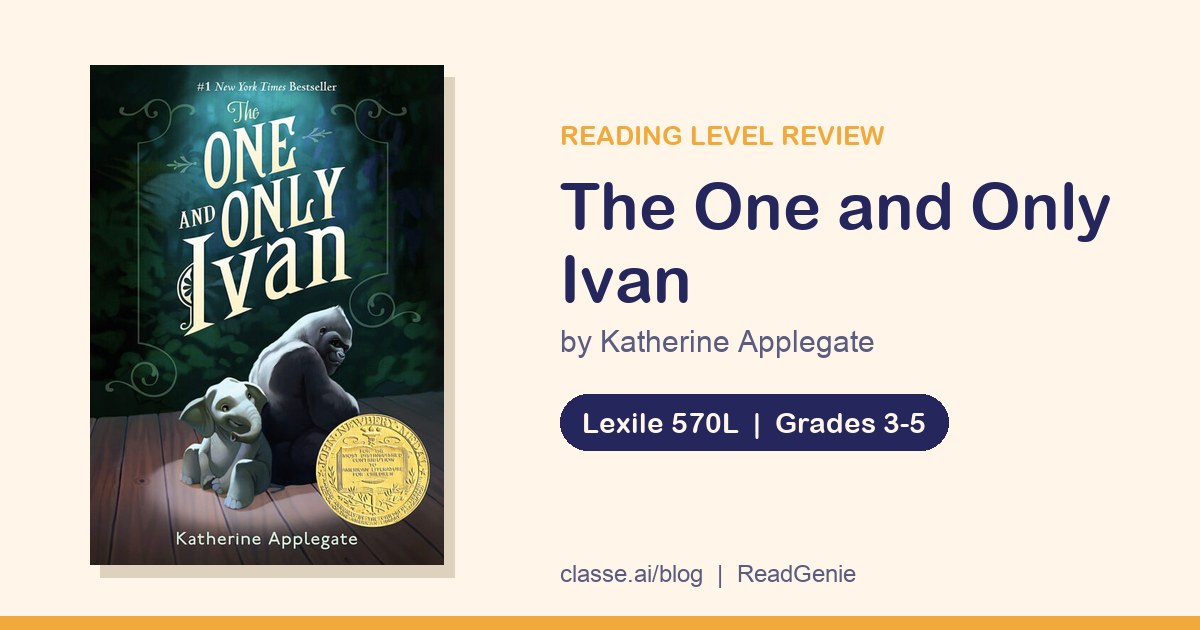
The One and Only Ivan by Katherine Applegate has a Lexile measure of 570L, an AR (ATOS) book level of 3.6 worth 4 AR points, Guided Reading level S and DRA 40, so most children can read it on their own somewhere in grades 3 to 5. The book is split into 153 tiny chapters that average under 200 words, with short paragraphs and lots of white space. Add a Newbery Medal and a story older kids take seriously, and it becomes one of the best novels we know for a struggling reader in 4th to 6th grade.
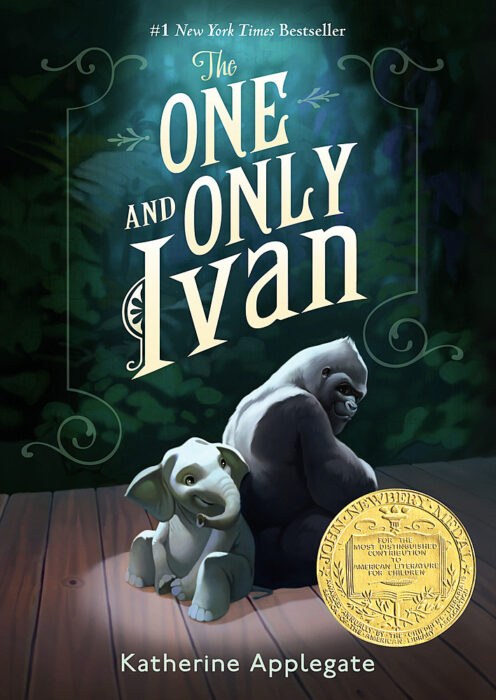
Ivan is a silverback gorilla who has spent twenty-seven years behind glass at the Exit 8 Big Top Mall and Video Arcade. He watches TV, trades jokes with Stella, an elephant, and Bob, a stray dog, and makes paintings that the mall sells to shoppers. Then a baby elephant named Ruby arrives, taken from the wild, and Ivan starts to see his home differently. He decides he has to find her a better life. Ivan tells the story himself in a dry, plain-spoken voice, and kids are often surprised to learn that a real gorilla named Ivan lived in a shopping mall for decades before he was moved to Zoo Atlanta.
The One and Only Ivan reading level at a glance
| Lexile measure | 570L (TeachingBooks) Also listed as 680L |
|---|---|
| ATOS / AR book level | 3.6 (TeachingBooks) |
| AR points | 4 (TeachingBooks) |
| Guided Reading (Fountas & Pinnell) | S (Scholastic) Also listed as T |
| DRA level | 40 (Scholastic) |
| Flesch Reading Ease (0-100) | 87.3 ReadGenie estimate |
| Flesch-Kincaid grade | 3.9 ReadGenie estimate |
| Interest level | Grades 3-7 (Booksource) Also listed as Grades 3-8 |
| Approximate grade band | Grades 3-5 (ages 8-11) ReadGenie |
| Length | 336 pages, ~26,263 words |
| Format | Middle grade novel |
| Good for struggling readers? | ★★★★★ 5/5 |
| Dyslexia-friendly rating | ★★★★★ 4/5 |
We couldn't find a published grade level equivalent for this book.
Is The One and Only Ivan a struggle for your child right now? ReadGenie gives struggling readers short daily Orton-Gillingham practice at home, out loud, with help on the exact sound they missed.
Try ReadGenie and get this book freeScores checked 2026-11-25. Different leveling systems don't always agree, so we show each published value with its source and mark our own estimates. Links to every source are under How we rate books.
What grade level is The One and Only Ivan?
The words themselves sit at about a 3rd grade level. The book as a whole is usually taught in 3rd, 4th or 5th grade, and catalogs list its interest level as grades 3 to 7.
An AR level of 3.6 means the text is about as hard as what a typical student reads in the middle of 3rd grade. The Lexile of 570L lands in the same place. Guided Reading S and DRA 40 come out higher, closer to 4th grade on most school charts. That gap makes sense for this book. Lexile and ATOS mostly measure sentence length and word difficulty, and Ivan's sentences and words are simple. Guided Reading levels also weigh the length of the book and how much a reader has to understand, and this one is about 26,000 words long and deals with captivity, grief and loyalty.
You may see a couple of other numbers. Scholastic's school catalog lists 680L for the paperback it sells, while the HarperCollins edition is listed at 570L by TeachingBooks, Booksource and Reading Is Fundamental. One classroom supplier lists Guided Reading T instead of S. Neither difference changes the picture much. This is a 3rd grade read at the sentence level that asks for 4th grade stamina.
Our own readability check on the first seven chapters came out at about a 4th grade level, with sentences averaging around 11 words. That lines up with the official levels.
Is The One and Only Ivan good for struggling readers?
Yes. We rate it 5 out of 5 for struggling readers. For a 4th, 5th or 6th grader reading a year or two behind, it is close to ideal.
The chapters are the reason. Most fill less than a page, and some are only a few lines long. A child who reads slowly can finish five or six in ten minutes and feel real progress, which is exactly what a kid who dreads chapter books needs. Paragraphs are short too, averaging around 20 words in the opening chapters, so the page never looks like a wall of text.
The vocabulary is friendly. Only about 4 percent of the words in those first chapters have three or more syllables. And the book does not look young. It won the Newbery Medal, classmates read it in school, and an 11-year-old can carry it without feeling embarrassed.
A few things can slow a reader down.
- It is about 26,000 words in all, so finishing still takes a couple of weeks
- The pictures don't carry the story, the words do
- Some sentences run long, with lists and asides tucked between the short ones
- The sad parts hit hard, including Ivan's memories of his family
A child reading at a solid 2nd grade level on their own will find it a stretch for independent reading, but it works well as a read-together book at that stage. If your child needs something much shorter first, Applegate's picture book about the real gorilla, Ivan: The Remarkable True Story of the Shopping Mall Gorilla, tells the same true story in a few pages.
Is The One and Only Ivan good for kids with dyslexia?
Overall: ★★★★★ 4/5
| Factor | Score | Why |
|---|---|---|
| Sentence length | 3/5 | About 11 words per sentence in the first seven chapters. About a third of sentences are under 8 words, but some run past 20 with lists and asides. |
| Vocabulary load | 4/5 | Mostly everyday words, about 4 percent with three or more syllables. A handful of harder ones (conveniently, accomplished, frantically, habitat) and a short glossary of gorilla words at the front. |
| Decodability | 4/5 | Most words follow common patterns. The hardest words are animal and place words like gorilla, silverback, carousel and arcade, plus a few irregular ones like people and recognize. |
| Text density and layout | 4/5 | Paragraphs average about 20 words with space between them, and many chapters fill less than a page. Judged from the ebook, the printed font was not seen. |
| Pictures that carry meaning | 2/5 | Patricia Castelao illustrated the book, but the words carry the story. How often pictures appear in print was not checked, so this is a cautious score. |
| Chapter length | 5/5 | 153 chapters averaging about 170 words, one to two minutes each even for a slow reader. |
| Engagement for reluctant readers | 4/5 | Ivan's dry humor and the plan to save Ruby pull readers along, though the first chapters are quiet scene-setting. |
| Audiobook / read-along support | 5/5 | Unabridged HarperCollins audiobook read by Adam Grupper, widely available through libraries on OverDrive. |
We rate The One and Only Ivan 4 out of 5 for dyslexic readers. The short chapters, the white space and a strong audiobook all help. The lack of picture support and some longer sentences keep it from a 5.
Chapter length is the standout. With 153 chapters averaging about 170 words, a dyslexic reader gets a natural break every minute or two. That makes it easy to stop at a good spot when attention runs out, and easy to start again the next day.
Sentence length is mixed. About a third of the sentences in the first chapters are under eight words, which are easy to track. Others run past twenty words when Ivan lists what he sees or adds a thought in the middle. Reading those aloud together the first time helps, since they sound natural even when they look long.
Decoding is mostly smooth. The trickiest words are the animal and place words a child meets right away, like gorilla, silverback, arcade and carousel. The book opens with a short glossary of gorilla words, which is a gift for a reader who likes to know what's coming.
On the page, paragraphs are short with space between them, and many chapters end halfway down. Patricia Castelao's illustrations appear in the book, but they aren't there to carry the meaning.
The audiobook is a strong support. HarperCollins publishes an unabridged recording read by Adam Grupper, and most libraries carry it through OverDrive and Libby. Listening while following the print lets a dyslexic child keep up with a class reading schedule without spending every bit of energy on decoding.
Words and phonics patterns to practice first
The opening chapters use a lot of patterns that a child working through structured phonics will know, which makes them good practice text.
Silent e words show up all the time, starting with Ivan describing himself as an ape. Same, time, made, size and home are all in the first chapters. Vowel teams appear in speech, speak, peels, leave, way and days. R-controlled vowels come in part, for, more, world, arcade and silverback.
The -ed ending is everywhere, and it makes three sounds. Learned and called end in a d sound, wished and tossed end in a t sound, and painted adds a whole syllable. Cracked is a nice one for the ck spelling. Sort a few into three piles before you read. The -ing ending is common too (walking, missing, parking, drawing, pushing, rolling).
Consonant-le words are worth a quick look, because jungle, knuckle, middle, little and simple all appear early. People is the odd one out, a word to learn by heart.
Pre-teach these as whole words before the first session: Ivan, Stella, Ruby, Julia, Mack, gorilla, silverback, arcade, carousel, habitat, recognize, conveniently, people and elephant. If silent e or vowel teams are still shaky, short daily Orton-Gillingham practice on exactly those patterns, the kind ReadGenie gives at home, makes the early chapters go much more smoothly.
How to read The One and Only Ivan with your child
Read the first few chapters aloud together. They take only a few minutes, and hearing Ivan's voice helps your child settle into his way of talking, which is calm, funny and a little sad.
Look at the glossary of gorilla words at the front before you start. Talking about what a silverback is and what a chest beat means gets the hardest words out of the way.
Set a goal of ten chapters a night. Because the chapters are so short, that is only about ten minutes of reading, and it finishes the book in roughly two weeks. Some kids will ask to keep going, and that's fine.
On harder days, let your child follow along with the audiobook. Switching between reading and listening keeps the story moving.
When you finish, look up the real Ivan together. His move to Zoo Atlanta makes a good talk about what's true and what Applegate imagined. Save the 2020 Disney+ movie for after the book.
Using The One and Only Ivan in the classroom or tutoring
For teachers, this is a common 3rd to 5th grade class novel, and the tiny chapters make it easy to assign by page count instead of by chapter. Chapter titles are a ready-made main idea lesson. Have students read a chapter with the title covered, write their own one-word title, then compare it with Applegate's. Pairing the novel with her picture book about the real Ivan gives you a clean lesson on fiction inspired by true events.
For tutors, preview Ivan, Stella, Ruby, Julia, Mack, gorilla, silverback and arcade before the first session. The opening chapters give plenty of -ed practice (learned, called, painted, cracked, wished, tossed). The very short chapters are perfect for repeated reading. Have your student read one chapter three times, time each read, and chart the improvement. Seeing the time drop is a big confidence boost.
Content notes for parents
This book is gentle in tone but serious underneath. Ivan and his twin sister were captured as babies in Africa, and his twin died on the way. Both Ivan's and Ruby's families were killed when they were taken, told without gory detail. One of the animals dies without the vet care it needs, which is the saddest moment in the book. Ruby is threatened with a sharp elephant hook to make her do tricks. Bob is the only puppy in his litter who survived being dumped on the freeway. There is some mild bathroom humor, since Ivan throws dung at visitors who annoy him. Common Sense Media rates it for ages 8 and up, and the ending is hopeful.
Should your child read it?
If your child is in 3rd to 5th grade and reads near grade level, or is in 4th to 6th grade and reads a year or two behind, this is an easy yes. The tiny chapters let a struggling reader finish a real Newbery Medal novel, and that feels like a big deal to a kid who has never finished one. Have tissues ready and keep the audiobook nearby. If your child still needs pictures on most pages, start with Applegate's picture book about the real Ivan, and if they loved this one, Because of Winn-Dixie and The Wild Robot are good next reads.
Make the next book easier
Short daily sessions of reading, spelling and handwriting practice, built with Orton-Gillingham teachers. It works alongside tutoring and school support. The first 7 days are free. Join today and we'll mail your child The One and Only Ivan for free.
Try ReadGenie and get your free bookStarts with a free 7-day trial. Book mailed after your first paid month. US only, one per family.
FAQ
How many AR points is The One and Only Ivan?
The One and Only Ivan is worth 4 AR points, with an AR (ATOS) book level of 3.6. It is about 26,000 words long, which is fairly short for a novel taught in 4th and 5th grade.
What is the Lexile level of The One and Only Ivan?
TeachingBooks, Booksource and Reading Is Fundamental list The One and Only Ivan at 570L for the HarperCollins edition. Scholastic's school catalog lists 680L for its own paperback. Both put the sentences and words at about a 3rd grade level.
What is the Fountas and Pinnell level of The One and Only Ivan?
Scholastic lists The One and Only Ivan at Guided Reading (Fountas and Pinnell) level S, and one classroom supplier lists T. Level S usually lines up with the end of 4th grade.
What age is The One and Only Ivan for?
Most kids read it on their own between ages 8 and 11. Catalogs list it for grades 3 to 7, and Common Sense Media rates it for ages 8 and up because of the sad scenes.
Is The One and Only Ivan sad?
Yes, in parts. Ivan remembers his family being killed when he was captured, and one of his animal friends dies. The book is hopeful overall, and most kids who read it remember the friendship and the happy ending more than the sad moments.
What grade level is The One and Only Ivan?
The reading level fits a typical 3rd grader at the sentence level, and the length and themes fit 4th grade. Schools most often teach it in 3rd, 4th or 5th grade.
Get The One and Only Ivan free
ReadGenie helps struggling readers improve their reading, spelling and handwriting in short daily sessions at home. Join and we'll mail your child this book for free.
Claim your free bookStarts with a free 7-day trial. Book mailed after your first paid month. US only, one per family.
What to read next
- Ivan: The Remarkable True Story of the Shopping Mall Gorilla by Katherine Applegate (easier). Applegate's picture book about the real Ivan, a short and easy way into the same story.
- Love That Dog by Sharon Creech (easier). Another short-lined, white-space-heavy book about an animal friend, told by a boy who finds his voice.
- Because of Winn-Dixie by Kate DiCamillo (similar). A warm animal friendship story with short chapters, often read in the same grades.
- The Wild Robot by Peter Brown (similar). Very short chapters, an animal cast and a nonhuman narrator learning what home means.
- Charlotte's Web by E.B. White (harder). The classic story of animal friends who save one of their own, with longer chapters.
- The Tale of Despereaux by Kate DiCamillo (harder). A Newbery Medal animal story with a narrator who talks to the reader, longer and with richer vocabulary.
Browse all of our reading-level book reviews.
How we rate books
Lexile, ATOS (Accelerated Reader), Guided Reading and DRA levels come from the companies that own them and from publishers. We link to where we found each one, and when a level isn't published we say so. Anything marked "ReadGenie estimate" is our own call, not an official level. Flesch scores come from a short public excerpt when the publisher offers one. The struggling-reader and dyslexia-friendly ratings are our judgment, based on eight things (sentence length, vocabulary, decodability, page layout, pictures, chapter length, how gripping the story is, and audiobook support). Treat them as a starting point. The right book is one your child can read with about 95% accuracy and wants to keep reading.
Sources
- TeachingBooks: The One and Only Ivan (Lexile, ATOS, AR points, word count, grades)
- Booksource: The One and Only Ivan (HarperCollins paperback) (edition, pages, illustrator, interest level, Guided Reading conflict, Lexile check, AR check, summary, Spanish edition)
- Scholastic 2023-2024 Education Solutions catalog, page 246 (Guided Reading, DRA, AR check, Lexile conflict, Newbery Medal)
- Scholastic 2021-2022 Education Solutions catalog, page 298 (Guided Reading check, DRA check)
- Reading Is Fundamental Literacy Central: The One and Only Ivan (Lexile check, pages, grades)
- OverDrive: The One and Only Ivan ebook sample (HarperCollins) (excerpt, chapter count, glossary, layout)
- OverDrive: The One and Only Ivan audiobook (HarperCollins, unabridged) (audiobook narrator and edition)
- Common Sense Media: The One and Only Ivan book review (content notes, age rating, true story background)
- Wikipedia: The One and Only Ivan (illustrator, Newbery Medal year, 2020 Disney+ film, sequels, the real Ivan's later life)