Flat Stanley Reading Level: Lexile AD550L, AR 4.0, Guided Reading M
Flat Stanley: His Original Adventure! is Lexile AD550L, AR level 4.0 and Guided Reading level M, so most kids read it alone late in 2nd grade or in 3rd grade. Here is how it works for struggling readers and kids with dyslexia, and which words to practice first.

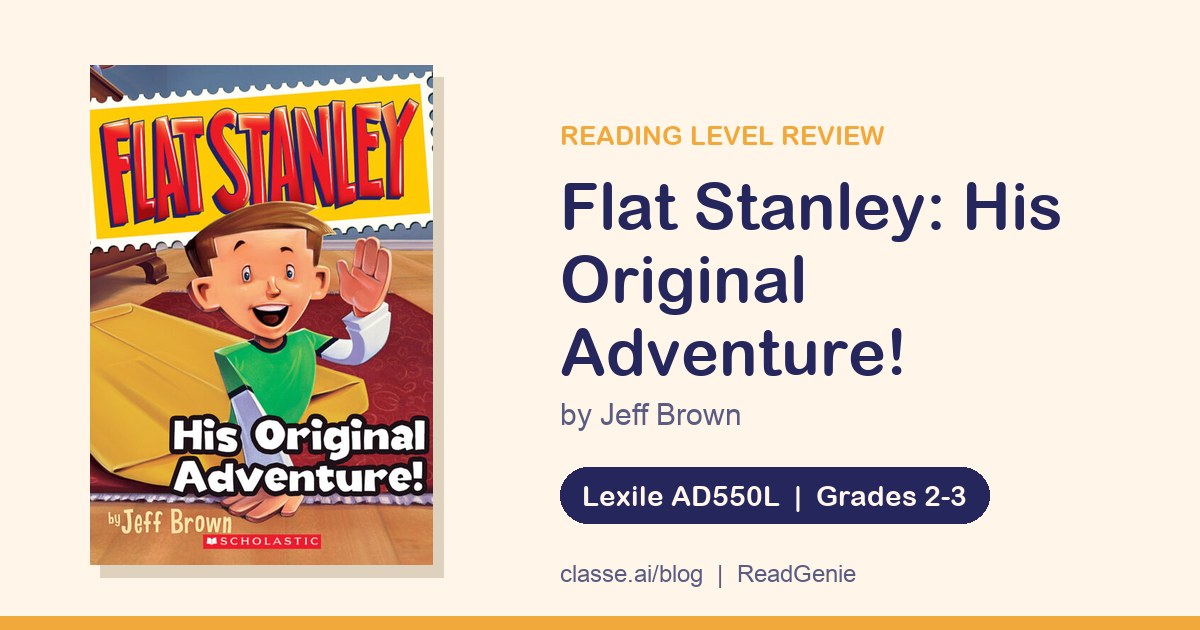
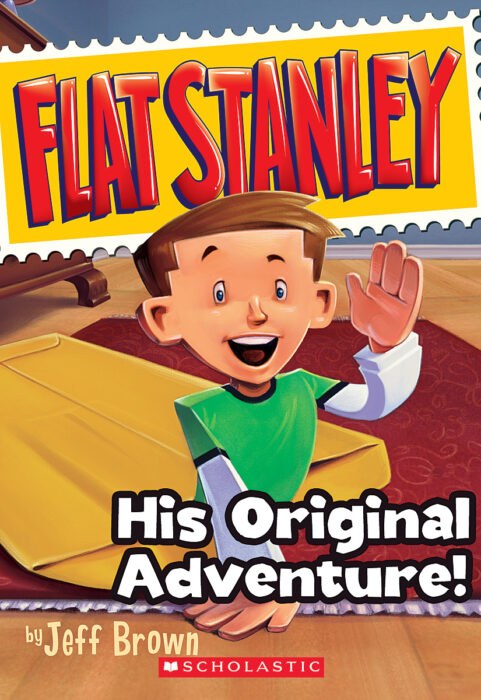
Flat Stanley: His Original Adventure! by Jeff Brown has a Lexile measure of AD550L, an AR (ATOS) book level of 4.0 and a Guided Reading level of M. Most kids can read it on their own late in 2nd grade or in 3rd grade. It is a good pick for struggling readers in grades 2 to 4 because it is about 4,200 words in five short chapters and the sentences average about seven words, but a few old-fashioned words make it worth reading the first chapter together.
Stanley Lambchop wakes up one morning flat. His big bulletin board fell on him in the night, and now he is half an inch thick. His parents stay remarkably calm, the family doctor examines him, and Stanley soon finds that being flat has its perks. He slides under closed doors, gets mailed across the country in an envelope and flies like a kite. Then sneak thieves start stealing paintings from the Famous Museum of Art, and Stanley comes up with a plan that only a flat boy could carry out. His younger brother Arthur is jealous the whole time, and in the last chapter it is Arthur who finds a way to make Stanley round again. Kids love the idea because it is so easy to picture, and many of them already know Stanley from the paper Flat Stanleys that classes mail around the world.
Flat Stanley: His Original Adventure! reading level at a glance
| Lexile measure | AD550L (Scholastic Teacher Store) Also listed as 750L and 550L |
|---|---|
| ATOS / AR book level | 4.0 (TeachingBooks) |
| AR points | 1.0 (TeachingBooks) |
| Guided Reading (Fountas & Pinnell) | M (Scholastic Teacher Store) |
| DRA level | 20-24 (Scholastic Teacher Store) |
| Flesch Reading Ease (0-100) | 90.8 ReadGenie estimate |
| Flesch-Kincaid grade | 2.3 ReadGenie estimate |
| Interest level | Grades 1-4 (Scholastic Teacher Store) Also listed as Grades 2-4 and Grades 1-6 |
| Approximate grade band | Grades 2-3 (ages 7-9) ReadGenie |
| Length | 96 pages, ~4,247 words |
| Format | Chapter book |
| Good for struggling readers? | ★★★★★ 4/5 |
| Dyslexia-friendly rating | ★★★★★ 4/5 |
We couldn't find a published grade level equivalent for this book.
Is Flat Stanley: His Original Adventure! a struggle for your child right now? ReadGenie gives struggling readers short daily Orton-Gillingham practice at home, out loud, with help on the exact sound they missed.
Try ReadGenie and get this book freeScores checked 2026-11-22. Different leveling systems don't always agree, so we show each published value with its source and mark our own estimates. Links to every source are under How we rate books.
What grade level is Flat Stanley?
The first Flat Stanley book reads at about a 2nd to 3rd grade level. A child who reads comfortably by the spring of 2nd grade can usually handle it alone, and most 3rd graders find it quick.
Guided Reading level M is a letter many schools expect near the end of 2nd grade, and DRA 20 to 24 sits in the same place. If your child's teacher says they are at level K or L, this book will be a stretch alone and a comfortable one with you beside them.
The AR level of 4.0 looks high next to those. ATOS counts how rare the words are, and this book was written in 1964 by an author who liked a proper, formal family. The parents speak in full, polite sentences and correct their sons' manners, and words like examination, enormous and measurements turn up alongside very simple ones. Those rarer words push the ATOS level up even though the sentences stay short. The book is worth 1 AR point.
The Lexile has an AD in front of it. AD stands for adult directed, and it means the levelers think a child will get more from the book if an adult reads it with them first. That fits what we saw. The story is simple, but the vocabulary is a little older than what kids usually hear. An older Scholastic edition lists a higher Lexile, so check which copy your school uses if the numbers don't match.
Is Flat Stanley good for struggling readers?
Yes, for most of them. We rate it 4 out of 5 for struggling readers.
The size is the biggest reason. Five chapters share about 4,200 words, so each one is around 850 words, roughly 8 to 10 minutes of reading for a child at level M. Each chapter is also its own little adventure. Chapter 2 is about being flat, chapter 3 is the kite and chapter 4 is the museum thieves. A child who stops for the night has finished a whole episode, not half of one.
The idea does a lot of the work. A boy flattened by a bulletin board is funny right away and easy to imagine, so a reader who has to slow down on a word doesn't lose the thread. Kids also tend to want to see what flatness lets Stanley do next, which carries them from one chapter into the following one.
It also looks like a real chapter book. That matters to a 3rd or 4th grader who is reading below grade and doesn't want to be seen with a younger-looking book.
There are a few things to watch for.
- The formal way the parents talk and words like Heavens can confuse kids who have never heard them spoken
- The pictures help, but they don't carry the story, so a child has to read the words to follow it
- Some 1960s details, like mailing a child across the country, may need a quick word from you
- Long words such as examination and measurements show up without warning in otherwise easy pages
Is Flat Stanley good for kids with dyslexia?
Overall: ★★★★★ 4/5
| Factor | Score | Why |
|---|---|---|
| Sentence length | 5/5 | Sentences in the excerpt average 6.9 words, and much of the text is short lines of dialogue. |
| Vocabulary load | 3/5 | Mostly everyday words, but 3.2% have three or more syllables (examination, measurements, enormous) and some are old-fashioned. |
| Decodability | 4/5 | Most words follow common patterns. The names Lambchop and Arthur and words like bulletin, measurements and through need pre-teaching. |
| Text density and layout | 4/5 | A small 96-page chapter book with short chapters and lots of dialogue, so pages have white space. Set in a serif font. |
| Pictures that carry meaning | 3/5 | Illustrated by Macky Pamintuan in this edition, but the pictures support the story rather than carry it. |
| Chapter length | 4/5 | Five chapters of roughly 850 words each, about 8 to 10 minutes of reading for a level M reader. |
| Engagement for reluctant readers | 5/5 | A boy who gets mailed in an envelope and flown like a kite hooks kids fast, and the museum thieves add a mystery. |
| Audiobook / read-along support | 4/5 | HarperCollins publishes the Flat Stanley Audio Collection, unabridged, read by Daniel Pinkwater, which includes this book. |
Our dyslexia-friendly rating is 4 out of 5.
Sentence length is the strong point. In the first two chapters, sentences averaged 6.9 words, and much of the page is short lines of talk between the four Lambchops and the doctor. Short sentences give a child a natural place to stop and catch their breath.
Vocabulary is the weak spot, and it is why we scored it 3 out of 5. Most words are everyday ones, but about 3 words in 100 have three or more syllables, and a few are words kids rarely hear now. A quick preview of five or six of them before each chapter solves most of the problem.
The pages are roomy, with plenty of dialogue and white space, though the type is a traditional serif and not the plain sans-serif some dyslexic readers prefer. The pictures add to the fun without telling the story on their own.
Audio helps here. HarperCollins publishes the Flat Stanley Audio Collection, read by Daniel Pinkwater, which includes this book in an unabridged recording. Listening to a chapter and then reading part of it aloud is a good way to keep a child in the story on days when decoding is slow. We did not find a dyslexia-friendly print edition.
Words and phonics patterns to practice first
The opening chapters lean on patterns kids learn in 1st and 2nd grade, with a handful of longer words mixed in. A short warm-up before each chapter makes a real difference.
Closed syllables with short vowels are the base. Flat, bed, pin, thick, fell and just make a good read-and-spell list, and flat is the word your child will see most.
Silent e words come up all the time. Wake, slide, wide, take and these are in the first two chapters. If your child reads them with a short vowel, pair each one with a closed-syllable word and sort them.
Vowel teams with ee are easy wins in this book. Feel, feet, deep, keep, seen and speech all use the same team for the same sound.
R-controlled vowels show up in board, horses, bars, dark and shared. Bulletin board is the first big phrase in the book, so make board automatic before you start.
Compound words are a good confidence builder. Breakfast, bedroom, sidewalk, afternoon and sometimes all split neatly into two words a child already knows, and so does the family name Lambchop.
Suffixes are worth a minute because they turn short words into long ones. Careful and helpful end in -ful, cheerfully adds -ly on top, politeness ends in -ness and examination ends in -tion. Cover the ending, read the base word, then add the ending back.
Teach a few words whole before you begin. Through and people don't follow the rules, and bulletin, enormous, examination, measurements and museum are long enough to slow anyone down. Add the names Stanley, Arthur and Lambchop to the list.
If patterns like these are still shaky, a few minutes of daily practice will help more than pushing through the chapters. ReadGenie has kids read words like these out loud and helps with the exact sound they missed, which can make a book like Flat Stanley feel much lighter.
How to read Flat Stanley with your child
Read chapter 1 aloud yourself. It sets up the whole family and lets your child hear how Mr. and Mrs. Lambchop talk, so the formal speech sounds familiar when your child meets it alone. Before you start, name the family together: Stanley, his younger brother Arthur, and their parents.
From chapter 2 on, try one chapter a night. Five chapters fit neatly into a school week, and finishing a whole chapter book by Friday is a big deal for a child who rarely finishes anything.
Take turns by speaker on pages full of dialogue. You read the grown-ups, your child reads Stanley and Arthur. It shares the hard words fairly and keeps the story moving.
After chapter 2, make a paper Stanley and mail him to a grandparent or cousin, the way Stanley travels in the book. It turns the reading into something the whole family is part of, and it gives your child a reason to write a letter too.
On tired nights, play a chapter of the audiobook and have your child follow along in the book, then read one page back to you.
Using Flat Stanley in the classroom or tutoring
For teachers, the book fits a Guided Reading level M group and splits into five sessions, one chapter each. Stop after chapter 3 and ask students to predict how Stanley's flatness could help catch the museum thieves, then check their ideas in chapter 4. It also pairs naturally with a Flat Stanley letter-writing project, where students mail a paper Stanley to someone who sends back a letter about where he went.
For tutors, the compound words in chapter 1 are an easy first lesson in splitting words into parts, and the suffix words make a good second one. Mark the base word in careful, helpful, cheerfully and politeness before the student reads them in context. Pre-teach bulletin, enormous and examination by syllable, then use a page of dialogue between Stanley and Arthur for a repeated reading, with a different voice for each brother.
Content notes for parents
This is a gentle, funny book. A bulletin board falls on Stanley while he sleeps, but it is played for laughs and he is not hurt. Arthur is jealous of all the attention Stanley gets, and the brothers squabble before Arthur is the one who makes Stanley round again. The museum thieves are caught and no one is hurt. There is no swearing, romance or real scary material.
Should your child read it?
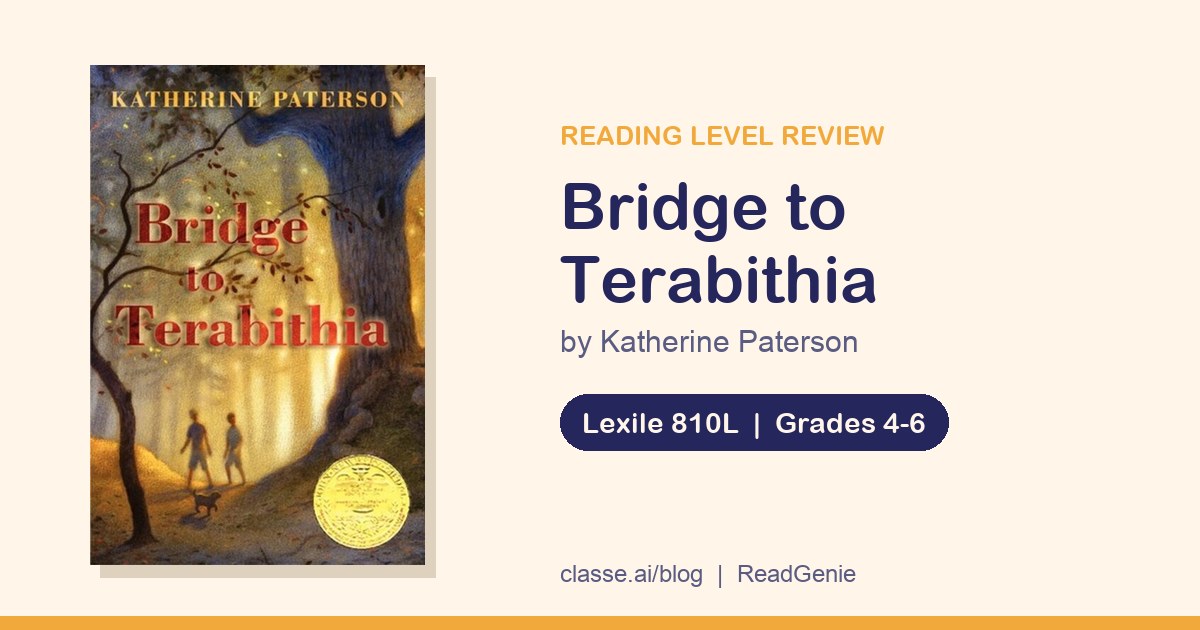
If your child reads at about Guided Reading level L or M, or is a 2nd or 3rd grader ready to try a first short chapter book, Flat Stanley is a strong choice, especially with you reading chapter 1 aloud. A 4th grader reading below grade will likely enjoy it too, since it looks like a regular chapter book. For a child not ready yet, start with Nate the Great or Mercy Watson to the Rescue, which are shorter and have more pictures. Kids who finish it and want something longer can try Magic Tree House or the A to Z Mysteries.
Make the next book easier
Short daily sessions of reading, spelling and handwriting practice, built with Orton-Gillingham teachers. It works alongside tutoring and school support. The first 7 days are free. Join today and we'll mail your child Flat Stanley: His Original Adventure! for free.
Try ReadGenie and get your free bookStarts with a free 7-day trial. Book mailed after your first paid month. US only, one per family.
FAQ
What reading level is Flat Stanley?
Flat Stanley: His Original Adventure! is Lexile AD550L, AR level 4.0 and Guided Reading level M. In plain terms it is a late 2nd grade to 3rd grade book for a child reading on their own, and a little easier with an adult nearby at first.
How many AR points is Flat Stanley worth?
The first Flat Stanley book is worth 1 AR point at a book level of 4.0. The book is short, so the quiz is a quick one for kids who use Accelerated Reader at school.
What is the Flat Stanley guided reading level?
Scholastic lists the original Flat Stanley book at Guided Reading level M and DRA 20 to 24. Many schools expect readers to reach level M near the end of 2nd grade.
What age is Flat Stanley for?
Most kids read it on their own between 7 and 9. Scholastic lists it for grades 1 to 4, and younger kids in that range usually enjoy it as a read-aloud before reading it themselves.
Why does the Flat Stanley Lexile have AD in front of it?
AD means adult directed. The levelers think kids get the most out of it when an adult reads it with them at first, here mostly because of the old-fashioned vocabulary. It doesn't mean the book is too hard, only that some support helps.
Is Flat Stanley good for a child with dyslexia?
It is one of the friendlier first chapter books. The sentences are short, the chapters are brief and there is an unabridged audiobook. Preview the long words and the family names before each chapter, and read the first chapter together.
Get Flat Stanley: His Original Adventure! free
ReadGenie helps struggling readers improve their reading, spelling and handwriting in short daily sessions at home. Join and we'll mail your child this book for free.
Claim your free bookStarts with a free 7-day trial. Book mailed after your first paid month. US only, one per family.
What to read next
- Mercy Watson to the Rescue by Kate DiCamillo (easier). A short, silly family story with pictures on every spread, for kids not ready for Flat Stanley yet.
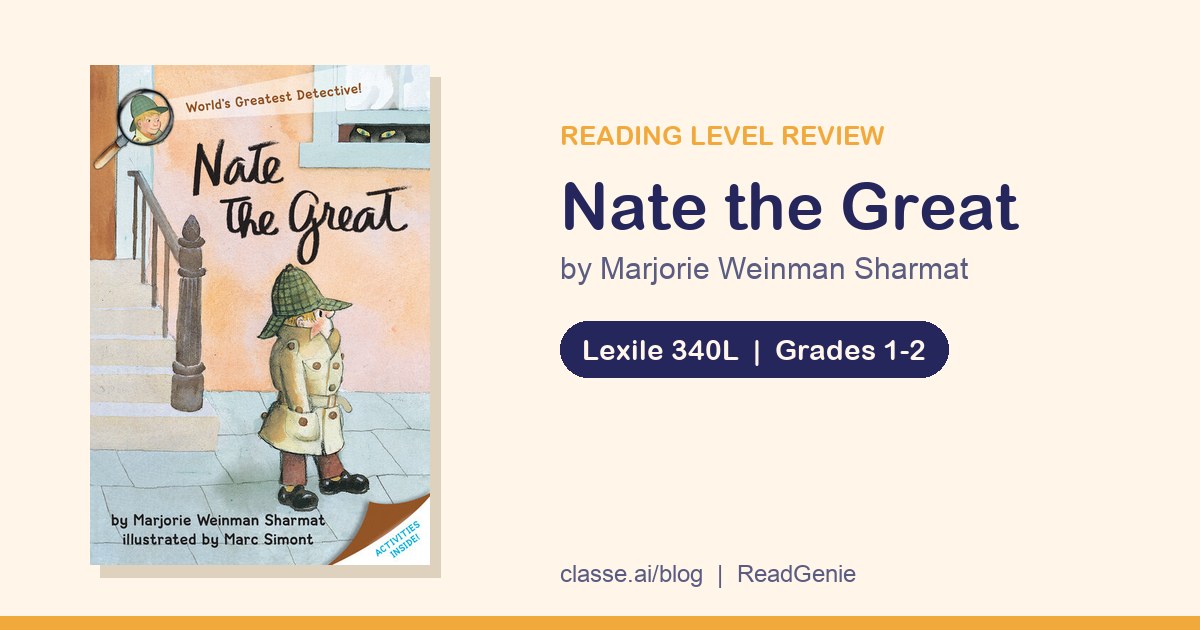
- Nate the Great by Marjorie Weinman Sharmat (easier). A first mystery with very short sentences and a deadpan voice.
- Dinosaurs Before Dark by Mary Pope Osborne (similar). Another short adventure chapter book at a similar level, and the start of a long series.
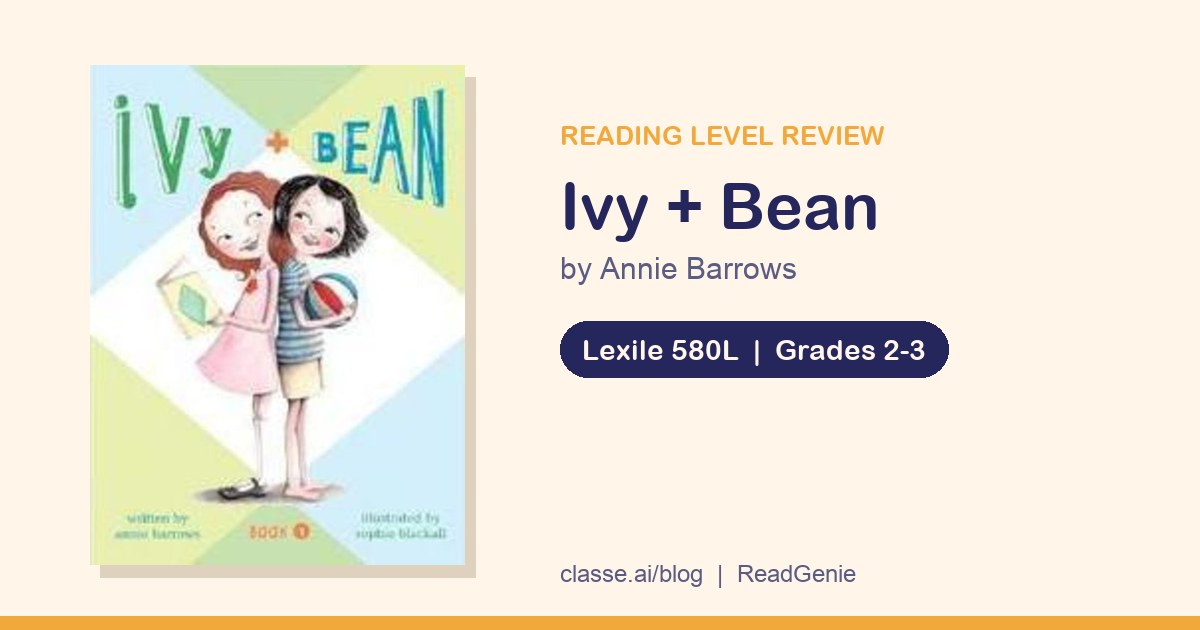
- Ivy + Bean by Annie Barrows (similar). Funny, short chapters about kids getting into trouble, at a similar level.
- The Absent Author by Ron Roy (harder). The first A to Z Mystery, a longer case for kids who liked Stanley catching the museum thieves.
- Sideways Stories from Wayside School by Louis Sachar (harder). Short, absurd chapters for kids who loved the silly premise and want more of it.
Browse all of our reading-level book reviews.
How we rate books
Lexile, ATOS (Accelerated Reader), Guided Reading and DRA levels come from the companies that own them and from publishers. We link to where we found each one, and when a level isn't published we say so. Anything marked "ReadGenie estimate" is our own call, not an official level. Flesch scores come from a short public excerpt when the publisher offers one. The struggling-reader and dyslexia-friendly ratings are our judgment, based on eight things (sentence length, vocabulary, decodability, page layout, pictures, chapter length, how gripping the story is, and audiobook support). Treat them as a starting point. The right book is one your child can read with about 95% accuracy and wants to keep reading.
Sources
- Scholastic Teacher Store: Flat Stanley: His Original Adventure! (9780545223607) (Lexile, Guided Reading level, DRA, ACR level, pages, grades, ISBN)
- Scholastic Teacher Store: Flat Stanley: His Original Adventure! (9780439588638, older edition) (Lexile conflict (750L), Guided Reading check, DRA check)
- TeachingBooks: Flat Stanley: His Original Adventure! (ATOS, AR points, word count, Lexile check)
- University of Florida, New Worlds Reading Initiative teacher guide (Lexile check (AD550L), illustrator, grade 2 classroom use)
- OverDrive ebook sample: Flat Stanley: His Original Adventure! (excerpt, chapter titles)
- OverDrive: Flat Stanley Audio Collection (audiobook narrator and publisher)