Nate the Great Reading Level: Lexile 340L, AR 2.0, Guided Reading K
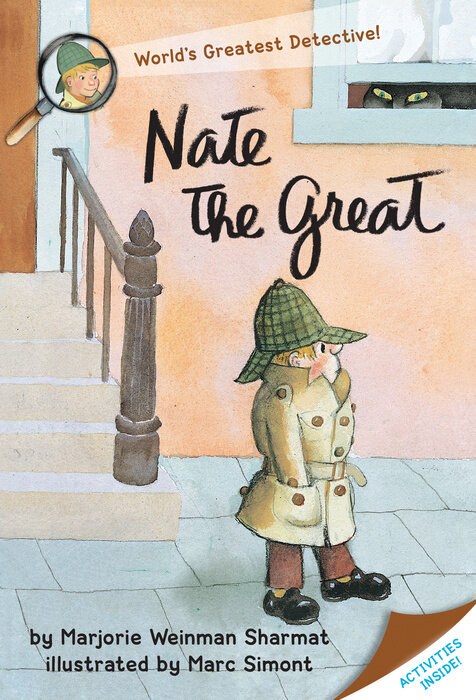
Nate the Great by Marjorie Weinman Sharmat is Lexile 340L, AR level 2.0 with 0.5 AR points and Guided Reading K. Most kids can read it alone by late 1st or 2nd grade, and its short sentences and real clues make it a strong first mystery for struggling readers.

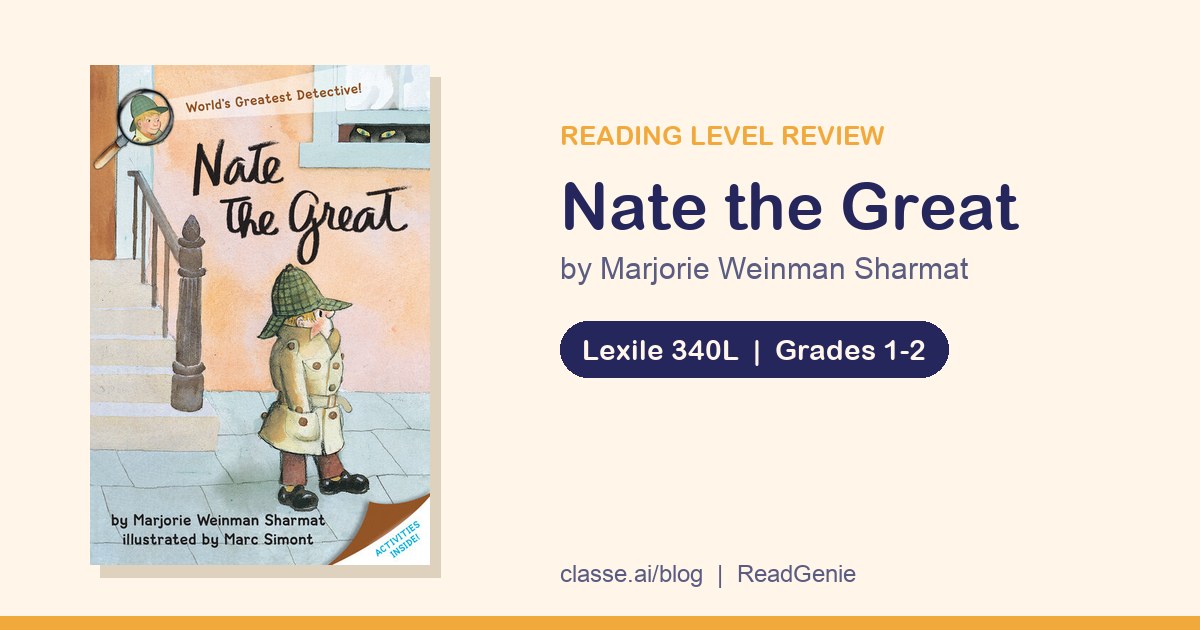
Nate the Great by Marjorie Weinman Sharmat has a Lexile measure of 340L, an AR (ATOS) book level of 2.0 worth 0.5 AR points and a Guided Reading level of K. Most kids can read it on their own by the end of 1st grade or early in 2nd grade. For a child who is behind, it is one of the best first mysteries there is, with about 1,600 words, sentences that average around six words and a real case to crack.
Nate is a boy detective who works alone, eats a lot of pancakes and treats every case like serious business. His friend Annie has lost a picture of her dog Fang, so Nate puts on his detective clothes, leaves a note for his mother and starts asking questions around the neighborhood. The joke is that Nate talks like a tough grown-up detective while his cases are about lost pictures and missing pets. Kids get to play detective right along with him, and that makes them want to finish. The first book came out in 1972, and the series has kept going for decades, which is why so many parents search for the series reading level.
Nate the Great reading level at a glance
| Lexile measure | 340L (Penguin Random House) |
|---|---|
| ATOS / AR book level | 2.0 (Penguin Random House) |
| AR points | 0.5 (TeachingBooks) |
| Guided Reading (Fountas & Pinnell) | K (Penguin Random House) |
| Flesch Reading Ease (0-100) | 96.3 ReadGenie estimate |
| Flesch-Kincaid grade | 1.4 ReadGenie estimate |
| Interest level | Grades 1-4 (Penguin Random House) Also listed as Grades 1-3 |
| Approximate grade band | Grades 1-2 (ages 6-8) ReadGenie |
| Length | 80 pages, ~1,594 words |
| Format | Early reader |
| Good for struggling readers? | ★★★★★ 4/5 |
| Dyslexia-friendly rating | ★★★★★ 4/5 |
We couldn't find a published DRA level or grade level equivalent for this book.
Is Nate the Great a struggle for your child right now? ReadGenie gives struggling readers short daily Orton-Gillingham practice at home, out loud, with help on the exact sound they missed.
Try ReadGenie and get this book freeScores checked 2026-11-21. Different leveling systems don't always agree, so we show each published value with its source and mark our own estimates. Links to every source are under How we rate books.
What grade level is Nate the Great?
Nate the Great reads at about a 1st to 2nd grade level. A typical child can read it independently near the end of 1st grade or at the start of 2nd, and a younger reader can enjoy it with an adult sharing the work.
The three official measures line up well. An ATOS level of 2.0 means the text is about as hard as what an average student reads at the very start of 2nd grade. A Lexile of 340L sits in the same range on most grade charts. Guided Reading level K is usually taught in the second half of 1st grade or early 2nd grade, so a teacher using Fountas and Pinnell levels would place it a little earlier than the other two systems suggest.
Our readability check on the opening pages agrees that the sentences are easy. They average 6.3 words, and only about 2.5 percent of the words have three or more syllables. The formula put the excerpt close to a 1st grade level. The official levels come out a bit higher because the reader has to follow clues and a few longer words like detective and telephone.
Length matters too. At about 1,600 words and 0.5 AR points, it is short enough that a child can read the whole thing in one or two sittings. That is a big deal for a reader who has never finished a book on their own.
Is Nate the Great good for struggling readers?
Yes. We rate it 4 out of 5 for struggling readers. It is short, the sentences are clipped and simple, and the mystery gives a reluctant reader a reason to turn the page. The only real drawback is that the book looks young to some older kids.
What makes Nate work so well is his voice. He speaks in flat, short statements, almost like a detective in an old movie, and that style happens to be very easy to read. Many sentences are three or four words long. A struggling reader moves through a page quickly and feels like a fluent reader, which is exactly the experience they need.
Marc Simont's pictures appear on most spreads and show where Nate is and who he is talking to. They help a child keep track of the people in the story, though the clues themselves live in the words, so kids do need to read carefully to solve the case.
A few things to watch for.
- Some kids in 4th grade and up will see the small size and simple pictures and decide it is for little kids
- Names like Annie, Rosamond and Fang come up often and are worth a preview
- Holding clues in mind while decoding is harder than following a plain story, so some kids need help remembering what they have learned
- The setting is from the 1970s, with a phone on the wall and a note left on the table, which younger kids may need explained
For a 1st through 3rd grader who is behind, this is a great choice, and the many later Nate the Great books give a child who likes this one plenty to read next. For an older struggling reader who is sensitive about looking babyish, the deadpan humor often wins them over anyway, but The Bad Guys or Dog Man look older at a similar amount of text.
Is Nate the Great good for kids with dyslexia?
Overall: ★★★★★ 4/5
| Factor | Score | Why |
|---|---|---|
| Sentence length | 5/5 | Sentences in the excerpt average 6.3 words, and many are three or four words long. |
| Vocabulary load | 4/5 | Mostly everyday words. Only 2.5% of words have three or more syllables, such as detective and telephone. |
| Decodability | 4/5 | Most words follow common patterns. Irregular words like said, would and mother and a few names need pre-teaching. |
| Text density and layout | 4/5 | Large type with short lines and white space, set in a classic serif font rather than a sans-serif. |
| Pictures that carry meaning | 4/5 | Marc Simont's pictures appear on most spreads and show the setting, but the words carry the clues. |
| Chapter length | 4/5 | The whole book reads in about 10 to 20 minutes for a reader at level K, and it breaks into short scenes at each stop on the case. |
| Engagement for reluctant readers | 4/5 | The mystery and Nate's serious voice pull readers along. The pace is gentle rather than action-packed. |
| Audiobook / read-along support | 4/5 | Listening Library publishes an unabridged audiobook read by John Lavelle, about 13 minutes long. |
We rate it 4 out of 5 for dyslexic readers. Very short sentences, everyday words, a short overall length and an official audiobook all work in its favor. The serif font and a handful of irregular words keep it from a top score.
Sentence length is the standout. In the opening pages, sentences average just over six words, which means a dyslexic reader rarely has to hold a long string of words in mind before reaching a period. That frees up attention for decoding.
The type is large and the lines are short, with plenty of white space. It is set in a classic serif typeface rather than a clean sans-serif, which some dyslexic readers find a little harder, but nothing about the page is crowded.
Most of the vocabulary is high frequency. The irregular words that do show up, like said, would and mother, are common enough that most kids have met them before. The longer words are mostly compound words, such as pancakes, notebook and breakfast, which are great for practicing how to break a word into parts.
Listening Library publishes an unabridged audiobook read by John Lavelle that runs about 13 minutes. A child can hear the whole story once, then read it with the rhythm of Nate's voice already in their head. That makes a big difference for kids who tire quickly when decoding.
Words and phonics patterns to practice first
Nate the Great is a good fit for a child who has learned short vowels and silent e and is starting on vowel teams.
Closed syllables with short vowels make up much of the text, in words like dog, desk, lost, left, just and went. These should feel easy, and they give a child quick wins.
Silent e shows up right away in Nate, name, alone, note and smiles. Point out how the e at the end makes the first vowel say its name, and contrast each one with a closed syllable word like nap or not.
Vowel teams appear in eaten, eating, juice and street. Remind your child that ee and ea usually make the long e sound.
R-controlled vowels come up in work, for, girls and pearls. Work and girls are worth a moment, since or and ir there make the same sound as er.
Compound words are everywhere, and they are one of the best things about this book for practice. Pancakes, notebook, goldfish, breakfast, anything and yesterday all split neatly into two smaller words. Cover one half with a finger, read it, then the other.
Digraphs like th, wh, sh and ch appear in the, when, she, touch, itches and scratch.
Pre-teach these words before reading: Nate, Annie, Rosamond, Fang, detective, telephone, picture, said, would and mother. If your child stalls on patterns like silent e or vowel teams, a few minutes a day of Orton-Gillingham practice on those exact patterns with ReadGenie can turn a book like this into one they can read on their own.
How to read Nate the Great with your child
Read the first two pages aloud in your best serious detective voice. Then hand the book over and let your child be Nate. Kids love reading his lines in a flat, important tone, and that kind of expressive reading builds fluency without feeling like practice.
Before you start, name the people and animals your child will meet, Nate, Annie, Rosamond and the big dog Fang. Knowing the names ahead of time means fewer stops in the middle of a sentence.
Keep a clue list as you go. Nate writes things down, so your child can too, on a sticky note or a scrap of paper. Before the last few pages, ask who they think has the picture and why. Guessing the answer is half the fun of a mystery.
The book is short enough to finish in an evening or two. When you do, make pancakes together. A small celebration tied to finishing a whole book can matter a lot to a child who has struggled.
On a short car ride, play the 13-minute audiobook, then let your child pick a favorite page to reread at home the next day.
Using Nate the Great in the classroom or tutoring
For teachers, it is a natural level K guided reading text and an easy introduction to how mysteries work. Talk about the case, the clues, the suspects and the answer before you start. As the group reads, stop at each place Nate visits and add what he learns to a clue chart. A quick writing task works well afterward too. Have students write a note to a parent the way Nate does before he leaves on a case.
For tutors, the book is full of compound words, so start with a short lesson on splitting pancakes, notebook, goldfish and breakfast into two parts. Then do a silent e contrast using Nate, name, alone and note against closed syllable words. Finish with the student reading a page of Nate's lines in his serious voice, and reread the same page at the next session so they can hear how much smoother it sounds.
Content notes for parents
This is a gentle, funny book. Fang is a big dog who seems a little scary at first, but nothing bad happens. There is no violence, nothing frightening, no swearing and no romance. Nate goes out on his own around the neighborhood, which reflects when it was written. It works well as a read-aloud for children as young as 4 or 5.
Should your child read it?
If your child is in 1st or 2nd grade and reading at or a little below grade level, Nate the Great is a great next book. A struggling 3rd grader can use it as a confidence builder that still feels clever. If it is too much right now, try Henry and Mudge or Hi! Fly Guy first. When Nate feels easy, Frog and Toad Are Friends and Mercy Watson to the Rescue sit at a similar level, and Cam Jansen or A to Z Mysteries are the next step up in kid detective books.
Make the next book easier
Short daily sessions of reading, spelling and handwriting practice, built with Orton-Gillingham teachers. It works alongside tutoring and school support. The first 7 days are free. Join today and we'll mail your child Nate the Great for free.
Try ReadGenie and get your free bookStarts with a free 7-day trial. Book mailed after your first paid month. US only, one per family.
FAQ
What reading level is Nate the Great?
Nate the Great has a Lexile measure of 340L, an AR book level of 2.0 and a Guided Reading level of K. Together those point to about a 1st to 2nd grade reading level, and most kids can read it alone near the end of 1st grade or early in 2nd.
How many AR points is Nate the Great?
The first Nate the Great book is worth 0.5 AR points, with an AR book level of 2.0. At about 1,600 words, most kids finish it and take the quiz within a day or two.
What is the Nate the Great Guided Reading level?
The publisher lists Nate the Great at Fountas and Pinnell level K. Level K is usually taught in the second half of 1st grade or early in 2nd grade.
What age is Nate the Great for?
The publisher recommends it for ages 6 to 9, grades 1 to 4. Most children read it on their own around age 7, and younger kids enjoy it as a read-aloud mystery.
What is the Nate the Great series reading level?
The first book is Lexile 340L and AR 2.0, and later books in the series are written for the same early reader audience. Levels vary a little from book to book, so check the individual title if your child's teacher uses a specific level.
Get Nate the Great free
ReadGenie helps struggling readers improve their reading, spelling and handwriting in short daily sessions at home. Join and we'll mail your child this book for free.
Claim your free bookStarts with a free 7-day trial. Book mailed after your first paid month. US only, one per family.
What to read next
- Henry and Mudge: The First Book by Cynthia Rylant (easier). A gentle boy-and-dog early reader with even simpler text.
- Hi! Fly Guy by Tedd Arnold (easier). A funny pet story with very little text per page, for kids not ready for Nate yet.
- Frog and Toad Are Friends by Arnold Lobel (similar). Short, funny stories about two friends at a similar level.
- Mercy Watson to the Rescue by Kate DiCamillo (similar). Another short, funny first chapter book with pictures on every spread.
- Cam Jansen and the Mystery of the Stolen Diamonds by David A. Adler (harder). The next step in kid-detective mysteries, with longer chapters and more clues.
- The Absent Author by Ron Roy (harder). The first A to Z Mystery, a longer case for readers who outgrow Nate.
Browse all of our reading-level book reviews.
How we rate books
Lexile, ATOS (Accelerated Reader), Guided Reading and DRA levels come from the companies that own them and from publishers. We link to where we found each one, and when a level isn't published we say so. Anything marked "ReadGenie estimate" is our own call, not an official level. Flesch scores come from a short public excerpt when the publisher offers one. The struggling-reader and dyslexia-friendly ratings are our judgment, based on eight things (sentence length, vocabulary, decodability, page layout, pictures, chapter length, how gripping the story is, and audiobook support). Treat them as a starting point. The right book is one your child can read with about 95% accuracy and wants to keep reading.
Sources
- Penguin Random House: Nate the Great (Yearling paperback) (Lexile, ATOS, Fountas & Pinnell level, pages, ages and grades, ISBN, audiobook narrator and length)
- TeachingBooks: Nate the Great (AR points, word count, Lexile check, ATOS check)
- Booksource: Nate the Great (Guided Reading check, Lexile check, AR level check, interest level)
- OverDrive ebook sample: Nate the Great (excerpt, layout)