The Great Gilly Hopkins Reading Level: Lexile 800L, AR 4.6
The Great Gilly Hopkins by Katherine Paterson is Lexile 800L, AR level 4.6 with 5 AR points and Guided Reading S. A typical 4th to 6th grader can read it alone, and it works well for a 5th to 7th grader who reads a year or two behind.

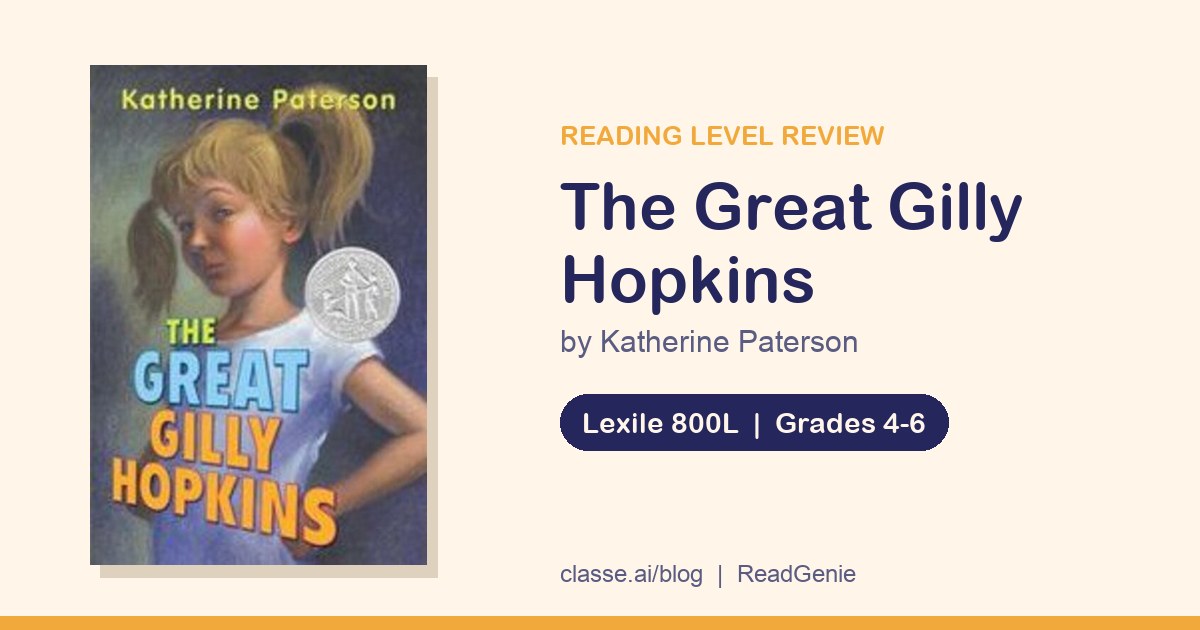
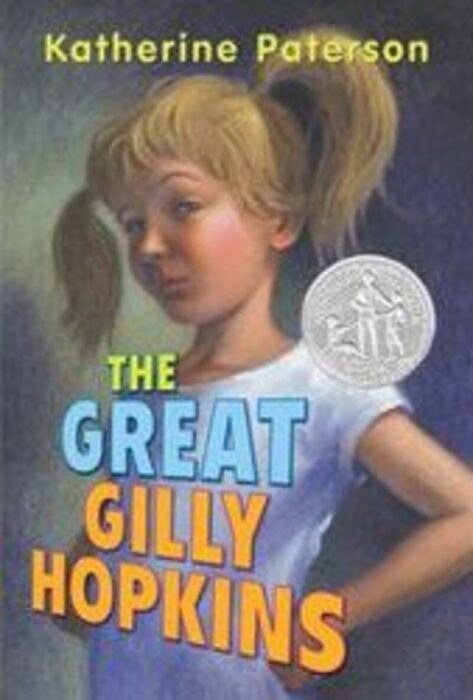
The Great Gilly Hopkins by Katherine Paterson has an 800L Lexile measure, an AR (ATOS) book level of 4.6 worth 5 AR points, and a Guided Reading level of S. A typical 4th to 6th grader can read it alone. Because it was written for kids 10 and up, it is also a good book for a 5th to 7th grader who reads a year or two behind, especially with the audiobook alongside.
Gilly is eleven, and she has lived in more foster homes than she cares to count. She is quick, rude and proud of being the kid nobody can handle. Her newest placement is with Maime Trotter, a big, patient woman who also looks after a timid seven-year-old named William Ernest and cooks supper every night for Mr. Randolph, the blind neighbor. Gilly decides on the first day that she won't stay. The book won a Newbery Honor and the National Book Award, and it still lands on class lists because kids recognize Gilly. She says the mean thing out loud, and she is funny while she does it.
The Great Gilly Hopkins reading level at a glance
| Lexile measure | 800L (TeachingBooks) Also listed as 970L (Reading Is Fundamental listing for a 1995 Scholastic paperback, ISBN 9780590613897) |
|---|---|
| ATOS / AR book level | 4.6 (TeachingBooks) |
| AR points | 5 (TeachingBooks) |
| Guided Reading (Fountas & Pinnell) | S (Booksource) |
| Grade level equivalent | 6 (Booksource) |
| Flesch Reading Ease (0-100) | 88.2 ReadGenie estimate |
| Flesch-Kincaid grade | 3.4 ReadGenie estimate |
| Interest level | Grades 5-8 (ages 10 and up) (TeachingBooks) |
| Approximate grade band | Grades 4-6 (ages 9-12) ReadGenie |
| Length | 256 pages, ~33,591 words |
| Format | Middle grade novel |
| Good for struggling readers? | ★★★★★ 4/5 |
| Dyslexia-friendly rating | ★★★★★ 3/5 |
We couldn't find a published DRA level for this book.
Is The Great Gilly Hopkins a struggle for your child right now? ReadGenie gives struggling readers short daily Orton-Gillingham practice at home, out loud, with help on the exact sound they missed.
Try ReadGenie and get this book freeScores checked 2026-11-20. Different leveling systems don't always agree, so we show each published value with its source and mark our own estimates. Links to every source are under How we rate books.
What grade level is The Great Gilly Hopkins?
Most of the numbers point to the same place, around 4th to 6th grade for independent reading.
An AR level of 4.6 means the text is about as hard as what a typical student reads in the middle of 4th grade. An 800L Lexile sits a little higher, in the range most charts give to 4th and 5th graders. Guided Reading level S is usually a late 4th or 5th grade level in classrooms, and Booksource lists a Grade Level Equivalent of 6. These measures weigh slightly different things. Lexile and AR look mostly at sentence length and how common the words are. Guided Reading also weighs themes and how much a reader has to work out on their own.
Our own readability check on the first two chapters came out a bit easier still, close to a 3rd or 4th grade reading load. That is because so much of the book is quick dialogue. Gilly snaps back at adults in short sentences, and those pull the average down. The narration between the dialogue is where the harder words live.
So our estimate for independent reading is grades 4 to 6. The book is written for ages 10 and up, and most classes read it in 5th or 6th grade. It is about 33,600 words long, which is short for a class novel, and it is worth 5 AR points.
Is The Great Gilly Hopkins good for struggling readers?
Yes, for the right reader. We rate it 4 out of 5 for struggling readers in grades 5 to 7.
The fit is good because the reading level sits about a grade below the age the book was written for. A 6th grader reading at a 4th or 5th grade level gets a real middle-grade novel with a sharp, funny heroine, not a book that looks young. Gilly also says the things a frustrated kid sometimes feels and doesn't say. Plenty of reluctant readers like her right away for that.
The sentences help a lot. In the first two chapters they average about 10 words, and more than half have 8 words or fewer. Long words are rare. Only about 3.5 percent of the words have three or more syllables.
There are still some real hurdles:
- No pictures anywhere in the story
- Chapters of around 2,200 words, too long for one short sitting
- A few long, bookish words in the narration
- Names that don't sound out easily, like Galadriel, Maime and Rutherford
A struggling reader whose class is reading it will do well with a name card, the audiobook for the longer chapters, and an adult nearby for a few hard scenes. A child reading well below a 3rd grade level should start with the audiobook or a read-together plan.
Is The Great Gilly Hopkins good for kids with dyslexia?
Overall: ★★★★★ 3/5
| Factor | Score | Why |
|---|---|---|
| Sentence length | 4/5 | Chapters 1 and 2 average 9.9 words per sentence, and 52% of sentences have 8 words or fewer, with lots of short dialogue. |
| Vocabulary load | 3/5 | Only 3.5% of words have three or more syllables, but the narration uses some literary words like elaborately, maneuver and condition. |
| Decodability | 3/5 | Most words follow common patterns, but names like Galadriel, Rutherford and Maime and spoken forms like Miz need a preview. |
| Text density and layout | 2/5 | Standard paperback pages of small type with no pictures. |
| Pictures that carry meaning | 1/5 | Text only, with no pictures inside the story. |
| Chapter length | 3/5 | Fifteen chapters across about 33,600 words, so most run around 2,200 words, about 15 minutes for a slower reader. |
| Engagement for reluctant readers | 4/5 | Gilly's schemes and comebacks are funny from the first page, though the plot is about feelings more than action. |
| Audiobook / read-along support | 5/5 | An official unabridged HarperCollins audiobook read by Alyssa Bresnahan, easy to find in library apps. |
We rate it 3 out of 5 for dyslexic readers. The writing is friendlier than the page looks, but it is a plain paperback with nothing to break up the text.
Start with what works. Short sentences and lots of back-and-forth talk make each page move. Gilly's voice pulls a reader forward, and the humor gives tired readers a reason to keep going.
Vocabulary is the mixed part. Most words are everyday ones, but Paterson's narration drops in words like elaborately, maneuver and laboriously. These are fine to read aloud for your child or to skip past, since the meaning is clear from what happens next. Names are the bigger snag. Galadriel is the hardest word in the book, so practice it before chapter 1. Luckily almost everyone calls her Gilly.
The layout is where dyslexic readers will tire. Pages are small type, there are no pictures, and with 15 chapters in about 33,600 words, most chapters take 15 minutes or more for a slower reader. Splitting each chapter at a scene break helps.
Audio is the strongest support. HarperCollins publishes an unabridged audiobook read by Alyssa Bresnahan, and most library apps carry it. Listening while following the print lets a dyslexic reader enjoy Gilly's voice without stalling on every long word. A Spanish edition, La gran Gilly Hopkins, also exists for bilingual families.
Words and phonics patterns to practice first
Most of the words a reader meets in the first two chapters use patterns from a 2nd or 3rd grade phonics program. That makes this a good book for an older child to see those patterns at work in a real story.
The suffixes -ed and -ing do a lot of the work, because the story is told in the past tense with plenty of action. Looked, turned, stared, smiled and waited show the three sounds of -ed. Going, looking, sitting, getting, smiling and trying cover -ing, and sitting and getting are good examples of the doubling rule.
Digraphs show up in shook, which, thing, chair, teeth and mouth. R-controlled vowels come in hard, first, turn, hurt, porch and smart. Vowel teams appear in each, feet, seat, meal, stay and gray. Silent e words like like, time, made, home, face and nose are quick wins. Consonant-le ends little, table, gentle, middle and people.
For an older reader, the narration offers good -tion words, such as satisfaction, condition, attention and cooperation. Break each into syllables on paper before reading the chapter.
Before the first page, pre-teach Galadriel, Gilly, Trotter, Maime, Rutherford, Courtney, Randolph, caseworker, hippopotamus and laboriously as whole words. If suffixes and long words are where your child stalls, short daily Orton-Gillingham practice on exactly those patterns, like the practice ReadGenie gives at home, makes a book like this much less tiring.
How to read The Great Gilly Hopkins with your child
Read chapter 1 together. It introduces Gilly, her caseworker Miss Ellis, Trotter and William Ernest, and Gilly's sarcasm is easier to catch when someone reads it aloud with the right tone.
Make a small card with the main names on it: Galadriel (Gilly), Trotter, William Ernest, Mr. Randolph and Courtney. Your child can use it as a bookmark and look at it instead of stopping mid-sentence.
Plan for one chapter a night, or half a chapter split at a scene break. At that pace the book takes three to four weeks, which keeps each sitting short.
Be close by for the chapter where Gilly leaves a racist card on her teacher's desk. Ask why Gilly wanted to hurt Miss Harris, and why Miss Harris didn't react the way Gilly expected. It is one of the most important scenes in the book, and kids usually have a lot to say about it.
When your child finishes, watch the movie version with Kathy Bates as Trotter and talk about what the film changed.
Using The Great Gilly Hopkins in the classroom or tutoring
For teachers, the book is a strong choice for tracking how a character changes. Have students chart Gilly's feelings about Trotter chapter by chapter, using what she says and what she does. Give struggling readers the audiobook so they can join whole-class discussion on the same day as everyone else. Plan the Miss Harris chapter carefully, and talk about the racist card directly so no student is left alone with it.
For tutors, pre-teach Galadriel, Trotter, Maime, Rutherford and caseworker before the first session. Chapter 1 has plenty of -ed and -ing words for practice, like stared, smiled, sitting and smiling. Use the longer narration words, like satisfaction and cooperation, for -tion and syllable division work.
Content notes for parents
Gilly is mean on purpose for much of the book. She calls people names, including fat insults and a cruel word for disabled people, and she leaves a racist card for her Black teacher. The book does not treat any of this as okay, and the teacher's calm response is a turning point for Gilly. There is mild swearing and some religious exclamations. Gilly steals money and runs away. Her mother left her when she was small, and that hurt sits under the whole story. Gilly gets into a fight with some boys at school, and there is nothing romantic. Most 10 to 12 year olds handle it well, and it often sparks good talks about anger and belonging.
Should your child read it?
If your child is in 5th to 7th grade and reads a year or two behind, The Great Gilly Hopkins is a good choice, especially with the audiobook. If they are a strong 4th grade reader, the reading won't stop them, but read the Miss Harris chapter together. If they read below a 3rd grade level, start with Because of Winn-Dixie, or listen to Gilly first and read later.
Make the next book easier
Short daily sessions of reading, spelling and handwriting practice, built with Orton-Gillingham teachers. It works alongside tutoring and school support. The first 7 days are free. Join today and we'll mail your child The Great Gilly Hopkins for free.
Try ReadGenie and get your free bookStarts with a free 7-day trial. Book mailed after your first paid month. US only, one per family.
FAQ
What age is The Great Gilly Hopkins for?
It is written for kids 10 and up, and TeachingBooks lists it for grades 5 to 8. Most kids read it at 10 to 12. A younger strong reader can handle the words, but the name-calling and the racist card are easier to talk through with a child who is 10 or older.
How many AR points is The Great Gilly Hopkins?
The Great Gilly Hopkins is worth 5 AR points, with an AR (ATOS) book level of 4.6. The quiz number is 116. That is a modest point value for a novel, since the book is only about 33,600 words long.
What is The Great Gilly Hopkins Lexile level?
The Great Gilly Hopkins has a Lexile measure of 800L. Most Lexile charts put that around 4th to 5th grade, a little below the age the book is written for.
What is the Guided Reading level of The Great Gilly Hopkins?
Booksource lists Guided Reading level S. Teachers usually use level S in late 4th or 5th grade, which matches the AR and Lexile levels well.
Is The Great Gilly Hopkins appropriate for 4th grade?
The reading level fits a strong 4th grader. The content is the question. Gilly uses insults, mild swearing and a racist card, all of which the story treats as wrong, so many families and teachers save it for 5th grade or read it together first.
Get The Great Gilly Hopkins free
ReadGenie helps struggling readers improve their reading, spelling and handwriting in short daily sessions at home. Join and we'll mail your child this book for free.
Claim your free bookStarts with a free 7-day trial. Book mailed after your first paid month. US only, one per family.
What to read next
- Because of Winn-Dixie by Kate DiCamillo (easier). A lonely girl in a new town finds a home through the people around her, in short chapters with a lighter load.
- Fish in a Tree by Lynda Mullaly Hunt (similar). A girl who acts out to hide her struggles, a teacher who sees through it, and a similar reading level.
- One for the Murphys by Lynda Mullaly Hunt (similar). A tough girl in her first foster home learns to trust a kind family, very close in feel to Gilly's story.
- Bridge to Terabithia by Katherine Paterson (similar). Paterson's other famous novel, about a friendship and a loss, at a close reading level.
- The Giver by Lois Lowry (harder). Another short award winner that schools assign, with longer chapters and bigger ideas.
Browse all of our reading-level book reviews.
How we rate books
Lexile, ATOS (Accelerated Reader), Guided Reading and DRA levels come from the companies that own them and from publishers. We link to where we found each one, and when a level isn't published we say so. Anything marked "ReadGenie estimate" is our own call, not an official level. Flesch scores come from a short public excerpt when the publisher offers one. The struggling-reader and dyslexia-friendly ratings are our judgment, based on eight things (sentence length, vocabulary, decodability, page layout, pictures, chapter length, how gripping the story is, and audiobook support). Treat them as a starting point. The right book is one your child can read with about 95% accuracy and wants to keep reading.
Sources
- TeachingBooks: The Great Gilly Hopkins (Lexile, ATOS, AR points, word count, grades, year published)
- Booksource: The Great Gilly Hopkins (Guided Reading, Grade Level Equivalent, Lexile, AR level, AR points, interest level, pages, edition)
- OverDrive: The Great Gilly Hopkins ebook sample (HarperCollins) (Flesch excerpt, phonics patterns, tricky words, sentence length)
- OverDrive: The Great Gilly Hopkins audiobook (HarperCollins) (audiobook narrator)
- Reading Is Fundamental: The Great Gilly Hopkins (Lexile conflict)
- Common Sense Media: The Great Gilly Hopkins (content notes)
- Open Library: The Great Gilly Hopkins (ISBNs, Spanish edition)
- Wikipedia: The Great Gilly Hopkins (awards, movie adaptation, characters)
- LitCharts: The Great Gilly Hopkins (chapter count)