Amelia Bedelia Reading Level: Lexile, AR Level and Grade Guide
Amelia Bedelia is Lexile 450L, AR level 2.5 and Guided Reading level L, so most kids read it alone in 2nd grade. Here's how it works for struggling readers and kids with dyslexia, and how to handle the idioms that make every joke.

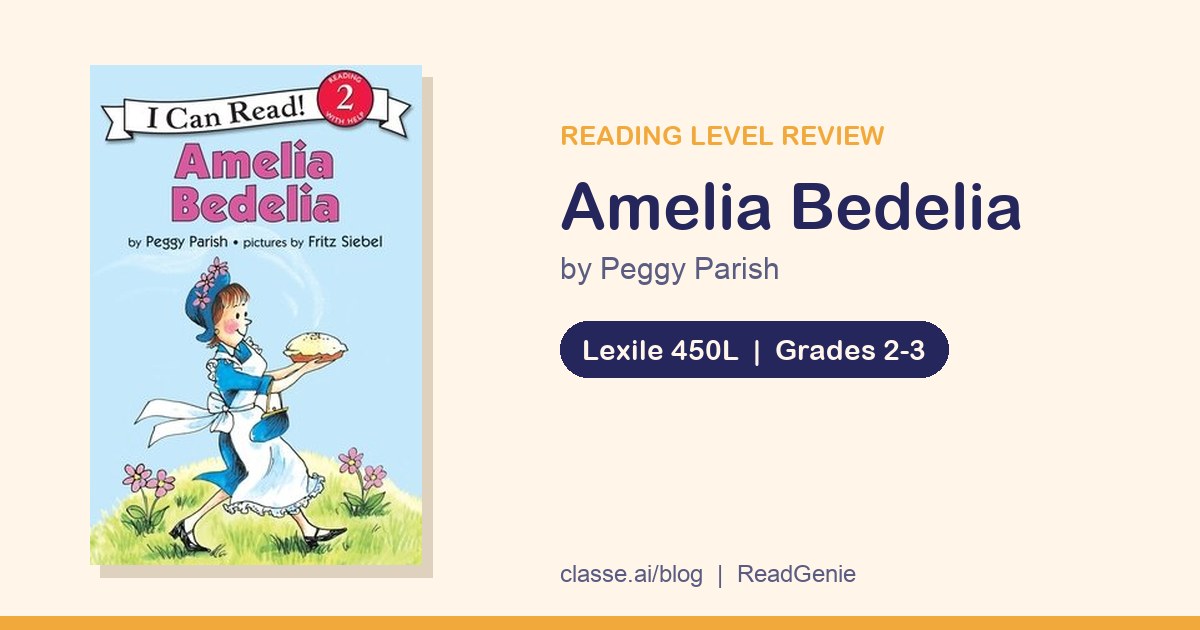
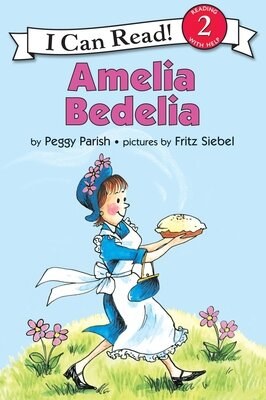
Amelia Bedelia by Peggy Parish has a 450L Lexile measure, an AR (ATOS) book level of 2.5 and a Guided Reading level of L. Most kids can read it on their own somewhere in 2nd grade, and it's a fun read-together book in 1st grade. For a child who finds reading hard, it's a good choice because it's short, there's a picture on almost every page and the jokes land fast. The one thing to plan for is the wordplay. Every joke is an everyday phrase taken literally, so a child who doesn't know the phrase won't get the joke without a little help.
The story is simple. Amelia Bedelia starts a new job as the housekeeper for Mr. and Mrs. Rogers, and Mrs. Rogers leaves her a list of chores. Amelia Bedelia does each one exactly as the words say. She dusts the furniture by sprinkling dust powder all over it, and she dresses the chicken in little clothes. Kids love knowing what Mrs. Rogers meant while Amelia Bedelia cheerfully gets it wrong, and the book first came out in 1963 and has been making second graders laugh ever since.
Amelia Bedelia reading level at a glance
| Lexile measure | 450L (TeachingBooks) Also listed as 120L (Mind Resources catalog listing for the paperback) |
|---|---|
| ATOS / AR book level | 2.5 (TeachingBooks) |
| AR points | 0.5 (TeachingBooks) |
| Guided Reading (Fountas & Pinnell) | L (Mind Resources) |
| Interest level | Ages 4-8 (Rainbow Resource) |
| Approximate grade band | Grades 2-3 (ages 7-9) ReadGenie |
| Length | 64 pages, ~1,039 words |
| Format | Early reader |
| Good for struggling readers? | ★★★★★ 4/5 |
| Dyslexia-friendly rating | ★★★★★ 4/5 |
We couldn't find a published DRA level, grade level equivalent or Flesch score for this book.
Scores checked 2026-11-01. Different leveling systems don't always agree, so we show each published value with its source and mark our own estimates. Links to every source are under How we rate books.
Is your child working hard and still getting stuck on words?
ReadGenie helps struggling readers improve their reading, spelling and handwriting with Orton-Gillingham practice at home. Your child reads out loud, the app listens, and it helps with the exact sound they missed. Join today and we'll mail your child Amelia Bedelia for free.
Try ReadGenie and get your free bookStarts with a free 7-day trial. Book mailed after your first paid month. US only, one per family.
What grade level is Amelia Bedelia?
The first Amelia Bedelia book reads at about a 2nd grade level. An AR level of 2.5 means the text is about as hard as what a typical student reads in the middle of 2nd grade. It's worth half an AR point, which tells you how short it is. The whole book is about 1,000 words spread over 64 pages.
Guided Reading level L usually lines up with the middle of 2nd grade too. If your child's teacher says they're reading at level J or K, this book will be a stretch alone but very doable with you sitting next to them. At level L or above, most kids can read it independently.
You may see a very different Lexile number online. One educational catalog lists 120L for the paperback, which would put it at a beginning-reader level. That doesn't match the book's AR level or its Guided Reading letter, so we'd go with 450L. That number places it at the upper end of early readers, right before kids move into short chapter books.
The book is published as an I Can Read Level 2 book, which HarperCollins pitches at ages 4 to 8. In practice, 4- and 5-year-olds enjoy it read aloud, 7-year-olds read it alone, and older kids still find it funny. Because the main character is a grown-up rather than a little kid, it doesn't look young to a struggling 3rd or 4th grader the way some early readers do.
Is Amelia Bedelia good for struggling readers?
Yes, for most kids. We give it 4 out of 5 for struggling readers.
Length is its biggest strength. A child who dreads long books can read the whole thing in one or two sittings, and finishing a book is a real confidence boost. Each page has only a few lines of large type, and Fritz Siebel's drawings show every mix-up, so a reader who loses the thread can look at the picture and find it again. The book is also built from small, complete episodes. Each chore is a setup and a punchline, so kids get a laugh every page or two instead of waiting for a payoff at the end.
The older main character helps too. Many struggling readers in 3rd grade and up refuse books that look like they're for little kids. Amelia Bedelia is an adult with a job, and the humor works at any age, so older kids are usually happy to be seen with it.
The hard part isn't the words. It's the meaning. A child has to know that draw the drapes means close the curtains before the drawing of Amelia Bedelia sketching them is funny. Kids who take language very literally, or who have trouble with spoken language, may not get the joke. Children learning English run into the same problem, since nearly every joke depends on an English idiom. None of this means they should skip it. It means it works best with a grown-up nearby to talk about what Mrs. Rogers actually wanted.
A few kids also find the 1960s setting and drawings old-fashioned. If that bothers your child, the newer Amelia Bedelia books by Herman Parish, Peggy Parish's nephew, have a more modern look.
Is Amelia Bedelia good for kids with dyslexia?
Overall: ★★★★★ 4/5
| Factor | Score | Why |
|---|---|---|
| Sentence length | 4/5 | Mostly short sentences and simple dialogue, with a few longer lines when Amelia Bedelia talks herself through a chore. |
| Vocabulary load | 3/5 | Mostly everyday words, but the jokes lean on household words like furniture, drapes, towels and meringue. |
| Decodability | 3/5 | Plenty of regular one-syllable words, mixed with names and longer words a beginning reader can't sound out yet, like Bedelia and measure. |
| Text density and layout | 4/5 | I Can Read Level 2 layout with large type and only a few lines of text per page. |
| Pictures that carry meaning | 4/5 | Fritz Siebel's drawings on nearly every page show each literal mix-up, so the picture often explains the joke. |
| Chapter length | 4/5 | No chapters, but the whole book is about 1,000 words and each chore is its own short episode, so it's easy to stop between them. |
| Engagement for reluctant readers | 5/5 | Every page has a joke, and kids love being in on the mistake before Mrs. Rogers sees it. |
| Audiobook / read-along support | 3/5 | An Amelia Bedelia audio collection read by Suzanne Toren is in many public libraries. We didn't find a current single-book audiobook from the publisher. |
We give it 4 out of 5 on our dyslexia-friendly scale. It does best on engagement, layout and length. The I Can Read format keeps the text to a few short lines per page with plenty of space around them, and almost every page has a picture that shows what just happened. For a dyslexic reader, that means less visual crowding and a built-in check on whether they read the page right.
Vocabulary and decoding are where it gets harder. Most of the words are short and regular, the kind a child who knows closed syllables and silent e can sound out. But the jokes depend on household words like furniture, towels and drapes, plus meringue, which doesn't follow any pattern a young reader knows. The names are long too. Amelia, Bedelia and Rogers show up on nearly every page, so it's worth teaching them before you start.
Audio is the weakest spot. We didn't find a current single-book audiobook from the publisher. Many public libraries carry an Amelia Bedelia audio collection read by Suzanne Toren, so check your library's catalog. Because the book is so short, reading it aloud to your child first and then having them read it back the next day works just as well.
Words and phonics patterns to practice first
If your child is in an Orton-Gillingham or structured literacy program, this book is a good fit once closed syllables and silent e feel solid. These are the patterns your child will meet most.
- Closed syllables with short vowels, like dust, fat, trim, dress and list. Lemon is a good two-syllable example to split between the m and the o.
- Silent e, as in rice, cake, drapes, make and time. Several of the chores use these words, so they come up right when the jokes do.
- Digraphs like the ch in chicken, the th in things, the sh in she and the wh in what.
- The igh spelling of long i, as in lights and right.
- The ow and ou sounds in towels, out and house.
- Long words to break into chunks, such as furniture, measure and the names Amelia, Bedelia and Rogers.
The words to pre-teach are Amelia, Bedelia, Rogers, furniture, measure, meringue, towels, said and what. Clap the names first (A-me-li-a Be-de-li-a), since they repeat on almost every page. Meringue is a word to simply tell your child, because even adults can't sound it out from the spelling. Said and what are common irregular words that are best practiced on sight.
This kind of pattern practice is what ReadGenie does every day. Your child reads aloud, the app listens, and it helps with the exact sound they missed, so a book like this one goes from a struggle to a laugh.
How to read Amelia Bedelia with your child
Start with a quick game. Before you read the page about dusting, ask your child what dust the furniture means. Then read it together and see what Amelia Bedelia does instead. Kids who have just said the real meaning out loud get the joke right away, and they feel smart for getting it.
Stop after each chore and let your child explain why it's funny. If they can tell you, they understood the page. If they can't, that's a sign the idiom was new to them, not that they misread it. Explain it, laugh about it and move on.
The chore list gives you natural places to stop, so splitting the book across two nights is easy if your child is tired. On the second night, reread the last page from the night before so they start with a win.
When you're done, make your own list of phrases that don't mean what they say. Hop in the car, hit the books and keep an eye on it are good ones. Have your child draw what Amelia Bedelia would do with each one. It's a fun way to build the language skills that this book quietly teaches.
Using Amelia Bedelia in the classroom or tutoring
For teachers, Amelia Bedelia fits a Guided Reading level L group and is one of the easiest anchor texts for a lesson on idioms and multiple-meaning words. A simple activity is to fold a page in half and have students draw the literal meaning of one chore on one side and the real meaning on the other. Reading a second Amelia Bedelia book afterward lets students predict the mix-ups before they happen, which is great practice in using background knowledge.
For tutors, it's good connected text once closed syllables and silent e are secure, since most of the one-syllable words in the jokes follow those patterns. Pre-teach the names along with furniture, measure and meringue as whole words so they don't stall the reading. The short pages are ideal for repeated reading. Have the student read a chore page, reread it for smoothness, and then move on.
Content notes for parents
Amelia Bedelia comes close to losing her job, and Mrs. Rogers is angry when she sees the house, but it all ends warmly thanks to Amelia Bedelia's baking. The book was written in 1963 about a housekeeper working for a well-off couple, and the clothes and drawings show their age. There's no violence, nothing scary and no potty humor.
Should your child read it?
If your child reads somewhere around Guided Reading level K to M and likes funny books, this is a great pick. If they're reading below that, read it together or start with an easier I Can Read title like Biscuit Goes to School or Hi! Fly Guy. When your child is ready for short chapter books with the same kind of humor, Junie B. Jones and the Stupid Smelly Bus is a good next step, and the Amelia Bedelia chapter books by Herman Parish keep a fan in the same world.
Make the next book easier
Short daily sessions of reading, spelling and handwriting practice, built with Orton-Gillingham teachers. It works alongside tutoring and school support. The first 7 days are free. Join today and we'll mail your child Amelia Bedelia for free.
Try ReadGenie and get your free bookStarts with a free 7-day trial. Book mailed after your first paid month. US only, one per family.
FAQ
What age is Amelia Bedelia good for?
HarperCollins publishes it for ages 4 to 8. Most kids read it on their own around age 7, in 2nd grade, and younger kids enjoy it as a read-aloud. Older kids who are behind in reading can use it too, since the grown-up main character keeps it from looking young.
What grade level is Amelia Bedelia?
It reads at about a 2nd grade level. Its AR level of 2.5 matches the middle of 2nd grade, and its Guided Reading level L matches what many schools expect around then.
What is the AR level of Amelia Bedelia?
The original Amelia Bedelia has an ATOS book level of 2.5 and is worth 0.5 AR points. Later books in the series have their own AR levels, so check the specific title your child is reading.
What reading level letter is Amelia Bedelia?
The first book is listed at Guided Reading level L. Later books in the series have their own levels, so check the title your child picks.
Why don't some kids get the Amelia Bedelia jokes?
Every joke depends on knowing an idiom, like draw the drapes or dress the chicken, and then picturing it literally. Kids who haven't heard the phrase, who are learning English or who take language very literally may need a grown-up to explain what was meant. Once they know, most kids find it hilarious.
Is Amelia Bedelia good for kids with dyslexia?
It can be a great fit. The pages are short, the type is large and the pictures show what's happening. Pre-teach the names and a few long words like furniture and meringue, and read it aloud first if decoding the whole book feels like too much.
Get Amelia Bedelia free
ReadGenie helps struggling readers improve their reading, spelling and handwriting in short daily sessions at home. Join and we'll mail your child this book for free.
Claim your free bookStarts with a free 7-day trial. Book mailed after your first paid month. US only, one per family.
What to read next
- Biscuit Goes to School by Alyssa Satin Capucilli (easier). A very simple My First I Can Read book for kids who aren't ready for Level 2 yet.
- Hi! Fly Guy by Tedd Arnold (easier). Short, silly and picture-heavy. A good confidence builder before Amelia Bedelia.
- Frog and Toad Are Friends by Arnold Lobel (similar). Another I Can Read classic with gentle humor and short stories.
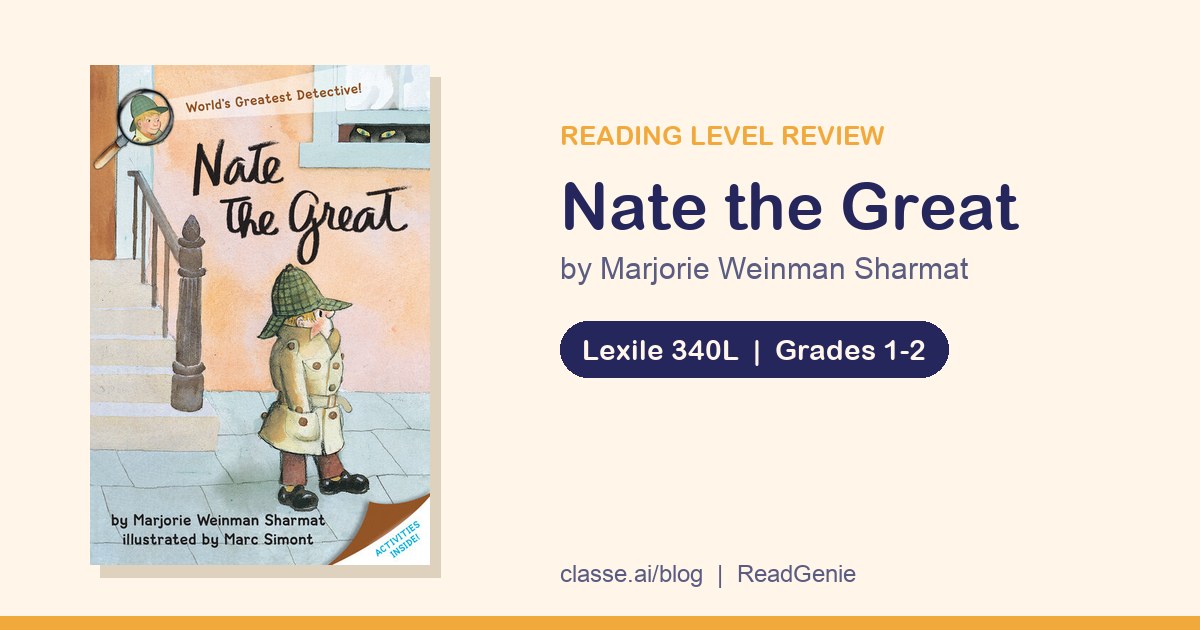
- Nate the Great by Marjorie Weinman Sharmat (similar). A short, funny early reader where the main character takes everything very seriously.
- Junie B. Jones and the Stupid Smelly Bus by Barbara Park (harder). The next step into short chapter books, with the same kind of laugh-out-loud voice.
- Amelia Bedelia Means Business by Herman Parish (harder). Book 1 of the Amelia Bedelia chapter books, starring Amelia Bedelia as a girl. A natural step up for fans.
Browse all of our reading-level book reviews.
How we rate books
Lexile, ATOS (Accelerated Reader), Guided Reading and DRA levels come from the companies that own them and from publishers. We link to where we found each one, and when a level isn't published we say so. Anything marked "ReadGenie estimate" is our own call, not an official level. Flesch scores come from a short public excerpt when the publisher offers one. The struggling-reader and dyslexia-friendly ratings are our judgment, based on eight things (sentence length, vocabulary, decodability, page layout, pictures, chapter length, how gripping the story is, and audiobook support). Treat them as a starting point. The right book is one your child can read with about 95% accuracy and wants to keep reading.
Sources
- TeachingBooks: Amelia Bedelia (Lexile, ATOS, AR points, word count, grades)
- Mind Resources: Amelia Bedelia (Guided Reading level, 120L listing (conflict))
- Rainbow Resource: Amelia Bedelia (I Can Read Level 2) (ISBN, page count, ages, illustrator)
- Centre County Library: Amelia Bedelia audio collection (audiobook)
- Open Library (first publication year, ISBNs)