Goosebumps Reading Level: Lexile 600L and AR 3.7 for Book 1
Welcome to Dead House, the first Goosebumps book, is Lexile 600L and AR level 3.7, so most kids read it alone in 3rd or 4th grade. Here's how it works for struggling and dyslexic readers, and which words to practice first.

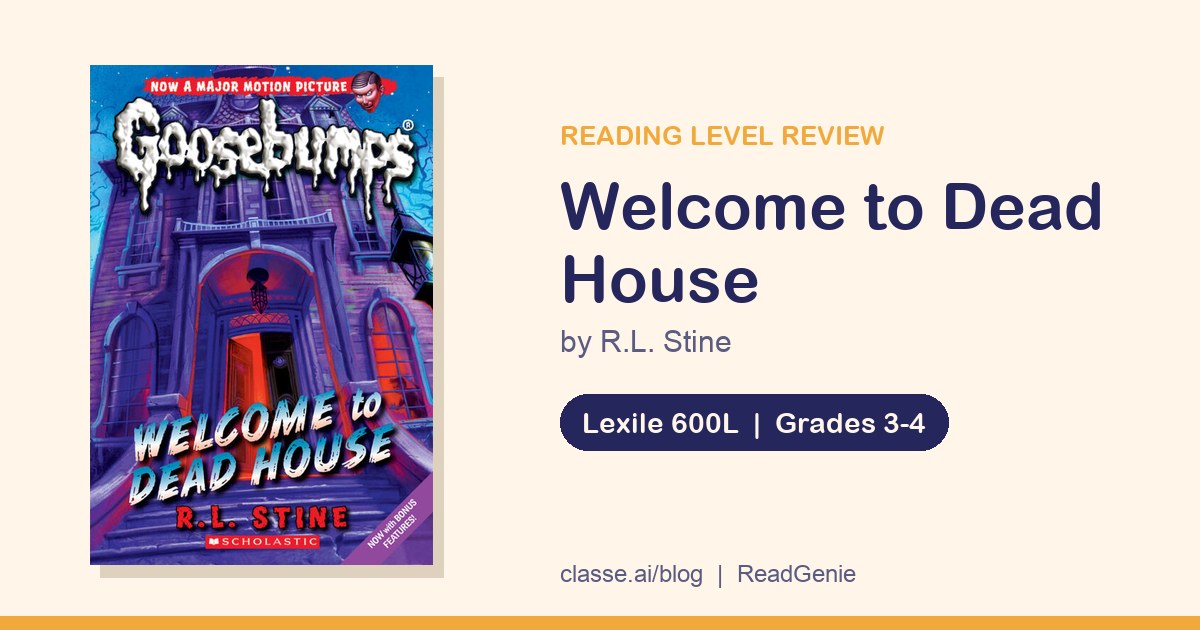
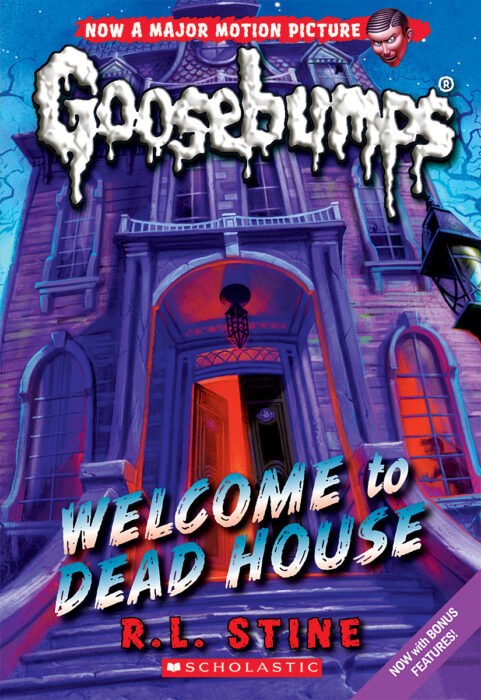
Welcome to Dead House, the first Goosebumps book by R.L. Stine, has a 600L Lexile measure and an AR (ATOS) book level of 3.7, so most kids can read it on their own in 3rd or 4th grade. Short sentences, a creepy house and a cliffhanger at the end of each chapter make it one of the best picks for struggling readers in grades 4 to 7 who want a real chapter book. It has no pictures, so a child still reading below a 2nd grade level will need the audiobook or a read-together start.
Amanda is twelve, and she and her younger brother Josh hate their new house the minute they see it. Their parents have inherited a big, dark old place in a town called Dark Falls, and the family moves in with their dog, Petey. The kids in the neighborhood act strangely, the house seems to have someone else in it, and the friendly man who sold it to the family seems a little too interested in them. Amanda starts putting the clues together, and the reader gets there right alongside her. Kids like it because it's scary in a safe way, it moves fast once the family arrives, and every chapter ends on a moment that makes them turn the page.
Welcome to Dead House reading level at a glance
| Lexile measure | 600L (TeachingBooks) Also listed as 470L |
|---|---|
| ATOS / AR book level | 3.7 (TeachingBooks) |
| AR points | 3 (TeachingBooks) |
| Flesch Reading Ease (0-100) | 92.9 ReadGenie estimate |
| Flesch-Kincaid grade | 2.4 ReadGenie estimate |
| Interest level | Grades 3-7 (Reading Is Fundamental) |
| Approximate grade band | Grades 3-4 (ages 8-10) ReadGenie |
| Length | 160 pages, ~23,002 words |
| Format | Middle grade novel |
| Good for struggling readers? | ★★★★★ 4/5 |
| Dyslexia-friendly rating | ★★★★★ 4/5 |
We couldn't find a published Guided Reading level, DRA level or grade level equivalent for this book.
Scores checked 2026-11-15. Different leveling systems don't always agree, so we show each published value with its source and mark our own estimates. Links to every source are under How we rate books.
Is your child working hard and still getting stuck on words?
ReadGenie helps struggling readers improve their reading, spelling and handwriting with Orton-Gillingham practice at home. Your child reads out loud, the app listens, and it helps with the exact sound they missed. Join today and we'll mail your child Welcome to Dead House for free.
Try ReadGenie and get your free bookStarts with a free 7-day trial. Book mailed after your first paid month. US only, one per family.
What grade level is Welcome to Dead House?
Plan on a 3rd to 4th grade reading level. A strong reader at the end of 2nd grade can manage it with help, and most 4th graders read it comfortably.
An AR level of 3.7 means the text is about as hard as what a typical student reads in the seventh month of 3rd grade. The book is worth 3 AR points because it's a full novel of about 23,000 words, longer than most books at this level. A 600L Lexile falls in the range many schools expect from 3rd and 4th graders.
We also ran our own readability check on the whole first chapter, about 2,400 words from the publisher's ebook sample. It came out easier than the official levels, at about a 2nd grade level on the Flesch-Kincaid formula. That's our estimate, not an official level, and the reason it runs low is useful to know. Stine writes in short sentences, around eight words each, with plenty of dialogue and everyday words. What makes the book harder than its sentences is its length and the way the scares build on clues a reader has to remember from earlier chapters.
Reading Is Fundamental lists the book for grades 3 to 7. That spread is what makes Goosebumps so useful. A 6th grader who reads at a 3rd grade level can carry this book without anyone thinking twice, because older kids know Goosebumps from the movies and TV.
Is Welcome to Dead House good for struggling readers?
Yes, for most kids who like a scare. We give it 4 out of 5 for struggling readers.
The writing does a lot of the work. Sentences are short and direct, and the words are the ones kids already use. Only a few words in the first chapter run three syllables or more. A child who has to work at every word can still keep the story in their head, because each sentence is small enough to hold.
The bigger reason is the hook. Goosebumps books are built to end each chapter on a scare or a question, and this first one set the pattern. A kid who says they hate reading will often read one more chapter just to find out what was at the window. That pull is hard to find in books at a 3rd grade level that don't look young.
Length is the honest drawback. Chapter 1 is the longest stretch before anything really creepy happens. It's mostly the family arriving and Amanda deciding she hates everything, about 2,400 words, which can feel slow for a reader who is already tired. Once the family moves in, the pace picks up and stays up.
There are no pictures, and the paperback has small type on full pages. For a child who still needs drawings on most pages, start with The Last Kids on Earth or Lunch Walks Among Us, then come back to Dark Falls.
It's also scary. Not gory, but real enough that some kids won't want to read it at bedtime. You know your child best on this one.
Is Welcome to Dead House good for kids with dyslexia?
Overall: ★★★★★ 4/5
| Factor | Score | Why |
|---|---|---|
| Sentence length | 4/5 | Chapter 1 averages 8.4 words per sentence, and over half of its sentences have 8 words or fewer. |
| Vocabulary load | 4/5 | Mostly everyday words. Only about 3.5% of words in chapter 1 have three or more syllables, with a few like sympathetically and incredible. |
| Decodability | 4/5 | The main names, Josh, Petey and Dawes, decode easily. Words like through, thought and young break the usual patterns and are worth a preview. |
| Text density and layout | 3/5 | A standard paperback with small type and full pages of text. |
| Pictures that carry meaning | 1/5 | A text novel with no pictures, so the words carry the story. |
| Chapter length | 3/5 | Chapter 1 runs about 2,400 words. Goosebumps chapters stop on a cliffhanger, which gives natural places to pause. |
| Engagement for reluctant readers | 5/5 | A creepy house, strange neighbors and a scare at the end of nearly every chapter pull reluctant readers along. |
| Audiobook / read-along support | 5/5 | A Scholastic Audio audiobook, read by Tara Sands, that many libraries carry. |
We rate it 4 out of 5 for dyslexic readers, mostly because of the sentences and the audiobook.
Short sentences matter a great deal when decoding takes effort. In chapter 1, more than half of the sentences have eight words or fewer. A dyslexic reader spends their energy on the words, not on holding a long sentence together, and still gets to the end of each thought.
The vocabulary is friendly too. Most words are short and common, and the main names are easy to sound out. Josh, Petey and Dawes follow regular patterns. Amanda and Charles need one quick preview each.
The weak spots are layout and pictures. The paperback is a standard mass-market size with small print, and nothing on the page helps with meaning. Some kids do better with the ebook, where they can make the type bigger and add more space between lines.
The audiobook is the strongest support. Scholastic Audio publishes a recording read by Tara Sands, and many libraries carry it. Listening while following the printed words lets a dyslexic child enjoy the story at full speed while their eyes practice on the page.
Words and phonics patterns to practice first
Chapter 1 is a good place to look at phonics patterns before your child reads, because the house, the street and the yard come up again and again. Practicing a few of these patterns ahead of time makes the first chapter much smoother.
Vowel teams are everywhere in the setting. Street, trees, leaves, weeds, groaned and shadows all show up early. Practice the ee and ea teams first, since those carry most of the outdoor description.
R-controlled vowels come next. Dark, yard, porch, turned, first and darkness set the mood of the book, so they get used a lot. Sort them by ar, or and ur to make the pattern easy to see.
Silent e words like like, whole, place, white, home and drive are a quick review for most readers. Digraphs show up in Josh, thick, shutters, porch, black and thing.
Consonant-le words, like middle, little, uncle and incredible, are worth a few minutes if your child still splits them in the wrong place. Compound words like driveway, overgrown, everywhere and something can be split in half and read as two short words.
Pre-teach these before chapter 1. Amanda, Petey, Dawes, Charles, through, thought, young, sure, sympathetically and embarrassed. Through and thought trip up a lot of readers because they look alike and sound nothing alike. Embarrassed and sympathetically are long, but they only appear a few times, so it's fine to just tell your child those two.
This is the kind of pattern practice ReadGenie does at home with Orton-Gillingham lessons, so a child can meet these words in a short session before they meet them in a scary story.
How to read Welcome to Dead House with your child
Read chapter 1 aloud together. It's the longest and slowest part of the book, and the scares start once the family moves in. Getting through it together means your child starts reading on their own right where the story speeds up.
After that, try taking turns with the audiobook. Your child reads one chapter, then listens to the next while following along. That keeps a tired reader moving toward the ending without turning the book into a chore.
Read in the daytime if your child scares easily. Stop at the end of a chapter, never in the middle of a scene, and talk about what just happened before bed.
Before the last few chapters, ask your child to guess what's really going on in Dark Falls. Kids love being right, and the guess makes them read more carefully for clues.
If your child loves it, let them pick the next Goosebumps book themselves. There are 62 books in the original series alone, so a child who finishes one has a long run of books at about the same level.
Using Welcome to Dead House in the classroom or tutoring
For teachers, it's a strong pick for a spooky book club in grades 4 to 6, especially in October. Have students track the clues that something is wrong in Dark Falls in a notebook, then check them after the reveal. It also works well for a lesson on how authors build suspense, since nearly every chapter ends on a cliffhanger students can point to.
For tutors, pre-teach Amanda, Petey, Dawes and Charles before chapter 1. Use words from the setting for vowel team and r-controlled practice, like street, trees, dark, yard and porch. Have the student read one chapter aloud each session for fluency and listen to the next with the audiobook.
Content notes for parents
This is a horror story for kids, so expect ghoulish townspeople, a cemetery at night and a creepy empty house. The family dog is in danger during the story. There's no gore and no bad language, but the ending is dark, and some kids find it more upsetting than the later, sillier Goosebumps books. The book first came out in 1992, so there are no cell phones and some details will feel old.
Should your child read it?
If your child is in 4th to 7th grade, reads at about a 3rd grade level and likes being a little scared, this is a great book to try. Kids who scare easily can wait, or start with a funnier monster book like Lunch Walks Among Us. Children who still need pictures on most pages should try The Last Kids on Earth first. Kids who finish several Goosebumps books and want something scarier can move up to Wait Till Helen Comes or Coraline.
Make the next book easier
Short daily sessions of reading, spelling and handwriting practice, built with Orton-Gillingham teachers. It works alongside tutoring and school support. The first 7 days are free. Join today and we'll mail your child Welcome to Dead House for free.
Try ReadGenie and get your free bookStarts with a free 7-day trial. Book mailed after your first paid month. US only, one per family.
FAQ
What reading level is Goosebumps?
The first Goosebumps book, Welcome to Dead House, has a 600L Lexile measure and an AR level of 3.7. That puts it at about a 3rd to 4th grade reading level. The other early books in the series are written the same way, with short sentences and a scare at the end of each chapter.
What is the AR level of Welcome to Dead House?
It has an ATOS book level of 3.7 and is worth 3 AR points. The 3.7 means the text is about as hard as what a typical student reads late in 3rd grade. The points are high for that level because the book is about 23,000 words long.
What age is Goosebumps for?
Reading Is Fundamental lists Welcome to Dead House for grades 3 to 7, which is about ages 8 to 12. Most kids can read it alone around ages 8 to 10. Older kids who read below grade level still enjoy it because the series doesn't look young.
Are Goosebumps books good for struggling readers?
Yes, for kids who like scary stories. The sentences are short, the words are everyday words, and every chapter ends on a cliffhanger, which keeps reluctant readers going. The books have no pictures, so pair them with the audiobook if reading a whole chapter is still hard.
Is Welcome to Dead House too scary for an 8 year old?
It depends on the child. There's no gore, but the townspeople are frightening and the ending is dark. Many 8 year olds love it, and some are happier starting with a funnier monster book and coming back later.
Get Welcome to Dead House free
ReadGenie helps struggling readers improve their reading, spelling and handwriting in short daily sessions at home. Join and we'll mail your child this book for free.
Claim your free bookStarts with a free 7-day trial. Book mailed after your first paid month. US only, one per family.
What to read next
- Lunch Walks Among Us by Jim Benton (easier). Franny K. Stein's monster lab is funny rather than scary, with pictures on every page, a gentler way in for younger or anxious readers.
- The Last Kids on Earth by Max Brallier (similar). Monsters and zombies with lots of drawings, at a similar level and less frightening.
- Say Cheese and Die! by R.L. Stine (similar). Another early Goosebumps book about a cursed camera, at about the same level.
- Wait Till Helen Comes by Mary Downing Hahn (harder). A longer, scarier ghost story for kids who finished several Goosebumps books.
- Coraline by Neil Gaiman (harder). A creepier new-house story with richer language, a good step up in grade 5 and beyond.
Browse all of our reading-level book reviews.
How we rate books
Lexile, ATOS (Accelerated Reader), Guided Reading and DRA levels come from the companies that own them and from publishers. We link to where we found each one, and when a level isn't published we say so. Anything marked "ReadGenie estimate" is our own call, not an official level. Flesch scores come from a short public excerpt when the publisher offers one. The struggling-reader and dyslexia-friendly ratings are our judgment, based on eight things (sentence length, vocabulary, decodability, page layout, pictures, chapter length, how gripping the story is, and audiobook support). Treat them as a starting point. The right book is one your child can read with about 95% accuracy and wants to keep reading.
Sources
- TeachingBooks: Welcome to Dead House (Lexile, ATOS, AR points, word count, grades, audiobook narrator)
- Reading Is Fundamental Literacy Central: Classic Goosebumps: Welcome to Dead House (interest level, Lexile conflict, ISBN, pages)
- OverDrive: Welcome to Dead House ebook sample (Scholastic) (Flesch excerpt, phonics patterns, sentence length)
- Scholastic product cover (Classic Goosebumps #13) (edition, cover)