The Hunger Games Reading Level: Lexile 810L, AR 5.3, Guided Reading Z
The Hunger Games by Suzanne Collins is Lexile 810L, AR level 5.3 with 15 AR points and Guided Reading Z. The sentences suit a 5th or 6th grade reader, but the length and the violence make it a 7th grade and up book, where struggling readers do best with the audiobook.

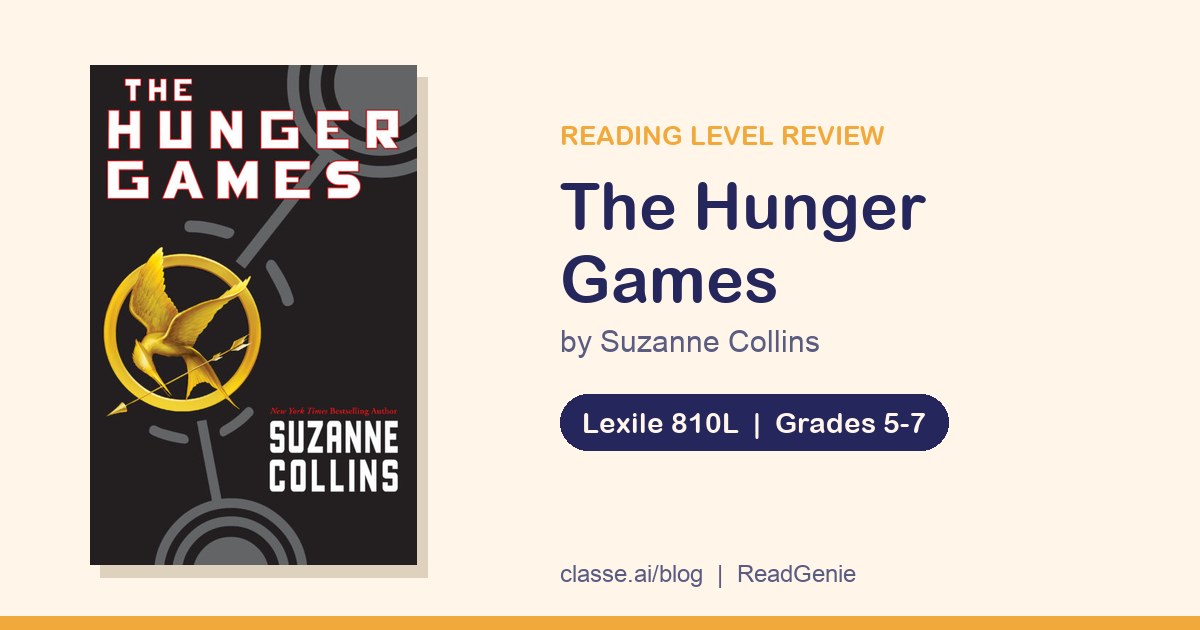
The Hunger Games by Suzanne Collins has a Lexile measure of 810L, an AR (ATOS) book level of 5.3 worth 15 AR points, a Guided Reading level of Z and a DRA level of 70. The sentences are plain enough for a 5th or 6th grade reader, but the book runs close to 100,000 words and the violence suits grades 7 and up. For a struggling reader in middle school it works best with the audiobook alongside, because the story is gripping enough to carry them through.
Katniss Everdeen is sixteen and keeps her family alive by hunting in the woods outside District 12, which is against the law. Every year the Capitol picks one boy and one girl from each district to fight to the death on live TV. When her little sister Prim is chosen, Katniss takes her place. What follows is part survival story, part reality show, and almost every chapter ends with a reason to read the next one. It is one of the most-read teen novels of the last twenty years, a common class novel in 7th and 8th grade, and a movie most kids have heard of, which is why so many parents look up its level.
The Hunger Games reading level at a glance
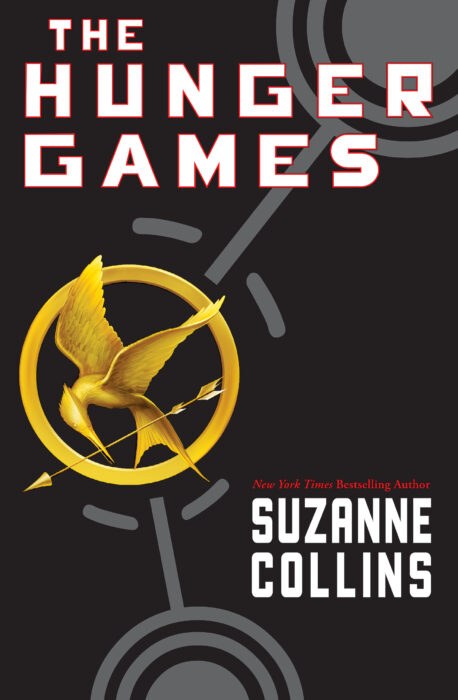
| Lexile measure | 810L (Scholastic Teacher Store) |
|---|---|
| ATOS / AR book level | 5.3 (TeachingBooks) |
| AR points | 15 (TeachingBooks) |
| Guided Reading (Fountas & Pinnell) | Z (Scholastic Teacher Store) |
| DRA level | 70 (Scholastic Teacher Store) |
| Flesch Reading Ease (0-100) | 83.2 ReadGenie estimate |
| Flesch-Kincaid grade | 4.8 ReadGenie estimate |
| Interest level | Grades 9-12 (Scholastic Teacher Store) |
| Approximate grade band | Grades 5-7 (ages 10-13) ReadGenie |
| Length | 384 pages, ~99,750 words |
| Format | Young adult novel |
| Good for struggling readers? | ★★★★★ 3/5 |
| Dyslexia-friendly rating | ★★★★★ 3/5 |
We couldn't find a published grade level equivalent for this book.
Is The Hunger Games a struggle for your child right now? ReadGenie gives struggling readers short daily Orton-Gillingham practice at home, out loud, with help on the exact sound they missed.
Try ReadGenie and get this book freeScores checked 2026-11-17. Different leveling systems don't always agree, so we show each published value with its source and mark our own estimates. Links to every source are under How we rate books.
What grade level is The Hunger Games?
The text sits at about a 5th to 6th grade level. The content and the length point to 7th grade and up. Both are true, and they explain why parents see such different answers online.
An AR level of 5.3 means the words and sentences are about as hard as what a typical student reads in the first half of 5th grade. The 810L Lexile lands in the same place. Katniss tells the story in the present tense, in short, direct sentences, and most of the words are common ones. Our readability check on all of chapter 1 came out a little below the AR level, which matches what you see on the page.
Guided Reading Z and DRA 70 sit at the very top of those scales, the levels schools use for 7th and 8th grade and beyond. Those systems look at more than words. They weigh themes, how much the reader has to infer, and how mature the content is, and children killing children in an arena pushes this book to the top.
Length matters too. At 15 AR points, it is a big book. A 5th grader who reads well can handle the sentences, but finishing 384 pages takes stamina. Scholastic lists it for grades 9 to 12 and other school sellers for grades 7 to 12, and most schools teach it in 7th or 8th grade.
Is The Hunger Games good for struggling readers?
For struggling readers in middle school, often yes, with support. We rate it 3 out of 5 for struggling readers, and it is one of those books where the audiobook changes everything.
The writing helps. Katniss talks to the reader directly and doesn't use fancy language. Chapter 1 averages about 13 words per sentence, and under 6 percent of its words have three or more syllables. That is plainer than many books meant for younger kids. The story helps more. Once the reaping happens at the end of chapter 1, the plot rarely slows down, and kids who say they hate reading will often ask for one more chapter. It is also a book teens talk about, so a 13-year-old reading below grade level can carry it around without feeling embarrassed.
The size is the problem. Almost 100,000 words is a lot of decoding for a child who reads slowly, and the chapters are long. There are no pictures, and the first chapter spends a while explaining District 12, the Seam, the fence and the tesserae before anything happens.
Watch for these sticking points:
- Invented names and words (Katniss, Peeta, Haymitch, Panem, tesserae)
- Chapter 1, which is about 5,000 words long and slow until the last pages
- The number of characters once the other tributes show up
- The arena deaths in Part II, which some kids need to talk through
A 7th or 8th grader reading a year or two behind will do well with the audiobook and a parent who reads the first chapter with them. A child reading below a 5th grade level on their own should either listen to it or start with something shorter.
Is The Hunger Games good for kids with dyslexia?
Overall: ★★★★★ 3/5
| Factor | Score | Why |
|---|---|---|
| Sentence length | 3/5 | About 13 words per sentence in chapter 1, with many short ones mixed in. |
| Vocabulary load | 3/5 | About 6 percent of words in chapter 1 have three or more syllables, including apothecary, iridescent, preposterous and eligibility. |
| Decodability | 3/5 | Most words follow common patterns. The invented names and terms (Katniss, Peeta, Haymitch, Effie Trinket, tesserae, Panem) don't always sound the way they look. |
| Text density and layout | 3/5 | Standard novel pages in a regular serif font, with dialogue breaking up the longer passages. |
| Pictures that carry meaning | 1/5 | No illustrations in the standard edition. A 2024 illustrated edition adds black and white art but keeps the full text. |
| Chapter length | 2/5 | 27 chapters averaging about 3,700 words, or 25 to 35 minutes each for a slower reader. |
| Engagement for reluctant readers | 4/5 | Chapter 1 builds slowly to a shock ending at the reaping, and from there the story moves fast. |
| Audiobook / read-along support | 5/5 | Unabridged Scholastic Audio recordings read by Carolyn McCormick and, in a 2018 special edition, by Tatiana Maslany. |
We rate The Hunger Games 3 out of 5 for dyslexic readers. The language is easier than the book's size suggests, but length and layout work against it.
Sentence length and vocabulary are both middle of the road. Collins mixes very short sentences with longer ones that list what Katniss sees and does. Most words are everyday words, with a few big ones dropped in, like apothecary, iridescent and preposterous. The real decoding trouble is the invented names. Katniss, Peeta and Haymitch don't look like any names a child has practiced, and tesserae doesn't sound the way it looks. Teach these before starting so they don't trip your child up on every page.
The standard paperback has full pages of serif text and no illustrations. Scholastic published an illustrated edition in 2024 with black and white art by Nico Delort, but it keeps the full text, so it doesn't make the reading lighter. The 27 chapters average around 3,700 words each, which can mean 30 minutes for a slower reader.
Audio is where this book shines. Scholastic Audio has two unabridged recordings, one read by Carolyn McCormick and a 2018 special edition read by Tatiana Maslany, and libraries carry both. Listening while following the print lets a dyslexic reader keep up with classmates without spending all their energy decoding. Many kids also listen to a chapter first and then read it, which makes the print version much easier.
Words and phonics patterns to practice first
Most of the hard words in The Hunger Games are long words built from parts a child may already know. A reader who can split a word into syllables and spot a suffix will find the pages a lot friendlier.
Consonant-le endings are everywhere in chapter 1: little, people, trouble, middle, table, battle. Teach that the consonant before -le joins it to make the last syllable (lit-tle, peo-ple, bat-tle).
The suffix -ly turns up all the time as Katniss describes how things happen: carefully, quickly, suddenly, usually, quietly, eventually. Cover the -ly, read the base word, then add it back.
Vowel teams carry many of the book's key words: reaping, seam, bread, leave, always, each. Point out that ea makes different sounds in reaping and bread, and practice both.
The suffix -tion shows up in words about the world of Panem: population, attention, conversation, starvation, nation. Teach that it says "shun" at the end of a word.
Prefixes un- and re- start many longer words: unwanted, unreachable, unthinkable, rebellion, remember, retrieve. Find the prefix, then read the rest.
Pre-teach these as whole words before chapter 1: Katniss, Primrose, Peeta, Haymitch, Effie, Panem, Capitol, tesserae, reaping, tribute, apothecary and Peacekeepers. If syllable division and suffixes are still shaky, short daily Orton-Gillingham practice on multisyllable words, like the lessons ReadGenie gives at home, makes a long novel like this one far less tiring.
How to read The Hunger Games with your child
Read chapter 1 aloud together. It is the slowest stretch and the longest chapter, and it ends with the moment that hooks almost everyone. Once your child has heard Prim's name called, the book starts doing the work.
Before Part II, talk about what happens in the arena. Kids handle the violence better when they know it is coming and know they can stop and talk. The deaths are described, and one of them is a 12-year-old girl's.
Break the book into its three parts, The Tributes, The Games and The Victor. Three goals feel much easier than 384 pages, and finishing each part is worth celebrating.
Use the audiobook as a partner. A chapter a night with your child following the print is a good pace, and it gets through the book in about a month. On nights your child has more energy, let them read the first few pages aloud before the recording takes over.
Wait to watch the movie until the book is done. Then talk about what the film left out, especially what Katniss is thinking, which the movie can't show.
Using The Hunger Games in the classroom or tutoring
For teachers, this is a common class novel in 7th and 8th grade and works well with a character chart started on day one, since the cast grows fast once the tributes arrive. Put the Panem words (Capitol, district, tribute, reaping, tesserae, Peacekeepers) on an anchor chart. Chapter 1 is about 5,000 words, so split it across two days for students who read slowly, and give students who need it the audiobook for homework chapters.
For tutors, pre-teach Katniss, Peeta, Haymitch, Effie and tesserae before the first session. Chapter 1 is full of consonant-le and -ly words for practice (little, trouble, battle, carefully, suddenly, quietly). A good session pattern is to have the student read the first few pages of a chapter aloud for fluency, then listen to the rest with the audiobook and talk about what happened.
Content notes for parents
This is a book about teenagers forced to kill each other, and several deaths are described, including a young girl's. Katniss's father died in a mine explosion before the story begins, and her family nearly starved afterward. Hunger, poverty and public punishment run through the whole book. There is a little romance but nothing beyond kissing. Most families find it fine for 12 and up, and many read it together so they can talk about it.
Should your child read it?
If your child is in 7th grade or older and wants to read it, yes, and the audiobook makes it doable even for a reader who is a year or two behind. A strong 5th or 6th grade reader can handle the words, but it is worth reading the arena chapters yourself first to decide. If your child is younger, sensitive to violence, or reading below a 5th grade level, start with Gregor the Overlander, Suzanne Collins's earlier series for younger readers, or Hatchet for a survival story without people hurting people.
Make the next book easier
Short daily sessions of reading, spelling and handwriting practice, built with Orton-Gillingham teachers. It works alongside tutoring and school support. The first 7 days are free. Join today and we'll mail your child The Hunger Games for free.
Try ReadGenie and get your free bookStarts with a free 7-day trial. Book mailed after your first paid month. US only, one per family.
FAQ
How many AR points is The Hunger Games?
The Hunger Games is worth 15 AR points, with an AR (ATOS) book level of 5.3. That is a lot of points for one book, because it is close to 100,000 words long.
What is The Hunger Games Lexile level?
The Hunger Games has a Lexile measure of 810L. On most Lexile charts that falls around 5th grade, lower than many parents expect from a teen novel, because the sentences are short and the words are mostly common.
What age group is The Hunger Games for?
Most kids read it between 12 and 14, in 7th or 8th grade. Scholastic lists it for grades 9 to 12 and other school sellers for grades 7 to 12. A younger child can usually read the words, but the arena violence is better suited to readers who are 12 or older.
Why is The Hunger Games Guided Reading level Z when the AR level is 5.3?
AR and Lexile measure mainly sentence length and word difficulty, and Collins writes in plain, short sentences. Guided Reading also weighs themes, inference and mature content, and a story about children forced to fight to the death sits at the top of that scale.
Is The Hunger Games hard to read?
The sentences are not hard. The length is. Chapter 1 reads at about a 5th grade level in our check, but the book is 384 pages with long chapters and many invented names, so a slow reader will need stamina or the audiobook.
Get The Hunger Games free
ReadGenie helps struggling readers improve their reading, spelling and handwriting in short daily sessions at home. Join and we'll mail your child this book for free.
Claim your free bookStarts with a free 7-day trial. Book mailed after your first paid month. US only, one per family.
What to read next
- Gregor the Overlander by Suzanne Collins (easier). Suzanne Collins's earlier fantasy series for younger readers, with an 11-year-old who falls into a world under New York City.
- Hatchet by Gary Paulsen (easier). A shorter survival story about a boy alone in the wilderness, with no violence between people.
- The Giver by Lois Lowry (similar). A shorter dystopian classic about a boy who learns the truth about his community, with less action and more ideas.
- Catching Fire by Suzanne Collins (similar). Book 2, where Katniss and Peeta are sent back into the arena.
- The Maze Runner by James Dashner (harder). Another fast teen dystopia, about boys trapped in a glade surrounded by a deadly maze.
Browse all of our reading-level book reviews.
How we rate books
Lexile, ATOS (Accelerated Reader), Guided Reading and DRA levels come from the companies that own them and from publishers. We link to where we found each one, and when a level isn't published we say so. Anything marked "ReadGenie estimate" is our own call, not an official level. Flesch scores come from a short public excerpt when the publisher offers one. The struggling-reader and dyslexia-friendly ratings are our judgment, based on eight things (sentence length, vocabulary, decodability, page layout, pictures, chapter length, how gripping the story is, and audiobook support). Treat them as a starting point. The right book is one your child can read with about 95% accuracy and wants to keep reading.
Sources
- Scholastic Teacher Store: The Hunger Games (paperback) (Lexile, Guided Reading, DRA, ATOS check, pages, grades, excerpt)
- TeachingBooks: The Hunger Games (ATOS, AR points, word count, Lexile check, grades)
- Booksource: The Hunger Games (Guided Reading check, Lexile check, AR check, interest level)
- Wake County Public Libraries: The Hunger Games audiobook (Carolyn McCormick) (audiobook narrator)
- Libro.fm: The Hunger Games (Special Edition) audiobook (audiobook narrator)
- Scholastic: illustrated edition announcement (illustrated edition)