Junie B. Jones Reading Level: Lexile, AR Level and Age Guide
Junie B. Jones and the Stupid Smelly Bus is Lexile 380L, AR level 2.9 and Guided Reading level M, a good fit for 2nd graders and strong 1st graders. Here's how it works for struggling readers and kids with dyslexia, and what to know about Junie B.'s grammar.

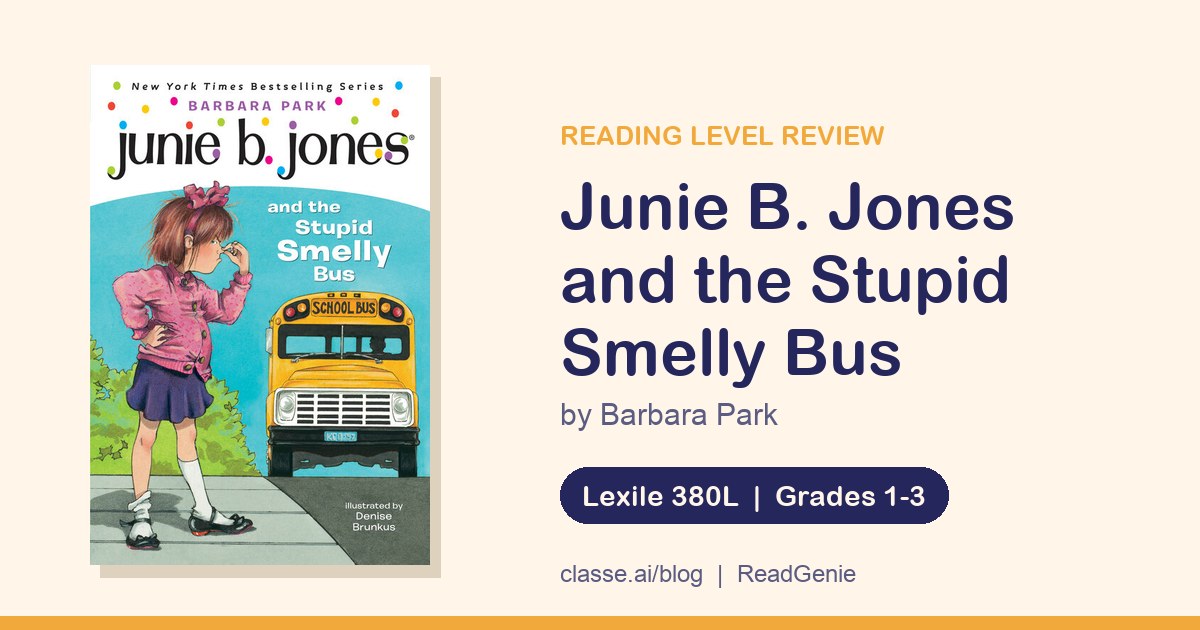
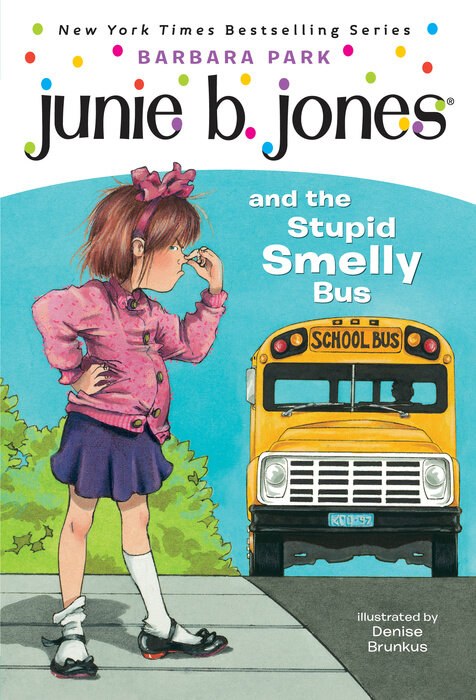
Junie B. Jones #1, Junie B. Jones and the Stupid Smelly Bus, has a 380L Lexile measure, an AR (ATOS) book level of 2.9 and a Guided Reading level of M. Most 2nd graders can read it on their own, and strong 1st graders can manage it with a grown-up nearby. For a child who finds reading hard, it's a friendly first chapter book because it's short, it's funny, and Junie B. tells the story herself in quick, chatty sentences. Two things are good to know before you start. Junie B. talks like a real 5-year-old, grammar mistakes and all, and her kindergarten world can feel young to kids in 4th grade and up.
The story is about the first days of kindergarten. Junie B. is not a fan of the school bus or the kids she decides are meanies, so when it's time to go home, she just doesn't get on. She stays behind in the empty school and goes exploring, and the grown-ups are not amused. Kids love her because she says the things they think but would never say out loud, and parents tend to like how well the book captures first-day nerves.
Junie B. Jones and the Stupid Smelly Bus reading level at a glance
| Lexile measure | 380L (Penguin Random House) Also listed as 520L (RIF Literacy Central, Trumpet Club edition ISBN 9780590639033) |
|---|---|
| ATOS / AR book level | 2.9 (TeachingBooks) |
| AR points | 1 (TeachingBooks) |
| Guided Reading (Fountas & Pinnell) | M (Penguin Random House) |
| Interest level | Ages 6-9 (Penguin Random House) |
| Approximate grade band | Grades 1-3 (ages 6-9) ReadGenie |
| Length | 80 pages, ~6,570 words |
| Format | Chapter book |
| Good for struggling readers? | ★★★★★ 4/5 |
| Dyslexia-friendly rating | ★★★★★ 4/5 |
We couldn't find a published DRA level, grade level equivalent or Flesch score for this book.
Scores checked 2026-10-31. Different leveling systems don't always agree, so we show each published value with its source and mark our own estimates. Links to every source are under How we rate books.
Is your child working hard and still getting stuck on words?
ReadGenie helps struggling readers improve their reading, spelling and handwriting with Orton-Gillingham practice at home. Your child reads out loud, the app listens, and it helps with the exact sound they missed. Join today and we'll mail your child Junie B. Jones and the Stupid Smelly Bus for free.
Try ReadGenie and get your free bookStarts with a free 7-day trial. Book mailed after your first paid month. US only, one per family.
What grade level is Junie B. Jones?
Book 1 sits at about a 2nd grade reading level. A child who reads comfortably at the end of 1st grade can usually handle it with some help, and by the middle of 2nd grade most kids read it alone.
An AR level of 2.9 means the text is about as hard as what a typical student reads near the end of 2nd grade. It's worth 1 AR point, so it makes a quick, satisfying quiz if your school uses Accelerated Reader.
Guided Reading level M is the same letter many schools hope to see around the end of 2nd grade. If your child's teacher says they're at level J or K, expect this book to be a stretch alone and a good fit as a shared read. It's the same letter as Magic Tree House book 1, so kids often read the two series side by side.
You might see two Lexile numbers. The publisher and most school resources list 380L for the Random House paperback, but an older Scholastic book-club printing shows up online as 520L. Lexile measures can change between editions and over time. We'd go with 380L for the copy you're likely to buy, and either way it lands at the easy end of chapter books.
The publisher suggests the series for ages 6 to 9 and grades 1 to 4. In practice, 1st graders love it as a read-aloud and 2nd graders read it on their own. Older struggling readers are where it gets more personal. Some 3rd graders are happy to read about a kindergartner, and others feel it's too young for them.
Is Junie B. Jones good for struggling readers?
For most kids, yes. We give it 4 out of 5 for struggling readers.
The whole book is about 6,500 words in a small 80-page paperback, broken into short chapters of just a few pages. A child who usually stalls halfway through a book can see the end coming, and that matters more than people think. Because Junie B. narrates everything herself, the sentences sound like talking. That makes them easier to read with expression, and reading with expression is a big part of fluency. A black-and-white drawing every few pages helps a reader keep track of what's happening and gets a laugh along the way.
It's also funny, which is the quickest way to get a reluctant reader to turn a page. And there's a long series behind it at about the same level, so a child who likes book 1 has plenty of easy wins waiting.
Here's what can trip kids up. Junie B. uses grammar the way a kindergartner does, on purpose. For most readers that's part of the joke, but a child who is still working out how written English should sound, or who is learning English, may pick up her mistakes or get confused by them. The pages are mostly text, which is a step up from early readers. And because Junie B. is five, a 9- or 10-year-old may find the book younger-looking than they'd like. For that child, the graphic novel or a series with an older main character may land better.
Is Junie B. Jones good for kids with dyslexia?
Overall: ★★★★★ 4/5
| Factor | Score | Why |
|---|---|---|
| Sentence length | 4/5 | Mostly short sentences and quick dialogue in a first-person kid voice. |
| Vocabulary load | 4/5 | Everyday school and home words. The few long words, like kindergarten and principal, repeat often. |
| Decodability | 3/5 | Many regular one- and two-syllable words, but also kid-talk forms and grammar mistakes that don't match what children see in other books. |
| Text density and layout | 4/5 | Small trim size with large type, short paragraphs and plenty of white space for a chapter book. |
| Pictures that carry meaning | 3/5 | A drawing every few pages. The pictures help with the jokes but don't carry the story. |
| Chapter length | 4/5 | Short chapters of a few pages each, about 6,500 words in all. |
| Engagement for reluctant readers | 5/5 | Junie B.'s loud, funny voice and a first-day-of-school worry most kids recognize. |
| Audiobook / read-along support | 5/5 | Unabridged audiobook of about 47 minutes from the publisher, good for listening while following the print. |
Dyslexia-friendly edition: Junie B. Jones and the Stupid Smelly Bus: The Graphic Novel (2025) tells the same story in comic form with fewer words (TeachingBooks lists 4,793 words and AR level 2.9).
We give it 4 out of 5 on our dyslexia-friendly scale. Its strengths are engagement, short sentences and an official unabridged audiobook from the publisher that runs about 47 minutes. Listening to a chapter while following the print, then reading the same chapter out loud the next day, is a good way for a dyslexic reader to enjoy a story a little above their decoding level.
The weakest spot is decoding. Most of the words are everyday school and home words that follow regular patterns, but Junie B.'s kid-talk and grammar slips mean some words aren't spelled or used the way your child sees them anywhere else. For a reader who is carefully matching sounds to letters, those moments can be confusing. A quick heads-up helps. Tell your child that Junie B. sometimes says things wrong on purpose, and that it's fine to laugh and keep going.
Visually, it's an easy book to look at. The trim size is small, the type is big for a chapter book and the paragraphs are short, though it uses a regular book font rather than a dyslexia-specific one.
If the chapter book is too much right now, look at Junie B. Jones and the Stupid Smelly Bus: The Graphic Novel (2025). It tells the same story in comic form with fewer words, and it carries the same AR level, so it isn't a big drop in difficulty. What changes is how much the pictures do. Kids who read the graphic novel first often go back to the original with confidence because they already know the story.
Words and phonics patterns to practice first
If your child is in an Orton-Gillingham or structured literacy program, this book is good practice once closed syllables are solid and r-controlled vowels are being introduced. These are the patterns your child will see most.
- Closed syllables with short vowels, like bus, smell, desk, hid and not. These should feel easy, and they make up a lot of the text.
- Y at the end of a word saying long e, as in smelly and library. Point it out once and it clicks.
- R-controlled vowels, as in teacher, kindergarten, nurse, first and her. It helps to say out loud that er, ir and ur often make the same sound.
- Vowel teams and digraphs such as the oo in school, the ea and ch in teacher, the ch in lunch and the sh in she.
- Open syllables, where the vowel says its name, like the first part of stupid and Junie, and short words like go, no and me.
The tricky words to go over before chapter 1 are kindergarten, principal, Beatrice, library, nurse, office, school, said and because. The two long ones come up again and again, so they're worth two minutes of practice. Clap them out together (kin-der-gar-ten, prin-ci-pal), then write each syllable on a card and have your child put them back in order. Beatrice is Junie B.'s full first name, and kids enjoy finding out what the B stands for.
This is the same kind of practice ReadGenie gives kids every day. Your child reads aloud, the app listens, and it helps with the exact sound they missed, so patterns like r-controlled vowels get easier in the books your child picks.
How to read Junie B. Jones with your child
Plan on a few short chapters a night. At that pace you'll finish in about a week, which feels like a real accomplishment without dragging on.
Let your child be Junie B. Have them read her lines in her loud, bossy voice while you read the narration around it, or swap halfway through a chapter. Kids who read in a flat voice often come alive with this character, and that expression is exactly what fluency practice is supposed to build.
When Junie B. says something the wrong way, don't skip past it. Laugh about it together, then ask your child how a grown-up would say it. It turns her mistakes into a game and keeps them from sticking.
If decoding is wearing your child out, play a chapter of the audiobook first while they follow along, and have them read that chapter aloud the next day. And if your child is nervous about starting school or riding the bus, this book is a gentle way in. Ask what Junie B. could have done instead of hiding, and talk about what your child would do if they ever felt lost or left behind.
Using Junie B. Jones in the classroom or tutoring
Teachers will find it fits a Guided Reading level M group, and it makes a natural back-to-school read for grades 1 and 2. Random House offers a free educators' guide with a "You Are Here" activity where students tour the school and draw a map of it, which lines up with Junie B.'s own wander through the building. Another simple idea is to collect a few of her grammar slips on chart paper and let students rewrite them the standard way. They love catching her mistakes.
For tutors and reading specialists, it's good connected text for students who know closed syllables and are moving into r-controlled vowels and y as long e. The first-person voice makes it a strong prosody text. Model a page with lots of expression, then have the student echo-read it. For students below level M, start with the graphic novel edition for independent reading and use the chapter book as a shared read.
Content notes for parents
The word stupid is right there in the title, and Junie B. calls other kids meanies and says plenty of things you might not want repeated at dinner. Some families love her honesty and some would rather skip the attitude. The plot also has a child hiding at school instead of going home, which is played for laughs but makes a good opening for a safety talk. There's no violence, scary content or romance.
Should your child read it?
If your child is reading somewhere around the end of 1st grade to the middle of 2nd, this is a great pick, especially if they like funny books. If they're below Guided Reading level K, start with the graphic novel or read the chapter book together with the audiobook. If your child is in 3rd or 4th grade and Junie B. feels too young, try Ivy + Bean or Judy Moody for the same kind of humor with an older main character.
Make the next book easier
Short daily sessions of reading, spelling and handwriting practice, built with Orton-Gillingham teachers. It works alongside tutoring and school support. The first 7 days are free. Join today and we'll mail your child Junie B. Jones and the Stupid Smelly Bus for free.
Try ReadGenie and get your free bookStarts with a free 7-day trial. Book mailed after your first paid month. US only, one per family.
FAQ
What age is Junie B. Jones good for?
The publisher recommends Junie B. Jones for ages 6 to 9. Most kids read the first book on their own around age 7 or 8, in 2nd grade, and 6-year-olds enjoy it as a read-aloud. Older kids who read below grade level can use it too, though some will find a kindergarten narrator young for them.
Is Junie B. Jones good for 1st grade?
It's a great read-aloud for 1st grade, and strong 1st grade readers can read it with help. At Guided Reading level M, it's a bit above where most 1st graders read alone, so the audiobook or shared reading helps a lot.
Is Junie B. Jones good for 3rd graders?
Many 3rd graders who are still building reading skills enjoy it, since the level is comfortable and the humor works at any age. Strong 3rd grade readers will find it easy, and some kids that age feel a kindergarten story is too young for them. For them, Judy Moody is a good next step.
What is the AR level of Junie B. Jones and the Stupid Smelly Bus?
It has an ATOS book level of 2.9 and is worth 1 AR point. That means the text is about as hard as what a typical student reads near the end of 2nd grade.
Why do some parents worry about Junie B. Jones's grammar?
Junie B. narrates the books herself and talks the way a young child does, mistakes included. Most kids understand it's part of the joke, but it can confuse children who are still learning how written English should sound. Talking about her mistakes as you read turns them into a useful grammar lesson.
Is Junie B. Jones a good book for kids with dyslexia?
It can be. The sentences are short, the chapters are quick and there's an official audiobook to follow along with. Pre-teach long words like kindergarten and principal, warn your child that Junie B. sometimes says things wrong on purpose, and try the graphic novel first if a page of text still feels like a lot.
Get Junie B. Jones and the Stupid Smelly Bus free
ReadGenie helps struggling readers improve their reading, spelling and handwriting in short daily sessions at home. Join and we'll mail your child this book for free.
Claim your free bookStarts with a free 7-day trial. Book mailed after your first paid month. US only, one per family.
What to read next
- Junie B. Jones and the Stupid Smelly Bus: The Graphic Novel by Barbara Park (easier). The same story in comic form, with fewer words. A good preview before the chapter book.
- Mercy Watson to the Rescue by Kate DiCamillo (easier). Short, funny and full of color pictures. A gentle step before Junie B.
- Dinosaurs Before Dark by Mary Pope Osborne (similar). Magic Tree House #1 is the same Guided Reading level, M, for kids who want adventure instead of school stories.
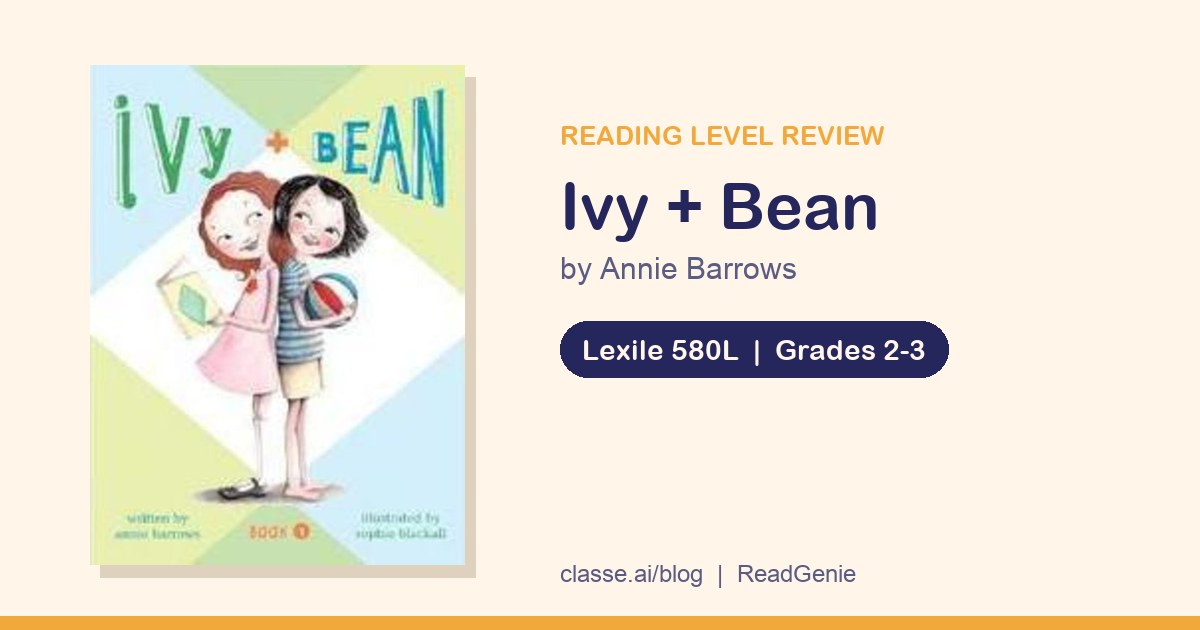
- Ivy + Bean by Annie Barrows (harder). Another funny girl-led school and neighborhood series, with a little more text per page.
- Judy Moody Was in a Mood by Megan McDonald (harder). A moody, funny third grader. The natural next step when Junie B. starts to feel young.
Browse all of our reading-level book reviews.
How we rate books
Lexile, ATOS (Accelerated Reader), Guided Reading and DRA levels come from the companies that own them and from publishers. We link to where we found each one, and when a level isn't published we say so. Anything marked "ReadGenie estimate" is our own call, not an official level. Flesch scores come from a short public excerpt when the publisher offers one. The struggling-reader and dyslexia-friendly ratings are our judgment, based on eight things (sentence length, vocabulary, decodability, page layout, pictures, chapter length, how gripping the story is, and audiobook support). Treat them as a starting point. The right book is one your child can read with about 95% accuracy and wants to keep reading.
Sources
- Penguin Random House: Junie B. Jones and the Stupid Smelly Bus (Lexile, Guided Reading level, ages, grades, page count, audiobook length)
- TeachingBooks: Junie B. Jones and the Stupid Smelly Bus (Lexile, ATOS, AR points, word count)
- TeachingBooks: Junie B. Jones and the Stupid Smelly Bus: The Graphic Novel (graphic novel word count and AR level)
- Random House Educators' Guide (PDF) (grades 1-4, formats, classroom activities)
- RIF Literacy Central (520L listing for a Trumpet Club edition)
- Open Library (ISBNs, first publication year)