The Last Kids on Earth Reading Level: Lexile 650L, AR 4.1, Level S
The Last Kids on Earth is Lexile 650L, AR level 4.1 and Guided Reading level S, so most kids read it alone in 3rd to 5th grade. Here's how it works for struggling and dyslexic readers, and which words to practice first.

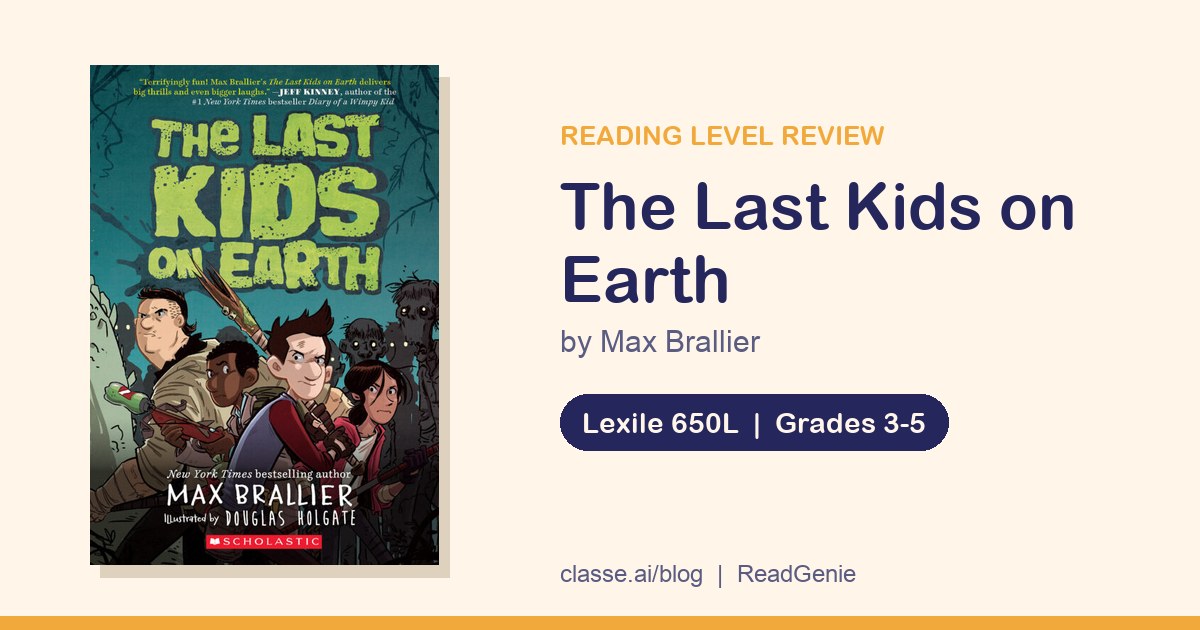
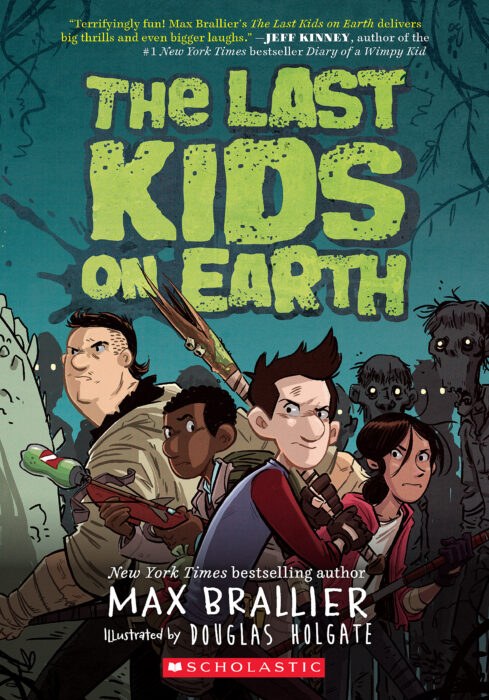
The Last Kids on Earth by Max Brallier has a 650L Lexile measure, an AR (ATOS) book level of 4.1 and a Guided Reading level of S, so most kids can read it on their own somewhere in 3rd to 5th grade. Drawings on most pages, short chapters and a funny hero who fights monsters with a baseball bat make it one of the best picks for reluctant and struggling readers in grades 4 to 7. Kids still reading below a 3rd grade level will do better starting with the audiobook or the graphic novel version.
Jack Sullivan is thirteen, an orphan who has never felt at home with any of the families he has lived with. Then the monster apocalypse arrives in his town of Wakefield, and life gets a lot more interesting. Jack turns his tree house into a fortress, gives himself a list of heroic feats to finish, and teams up with his best friend Quint and Dirk, the school tough guy, to rescue June, the girl he has a crush on. Standing in their way is a gigantic monster named Blarg. Kids love it for the jokes, the battles and the idea of a world with no grown-ups telling them what to do.
The Last Kids on Earth reading level at a glance
| Lexile measure | 650L (Scholastic Teacher Store) Also listed as GN420L |
|---|---|
| ATOS / AR book level | 4.1 (TeachingBooks) |
| AR points | 3 (TeachingBooks) |
| Guided Reading (Fountas & Pinnell) | S (Scholastic Teacher Store) Also listed as T |
| DRA level | 40-50 (Scholastic Teacher Store) |
| Flesch Reading Ease (0-100) | 83.3 ReadGenie estimate |
| Flesch-Kincaid grade | 4.6 ReadGenie estimate |
| Interest level | Grades 3-7 (Scholastic Teacher Store) |
| Approximate grade band | Grades 3-5 (ages 8-11) ReadGenie |
| Length | 240 pages, ~21,916 words |
| Format | Middle grade novel |
| Good for struggling readers? | ★★★★★ 4/5 |
| Dyslexia-friendly rating | ★★★★★ 4/5 |
We couldn't find a published grade level equivalent for this book.
Scores checked 2026-11-15. Different leveling systems don't always agree, so we show each published value with its source and mark our own estimates. Links to every source are under How we rate books.
Is your child working hard and still getting stuck on words?
ReadGenie helps struggling readers improve their reading, spelling and handwriting with Orton-Gillingham practice at home. Your child reads out loud, the app listens, and it helps with the exact sound they missed. Join today and we'll mail your child The Last Kids on Earth for free.
Try ReadGenie and get your free bookStarts with a free 7-day trial. Book mailed after your first paid month. US only, one per family.
What grade level is The Last Kids on Earth?
Think of it as a 3rd to 5th grade book. A strong 3rd grader can read it with a little help, and most 4th and 5th graders read it comfortably on their own.
The AR level of 4.1 means the text is about as hard as what a typical student reads at the start of 4th grade. The book is worth 3 AR points because it's a real novel of about 22,000 words, even with all the pictures. A 650L Lexile sits in the range many schools expect from 3rd and 4th graders.
Guided Reading level S is usually matched to late 4th grade, and Scholastic's DRA range of 40 to 50 points the same way. The letter level runs a little higher than the Lexile because Fountas and Pinnell weigh more than sentences and words. Jack tells the story in a jokey voice with lots of side comments, and a reader has to follow what happens between the comic panels and the prose.
Not every source agrees on the newest paperback. Booksource lists a 2026 Penguin Random House paperback at level T with a graphic novel Lexile of GN420L. We go with Scholastic and TeachingBooks, which agree on 650L, and we list both numbers in our sources.
We also ran our own readability check on the first two chapters, about 2,300 words from the publisher's ebook sample. It came out at about a 4th to 5th grade level on the Flesch-Kincaid formula. That's our estimate, not an official level. Sentences average around 12 words, longer than in Dog Man or Diary of a Wimpy Kid, and Jack loves a big word.
Is The Last Kids on Earth good for struggling readers?
Yes, for most kids with a little support. We give it 4 out of 5 for struggling readers.
The pictures do a lot. Douglas Holgate's drawings show up on most spreads, and some of the biggest action is told in comic panels. A child who has to work hard at decoding gets a break every page or two, and the drawings show what the words just said. The pages look lighter than a regular novel, which matters to a kid who freezes at a full page of text.
The hook is strong too. Jack is funny, a little full of himself, and he narrates straight to the reader. Monsters and zombies show up in the first chapter. A 6th grader who reads at a 3rd or 4th grade level can carry this book without anyone teasing, because it looks and feels like something older kids read. Plenty of them already know it from the Netflix show.
The chapters are short. The first one runs about 1,300 words and the second about 1,000, so a struggling reader can finish a chapter in one sitting and feel done.
Here's what holds it back from a 5. The sentences are longer than in comic-heavy books like Dog Man, and Jack uses showy words like gargantuan, ferocious and impenetrable just for fun. Some invented monster names don't follow any spelling rules. A child reading at a 2nd grade level will get stuck often enough to lose the story.
For those kids, start with Dog Man or Big Nate, or try the graphic novel version of this book, then come back to the original.
Is The Last Kids on Earth good for kids with dyslexia?
Overall: ★★★★★ 4/5
| Factor | Score | Why |
|---|---|---|
| Sentence length | 3/5 | Chapters 1 and 2 average 11.7 words per sentence, though 44% of sentences have 8 words or fewer. |
| Vocabulary load | 3/5 | About 5.8% of words in the opening chapters have three or more syllables, with playful big words like gargantuan, ferocious and impenetrable. |
| Decodability | 3/5 | Most words follow common patterns, but invented monster names and words like apocalypse and pterodactyls need a preview. |
| Text density and layout | 4/5 | Text is broken up by drawings, big display lettering and comic panels, so pages feel lighter than a regular novel. |
| Pictures that carry meaning | 4/5 | Douglas Holgate's illustrations appear on most spreads, and some scenes are told in comic panels. |
| Chapter length | 4/5 | Chapter 1 runs about 1,300 words and chapter 2 about 1,000, so each chapter fits one sitting. |
| Engagement for reluctant readers | 5/5 | Monster battles, a tree house fortress and Jack's jokes pull reluctant readers along from the first page. |
| Audiobook / read-along support | 5/5 | An official audiobook read by Robbie Daymond that many libraries carry. |
We rate it 4 out of 5 for dyslexic readers. The layout, the pictures and the audiobook carry it, and the vocabulary is the part to plan for.
The page design helps a dyslexic reader more than the sentences do. Text comes in short blocks, broken up by drawings, big display lettering and comic panels. That gives the eyes a place to rest and keeps a reader from losing their line on a dense page.
Sentence length is middle of the road. The opening chapters average close to 12 words a sentence, but almost half the sentences are 8 words or shorter. Long sentences tend to show up when Jack is describing a monster, so those are good spots to slow down or read together.
Vocabulary is the real work. Most words are everyday words, but around one in seventeen words has three or more syllables. Jack likes words like apocalypse, gargantuan and pterodactyls. These are fun to say once you know them, so teach them ahead of time instead of making your child decode them cold.
The audiobook is a big plus. The official recording is read by Robbie Daymond, and many libraries carry it. Listening while following the printed words lets a dyslexic child enjoy the jokes at full speed. The drawings still need to be seen, so keep the book open while listening.
Words and phonics patterns to practice first
The first two chapters give a good preview of the patterns your child will meet all through the book.
Digraphs are everywhere. Chapter, thing, check, quick, coach and thin all show up early. If your child still mixes up sh, ch and th, warm up with those first.
R-controlled vowels come next. Monster, forty, world, normal, orphan and girls appear in the opening pages. Monster alone comes up so often that getting the er sound solid pays off on almost every page.
The -ed ending carries the action. Shattered, bounced, learned, clawed, crumpled and arrived are typical. Practice the three sounds of -ed (as in clawed, bounced and the extra syllable in words like ended) so your child doesn't stop at each one.
Vowel teams like beneath, years, roof, cool, tool and need are worth a quick review. Consonant-le words such as little, tumble, handle, middle, single and resemble are good practice for splitting syllables in the right place. Compound words like baseball, something, sunglasses, overgrown, underneath and backyards can be split in half and read as two short words. You'll also see a handful of -tion words, like action, attention, situation and frustration.
Pre-teach these before chapter 1. Sullivan, Wakefield, Blarg, apocalypse, gargantuan, impenetrable, ferocious, pterodactyls, people and surroundings. Pterodactyls has a silent p, so it's fine to just tell your child that one. Blarg is made up, and kids usually love saying it.
This is the kind of practice ReadGenie does at home with short Orton-Gillingham lessons, so a child can drill digraphs, r-controlled vowels and -ed endings before meeting them in a monster battle.
How to read The Last Kids on Earth with your child
Read chapter 1 together and look at the drawings before reading the words. Jack explains the whole monster apocalypse in a few pages, and the pictures set up everything that comes next.
After that, try trading off with the audiobook. Your child reads one chapter, then listens to the next while following along in the book. On busy nights the audiobook keeps the story moving so the book doesn't stall halfway through.
Jack keeps a list of feats he wants to finish. Have your child keep their own copy and check them off as Jack does each one. It's a simple way to follow the plot, and kids like being the one keeping score.
If the Netflix show is a treat in your house, save an episode for after your child reads the matching part of the book. And if they love it, let them pick the next book in the series themselves.
Using The Last Kids on Earth in the classroom or tutoring
For teachers, this is a strong pick for reluctant readers in grades 4 to 6 who have outgrown comics but still want pictures. Have students compare a scene told in comic panels with one told in prose, and talk about what each does better. Jack's big words, like gargantuan and impenetrable, make a fun word-of-the-day routine, and students tend to start using them on their own.
For tutors, pre-teach Sullivan, Wakefield, Blarg and apocalypse before chapter 1. Use action words from the book for -ed practice, like shattered, bounced, clawed and crumpled. Have the student read the prose pages aloud and talk through the comic panels, so the pictures support decoding instead of replacing it.
Content notes for parents
Expect lots of cartoon fighting with monsters and zombies, using a baseball bat and homemade weapons. It's played for laughs, with no gore. Jack's life as an orphan who has moved from family to family is part of his story, and the book handles it with humor. There's some mild name-calling and gross-out humor, the kind you'd expect from a book aimed at 9 to 12 year olds.
Should your child read it?
If your child is in 4th to 7th grade, reads at about a 3rd or 4th grade level and wants something funny with lots of action, this is a great book to hand them. Kids still reading below a 3rd grade level should start with Dog Man, Big Nate or the graphic novel version. Kids who want monsters with real scares can try Welcome to Dead House, and kids ready for longer books with fewer pictures can move up to The Dragonet Prophecy.
Make the next book easier
Short daily sessions of reading, spelling and handwriting practice, built with Orton-Gillingham teachers. It works alongside tutoring and school support. The first 7 days are free. Join today and we'll mail your child The Last Kids on Earth for free.
Try ReadGenie and get your free bookStarts with a free 7-day trial. Book mailed after your first paid month. US only, one per family.
FAQ
What reading level is The Last Kids on Earth?
The Last Kids on Earth has a 650L Lexile measure, an AR level of 4.1 and a Guided Reading level of S. That puts it at about a 3rd to 5th grade reading level. The pictures on most pages make it feel easier than a regular novel at the same level.
What is the AR level of The Last Kids on Earth?
It has an ATOS book level of 4.1 and is worth 3 AR points. The 4.1 means the text is about as hard as what a typical student reads early in 4th grade. It's about 22,000 words long.
What age is The Last Kids on Earth for?
Scholastic lists it for grades 3 to 7, which is about ages 8 to 13. Most kids can read it on their own around ages 8 to 11. Older kids who read below grade level enjoy it too, because the book doesn't look young.
Is The Last Kids on Earth good for struggling readers?
Yes, for most. The drawings, short chapters and funny hero keep reluctant readers going. The sentences and vocabulary are harder than in Dog Man, so a child reading below a 3rd grade level may need the audiobook alongside the book.
Is The Last Kids on Earth a graphic novel?
The original book is an illustrated novel, with prose on every spread plus drawings and some comic-panel scenes. There's also a separate graphic novel version of the first book, told fully in comics, which is a good way in for kids who aren't ready for the original yet.
Get The Last Kids on Earth free
ReadGenie helps struggling readers improve their reading, spelling and handwriting in short daily sessions at home. Join and we'll mail your child this book for free.
Claim your free bookStarts with a free 7-day trial. Book mailed after your first paid month. US only, one per family.
What to read next
- Dog Man by Dav Pilkey (easier). A full comic with even fewer words per page, a good confidence builder before Jack's longer chapters.
- Big Nate: In a Class by Himself by Lincoln Peirce (easier). Another funny illustrated novel with a cartoon hero, a bit easier to read.
- Diary of a Wimpy Kid by Jeff Kinney (similar). The same mix of drawings and a jokey first-person voice, at a similar level.
- Hilo: The Boy Who Crashed to Earth by Judd Winick (similar). A graphic novel about robots and monsters with the same humor and big battles.
- Welcome to Dead House by R.L. Stine (similar). The first Goosebumps book, for kids who want monsters with real scares and no pictures.
- The Dragonet Prophecy by Tui T. Sutherland (harder). Wings of Fire is longer, with more description and fewer pictures, a good next step for monster fans.
Browse all of our reading-level book reviews.
How we rate books
Lexile, ATOS (Accelerated Reader), Guided Reading and DRA levels come from the companies that own them and from publishers. We link to where we found each one, and when a level isn't published we say so. Anything marked "ReadGenie estimate" is our own call, not an official level. Flesch scores come from a short public excerpt when the publisher offers one. The struggling-reader and dyslexia-friendly ratings are our judgment, based on eight things (sentence length, vocabulary, decodability, page layout, pictures, chapter length, how gripping the story is, and audiobook support). Treat them as a starting point. The right book is one your child can read with about 95% accuracy and wants to keep reading.
Sources
- Scholastic Teacher Store: The Last Kids on Earth (paperback) (Lexile, Guided Reading, DRA, ACR level, grades, pages, edition)
- TeachingBooks: The Last Kids on Earth (ATOS, AR points, Lexile, word count, grades, audiobook narrator)
- Booksource: The Last Kids on Earth (2026 paperback) (Guided Reading conflict, Lexile conflict, AR level, interest level)
- TeachingBooks: The Last Kids on Earth and the Zombie Parade (series range)
- TeachingBooks: The Last Kids on Earth and the Monster Dimension (series range)
- Booksource: The Last Kids on Earth (Graphic Novel) (graphic novel adaptation)
- OverDrive: The Last Kids on Earth ebook sample (Penguin Young Readers) (Flesch excerpt, phonics patterns, sentence length)