Mercy Watson Reading Level: Lexile 450L, AR 2.7, Guided Reading L
Mercy Watson to the Rescue by Kate DiCamillo is Lexile 450L, AR level 2.7 with 0.5 AR points and Guided Reading L. Most kids can read it alone in 2nd grade, and its big type, short chapters and color pictures make it a great first chapter book for struggling readers.

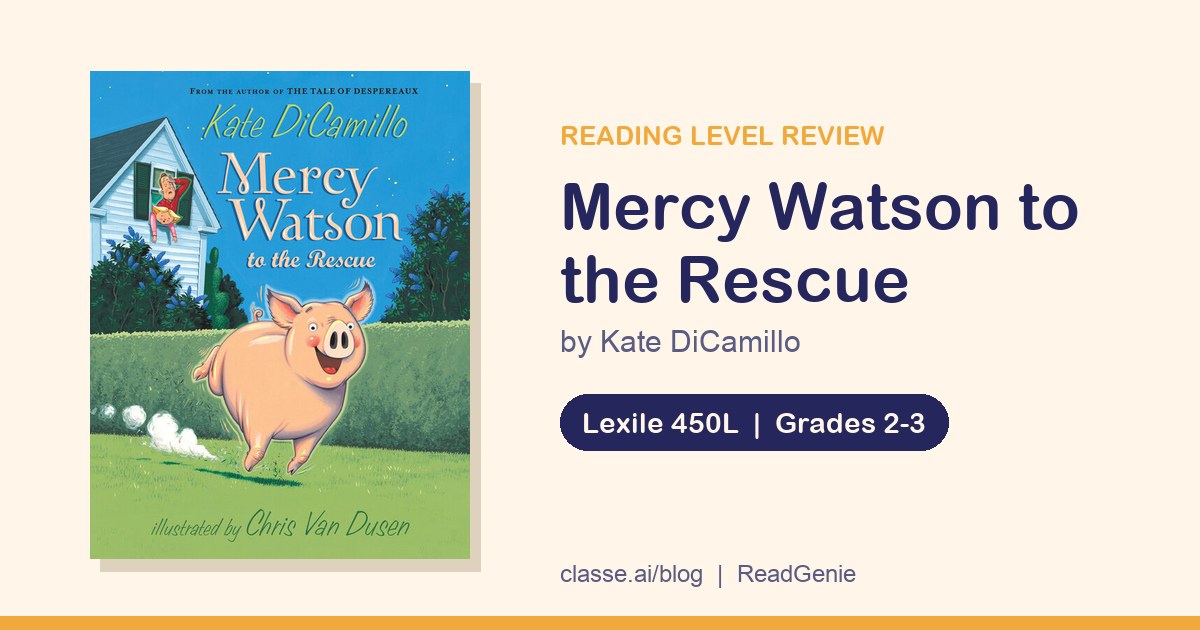
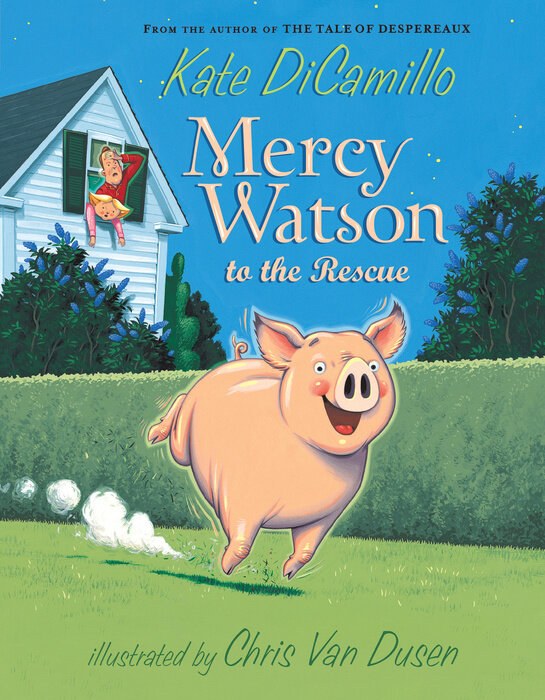
Mercy Watson to the Rescue by Kate DiCamillo has a Lexile measure of 450L, an AR (ATOS) book level of 2.7 worth 0.5 AR points and a Guided Reading level of L. Most kids can read it on their own in 2nd grade, and a strong 1st grader can with a little help. For a child who is behind in reading, it is one of the friendliest first chapter books around, with about 1,900 words, big type, short chapters and color pictures on nearly every page.
Mercy is a pig who lives with Mr. and Mrs. Watson, and what she loves most in the world is hot toast with a lot of butter on it. One night she climbs into bed with the Watsons, and the bed starts to sink through the floor. Mercy heads off to get help, or at least that is what the Watsons think she is doing. Kids love the gap between what the grown-ups believe and what Mercy is really after. It is the first of the Mercy Watson books, which is why so many parents look up the series level before buying the set.
Mercy Watson to the Rescue reading level at a glance
| Lexile measure | 450L (Penguin Random House) |
|---|---|
| ATOS / AR book level | 2.7 (TeachingBooks) |
| AR points | 0.5 (TeachingBooks) |
| Guided Reading (Fountas & Pinnell) | L (Penguin Random House) Also listed as K |
| Flesch Reading Ease (0-100) | 92.8 ReadGenie estimate |
| Flesch-Kincaid grade | 2.0 ReadGenie estimate |
| Interest level | Grades K-3 (Penguin Random House) Also listed as Grades 1-3 |
| Approximate grade band | Grades 2-3 (ages 7-9) ReadGenie |
| Length | 80 pages, ~1,929 words |
| Format | Chapter book |
| Good for struggling readers? | ★★★★★ 4/5 |
| Dyslexia-friendly rating | ★★★★★ 4/5 |
We couldn't find a published DRA level or grade level equivalent for this book.
Is Mercy Watson to the Rescue a struggle for your child right now? ReadGenie gives struggling readers short daily Orton-Gillingham practice at home, out loud, with help on the exact sound they missed.
Try ReadGenie and get this book freeScores checked 2026-11-18. Different leveling systems don't always agree, so we show each published value with its source and mark our own estimates. Links to every source are under How we rate books.
What grade level is Mercy Watson to the Rescue?
Mercy Watson to the Rescue sits right around a 2nd grade reading level. Most children can read it independently somewhere in 2nd grade, and many read it with a parent at the end of 1st grade.
An AR level of 2.7 means the text is about as hard as what a typical student reads in the seventh month of 2nd grade. The 450L Lexile points to the same spot. Guided Reading level L is usually taught near the end of 2nd grade, so all three systems agree here, which doesn't always happen. One leveled-library kit from Fountas and Pinnell places it a step lower at K, and we went with the publisher's L.
Our readability check on the opening pages came out a little easier, around a 2nd grade start. Sentences there average under seven words, and only about 2.5 percent of words have three or more syllables. What lifts the official levels is length and a few longer words, not hard sentences.
Length is also why it is such a good first chapter book. At 0.5 AR points and about 1,900 words, it is short. Spread across 80 pages, that comes to only a few lines of text per page. A child gets the feeling of reading a real chapter book without facing a real chapter book's pages.
Is Mercy Watson to the Rescue good for struggling readers?
Yes, with one catch. We rate it 4 out of 5 for struggling readers. The text is short, clear and well supported by pictures. The catch is the look of the book, which can feel young to older kids.
The pages are about as welcoming as chapter books get. The type is large, the lines are short and there is plenty of white space around each paragraph. Chris Van Dusen's full-color paintings fill most spreads, so a child who loses track of a word can look up and see what is going on. Chapters are only a few pages long, which gives natural places to stop before a reader gets tired.
DiCamillo also repeats herself on purpose. The line about hot toast with a great deal of butter comes back again and again, and so do the Watsons' bedtime song and their sleepy dreams. The first time through, a child works at those phrases. By the third time, they read them smoothly, and that small win builds confidence fast.
There are a few things to watch for.
- The pig and the bright pictures look young, so many 4th and 5th graders will feel it is beneath them
- Longer words like decided, together and dreaming show up in the first chapter
- Sound effects are spelled for fun, with stretched letters, so careful decoders may stall on them
- Much of the humor is dry and comes from what the grown-ups misunderstand, which younger kids may miss
For a 1st through 3rd grader who is behind, this is a great pick. For an older struggling reader who is self-conscious about baby books, try The Bad Guys or Dog Man instead, which have similar amounts of text and look older.
Is Mercy Watson to the Rescue good for kids with dyslexia?
Overall: ★★★★★ 4/5
| Factor | Score | Why |
|---|---|---|
| Sentence length | 5/5 | Sentences in the excerpt average under seven words, and many are two or three words long. |
| Vocabulary load | 4/5 | Mostly everyday words. Only about 2.5% of words have three or more syllables, with a few like together and darling. |
| Decodability | 4/5 | Most words follow common patterns. The -ight family (night, bright, light) and stretched sound words need a quick preview. |
| Text density and layout | 5/5 | Large type, short lines and roughly 40 to 60 words on a page, with lots of white space. |
| Pictures that carry meaning | 4/5 | Full-color art on nearly every spread, though the words still carry the jokes. |
| Chapter length | 5/5 | Chapters are a few pages each, two or three minutes of reading. |
| Engagement for reluctant readers | 4/5 | Gentle slapstick and a toast-loving pig keep young readers going. Older kids may want more action. |
| Audiobook / read-along support | 4/5 | Listening Library publishes an unabridged audiobook read by Ron McLarty, about 20 minutes long. |
We rate it 4 out of 5 for dyslexic readers. Short sentences, big print, short chapters and an official audiobook all help. The fun spellings and a handful of longer words are the main bumps.
Layout is the book's biggest strength for a dyslexic child. A typical page holds roughly 40 to 60 words in large, plain type with wide margins. Nothing is crowded, and the text never wraps around busy art. That makes it easier for a child to keep their place on the line.
The words themselves are mostly short and regular. The opening chapter leans on everyday words and on the -ight family, which is a great pattern to preview because it looks so different from how it sounds. The character names are short except for Watson and the neighbors, Eugenia and Baby Lincoln, who show up later. A quick look at those names before reading saves a lot of guessing.
Listening Library publishes an unabridged audiobook read by Ron McLarty. It runs about 20 minutes, so a child can listen to the whole story once, then read it with the sound of the words already in their ears. For many dyslexic readers that one listen makes the print far less intimidating.
Words and phonics patterns to practice first
Mercy Watson to the Rescue is a good book for a child who knows short vowels and the most common vowel teams and needs practice reading them in a real story.
Closed syllables with short vowels carry most of the text: pig, bed, hot, got, just and snuggled. Snuggled is a good one to split into snug and gled.
The -ight family shows up in the very first lines with night, bright, light and brighter. Teach igh as one sound before you start, and the bedtime song becomes easy.
Vowel teams appear in sleep, toast, each, deal, dreaming and eaten. Remind your child that ee and ea usually say the long e sound, and oa says the long o.
R-controlled vowels are common too: dark, morning, warm, her, after and car. Warm is the odd one, since ar there sounds like or.
Past tense -ed endings are worth a quick lesson: decided, snuggled, kissed, turned, buttered and named. Sort them by the sound the ending makes (decided ends in a whole extra syllable, kissed sounds like a t, turned sounds like a d).
Silent e words like makes, likes and shines are a nice review of how the e makes the first vowel say its name.
Pre-teach these words before reading: Mercy, Watson, Lincoln, Eugenia, afraid, decided, together, another, said and were. If your child keeps getting stuck on patterns like -ight and -ed, short daily Orton-Gillingham practice with ReadGenie on exactly those patterns can make a book like this one feel easy.
How to read Mercy Watson to the Rescue with your child
Look through the pictures together before you read. Name the characters as you go, Mercy, Mr. Watson, Mrs. Watson and the neighbors next door. Kids follow the story much better once they know who is who.
Read chapter 1 aloud yourself, and let your child jump in on the repeated toast line every time it comes back. By the end of the chapter, most kids are reading it with you. Hand over more of the reading in chapter 2.
Let your child read the sound effects as loudly as they like. They are the most fun words in the book, and turning them into a performance takes the worry out of their odd spellings.
The book is short enough to finish in one or two evenings. When you do, make hot buttered toast together. It sounds silly, but it gives a struggling reader a happy memory tied to finishing a whole chapter book.
On a car ride, listen to the 20-minute audiobook, then have your child pick a favorite chapter to reread at home. Rereading a familiar chapter is one of the best ways to build fluency.
Using Mercy Watson to the Rescue in the classroom or tutoring
For teachers, it works well as a level L guided reading text for a group that is finishing early readers and is nervous about chapter books. The scene where the bed starts to crack is a clear lesson in cause and effect. You can also ask students to compare what Mercy really wants with what the Watsons think she is doing, which is an easy first step into talking about a character's motives.
For tutors, the opening pages give you a ready-made -ight lesson with night, bright, light and brighter. Follow it with a quick -ed sort using decided, kissed and snuggled. Have the student read the bedtime song with expression, then reread it at the next session so they can hear their own progress.
Content notes for parents
This is a very gentle book. The bed sinking through the floor is played for laughs, and nobody gets hurt. There is a grumpy neighbor, a bit of worry about the Watsons and a call to the fire department, all in a cheerful, silly tone. There is nothing scary, no swearing and no romance. It works as a bedtime read for kids as young as 4 or 5.
Should your child read it?
If your child is in 1st to 3rd grade and ready to move from early readers to chapter books, start here. A child still working at a beginning level will enjoy it as a read-together book first. If it feels like too much text, try Hi! Fly Guy or Henry and Mudge for a while. When Mercy Watson feels easy, Frog and Toad Are Friends and The Princess in Black are good next picks, and Junie B. Jones or Leroy Ninker Saddles Up add longer chapters.
Make the next book easier
Short daily sessions of reading, spelling and handwriting practice, built with Orton-Gillingham teachers. It works alongside tutoring and school support. The first 7 days are free. Join today and we'll mail your child Mercy Watson to the Rescue for free.
Try ReadGenie and get your free bookStarts with a free 7-day trial. Book mailed after your first paid month. US only, one per family.
FAQ
What is the Mercy Watson to the Rescue AR level?
Mercy Watson to the Rescue has an AR (ATOS) book level of 2.7 and is worth 0.5 AR points. That puts it around the seventh month of 2nd grade, and at about 1,900 words most kids finish it and take the quiz within a few days.
What is the Mercy Watson Lexile level?
The first book, Mercy Watson to the Rescue, has a Lexile measure of 450L. That is a typical 2nd grade level on most Lexile charts and matches its AR level of 2.7.
What age is Mercy Watson for?
The publisher lists the book for ages 5 to 8, grades K to 3. Most children read it on their own around ages 7 and 8, and younger kids love it as a read-aloud.
What is the Mercy Watson Guided Reading level?
The publisher lists Mercy Watson to the Rescue at Fountas and Pinnell level L, which is usually taught near the end of 2nd grade. One leveled-library kit places it at K, a step lower.
Is Mercy Watson a good first chapter book?
Yes. It has short chapters, big type, full-color pictures on most pages and only about 1,900 words in all. That makes it one of the easiest ways for a child to finish a whole chapter book on their own.
Get Mercy Watson to the Rescue free
ReadGenie helps struggling readers improve their reading, spelling and handwriting in short daily sessions at home. Join and we'll mail your child this book for free.
Claim your free bookStarts with a free 7-day trial. Book mailed after your first paid month. US only, one per family.
What to read next
- Hi! Fly Guy by Tedd Arnold (easier). A funny pet story with even less text per page, for kids not ready for chapters.
- Henry and Mudge: The First Book by Cynthia Rylant (easier). A gentle boy-and-dog early reader with short chapters.
- Frog and Toad Are Friends by Arnold Lobel (similar). Short, funny stories about two friends, at a similar level.
- The Princess in Black by Shannon Hale and Dean Hale (similar). Another full-color early chapter book with short chapters and slapstick.
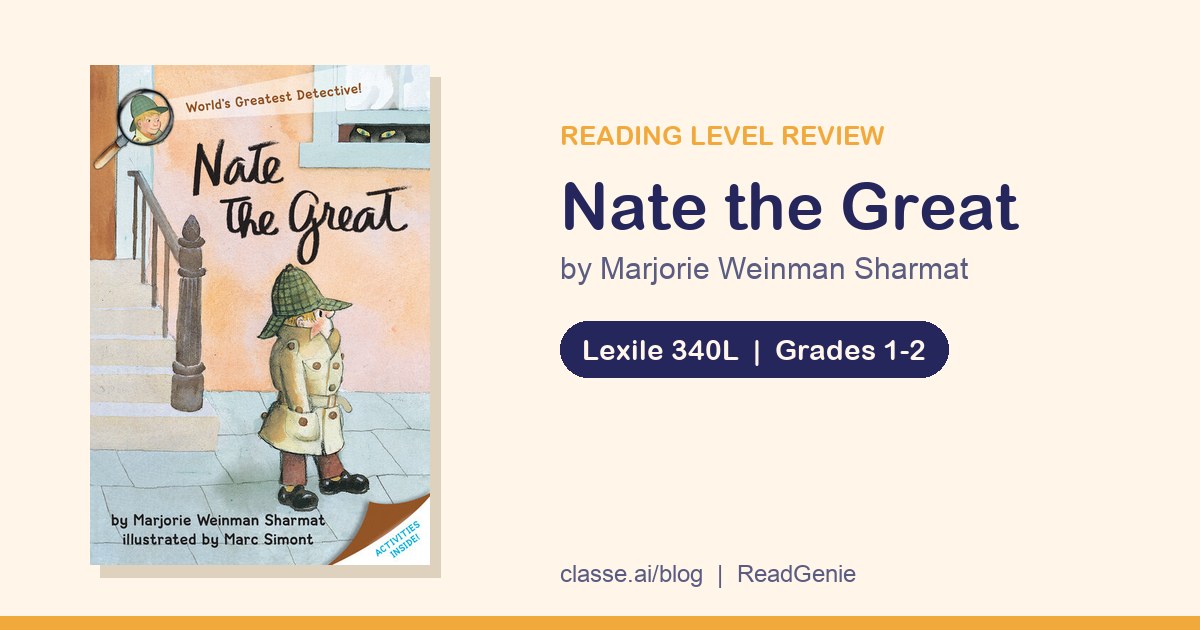
- Nate the Great by Marjorie Weinman Sharmat (similar). A short detective story for kids who like a puzzle.
- Leroy Ninker Saddles Up by Kate DiCamillo (harder). The first Tales from Deckawoo Drive book, set on Mercy's street with longer chapters.
- Junie B. Jones and the Stupid Smelly Bus by Barbara Park (harder). A longer, funny chapter book with fewer pictures, a good next step.
Browse all of our reading-level book reviews.
How we rate books
Lexile, ATOS (Accelerated Reader), Guided Reading and DRA levels come from the companies that own them and from publishers. We link to where we found each one, and when a level isn't published we say so. Anything marked "ReadGenie estimate" is our own call, not an official level. Flesch scores come from a short public excerpt when the publisher offers one. The struggling-reader and dyslexia-friendly ratings are our judgment, based on eight things (sentence length, vocabulary, decodability, page layout, pictures, chapter length, how gripping the story is, and audiobook support). Treat them as a starting point. The right book is one your child can read with about 95% accuracy and wants to keep reading.
Sources
- Penguin Random House: Mercy Watson to the Rescue (Candlewick paperback) (Lexile, Fountas & Pinnell level, pages, ages and grades, ISBN)
- TeachingBooks: Mercy Watson to the Rescue (ATOS, AR points, word count, Lexile check)
- Booksource: Mercy Watson to the Rescue (Guided Reading check, Lexile check, AR level check, interest level)
- Candlewick Press chapter sample (PDF) (excerpt, layout)
- Penguin Random House: Mercy Watson to the Rescue (Listening Library audiobook) (audiobook narrator and length)
- Bookshare: Mercy Watson to the Rescue (Fountas & Pinnell LLI Blue) (Guided Reading conflict)