The Million Dollar Shot Reading Level: Lexile, AR and Grade Guide
The Million Dollar Shot is Lexile 680L, AR level 4.2 and Guided Reading level S, so most kids read it alone in 4th or 5th grade. Here's how it works for struggling readers who love sports, and which words to practice first.

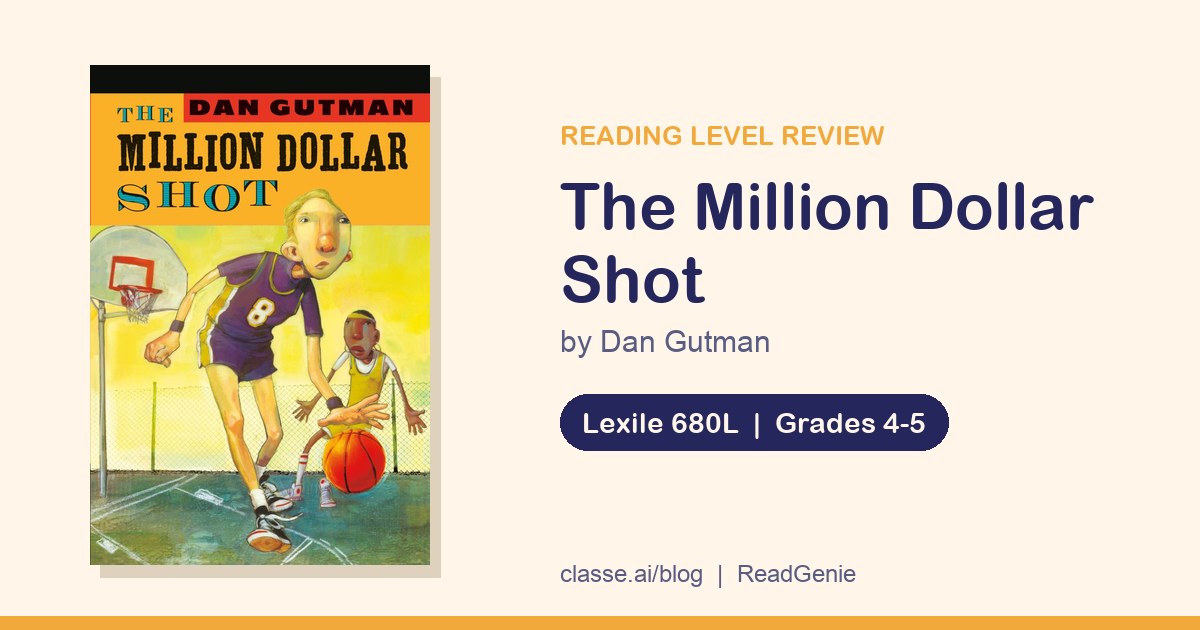
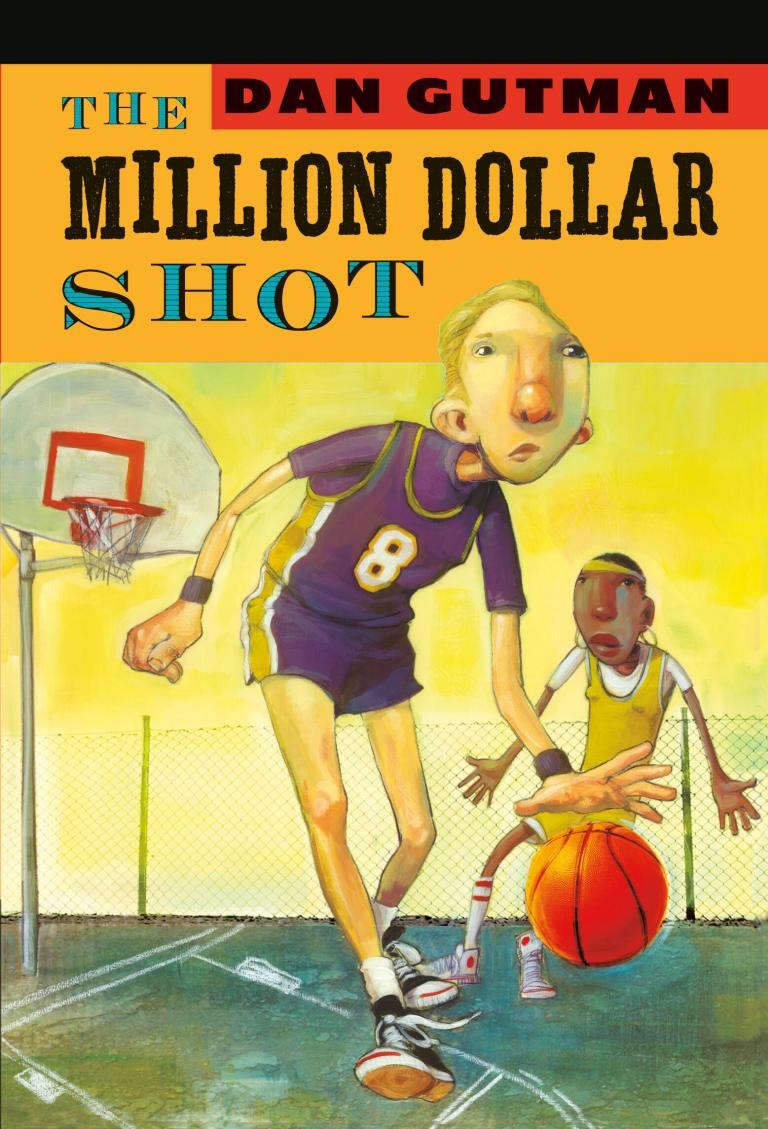
The Million Dollar Shot by Dan Gutman has a 680L Lexile measure, an AR (ATOS) book level of 4.2 and a Guided Reading level of S, so most kids can read it on their own in 4th or 5th grade. It's about 20,000 words long and built around one basketball shot, which makes it a strong pick for struggling readers in grades 5 to 7 who love sports. A child still reading below a 3rd grade level will need the audiobook or a read-together start.
Eddie Ball is eleven, lives with his mom in a trailer park, and doesn't have much going for him on a basketball court. Then he writes a poem for a contest run by Finkle Foods, the snack company his whole town depends on, and wins. The prize is a single foul shot at halftime of the NBA Finals. If it goes in, he gets a million dollars. His friend Annie, who hardly ever misses, and her dad set out to teach him how to shoot, while the man who owns the company starts looking for ways to make sure the ball stays out. Kids like it because the goal is clear from the first chapters and the pressure keeps building right up to the big night.
The Million Dollar Shot reading level at a glance
| Lexile measure | 680L (Booksource) |
|---|---|
| ATOS / AR book level | 4.2 (TeachingBooks) |
| AR points | 3 (TeachingBooks) |
| Guided Reading (Fountas & Pinnell) | S (Booksource) |
| Interest level | Ages 8-12 (Hachette Book Group) |
| Approximate grade band | Grades 4-5 (ages 9-11) ReadGenie |
| Length | 128 pages, ~19,775 words |
| Format | Middle grade novel |
| Good for struggling readers? | ★★★★★ 4/5 |
| Dyslexia-friendly rating | ★★★★★ 3/5 |
We couldn't find a published DRA level, grade level equivalent or Flesch score for this book.
Scores checked 2026-11-14. Different leveling systems don't always agree, so we show each published value with its source and mark our own estimates. Links to every source are under How we rate books.
Is your child working hard and still getting stuck on words?
ReadGenie helps struggling readers improve their reading, spelling and handwriting with Orton-Gillingham practice at home. Your child reads out loud, the app listens, and it helps with the exact sound they missed. Join today and we'll mail your child The Million Dollar Shot for free.
Try ReadGenie and get your free bookStarts with a free 7-day trial. Book mailed after your first paid month. US only, one per family.
What grade level is The Million Dollar Shot?
Plan on a 4th to 5th grade reading level. A strong reader at the end of 3rd grade can usually manage it with some help, and most 5th graders find it a comfortable read.
An AR level of 4.2 means the text is about as hard as what a typical student reads in the second month of 4th grade. The book is worth 3 AR points because it's a full novel, about 20,000 words on 128 pages, rather than a short chapter book. A 680L Lexile sits in the range many schools expect from 4th graders.
Guided Reading level S is a little higher than the other two. Many schools put level S around the end of 4th grade or the start of 5th. That's normal for a book like this. Guided Reading levels weigh things that Lexile and AR leave out, like how long the book is, how much a reader has to keep track of, and whether the story has more than one problem going at once. Here Eddie has to learn to shoot, deal with money trouble at home and stay out of the way of a grown-up who wants him to fail. That takes more holding in your head than a simple series book.
The publisher lists the book for ages 8 to 12, and school book suppliers put its interest level as high as grade 9. That spread is useful for older readers. A 6th or 7th grader who reads at a 4th grade level can carry this book in the hallway without feeling like it's meant for little kids.
Is The Million Dollar Shot good for struggling readers?
Yes, for most kids who like sports. We give it 4 out of 5 for struggling readers.
The biggest reason is the hook. Within the first part of the book a child knows exactly what's at stake, one shot and a million dollars, and every chapter after that moves toward the game. Kids who say they hate reading often stick with a book when they want to find out if something happens, and this one gives them that from the start.
Length helps too. At about 20,000 words, it's a real novel but a short one. A reader who manages 15 or 20 minutes a day can finish it in two or three weeks, and finishing a whole novel does a lot for a struggling reader's confidence. When they do, there are more Million Dollar books by Gutman, including soccer, hockey, bowling and golf stories, so the next book is easy to find.
It looks like a regular middle grade paperback, not a beginner book. That counts for a lot with a 6th grader who is tired of thin books with big print.
A few things to plan for. There are no pictures inside, so the words have to carry the whole story. Basketball words like foul line, free throw and backboard are easy for sports kids and confusing for everyone else. And the book came out in 1997, so prices, phones and TV details will feel old to your child, which can lead to some funny questions.
If your child still needs pictures on most pages, start with Dog Man or Captain Underpants, then come back to Eddie.
Is The Million Dollar Shot good for kids with dyslexia?
Overall: ★★★★★ 3/5
| Factor | Score | Why |
|---|---|---|
| Sentence length | 3/5 | A 680L Lexile points to mid-length sentences for a 4th grade book. No public excerpt was available to count them. |
| Vocabulary load | 4/5 | Mostly everyday words about school, home and basketball. Few rare or long words beyond the contest and money talk. |
| Decodability | 3/5 | Short names like Eddie and Annie decode easily. Words like million, foul and poem break the usual patterns and are worth a quick preview. |
| Text density and layout | 3/5 | About 20,000 words on 128 pages, so pages are full of text in a standard novel layout. |
| Pictures that carry meaning | 1/5 | A text novel with no picture support, so the words carry the story. |
| Chapter length | 3/5 | The whole book is short, but its chapter count could not be confirmed from a public source. |
| Engagement for reluctant readers | 5/5 | Fast and funny, with a million dollar shot, a villain and a countdown to the big game. |
| Audiobook / read-along support | 4/5 | An unabridged audiobook from Recorded Books, read by Johnny Heller, that libraries carry. |
We give it 3 out of 5 on our dyslexia-friendly checklist. That's a solid middle score, and with the audiobook it works well for many dyslexic readers.
Engagement is the strongest factor. A dyslexic child who is working hard to decode needs a reason to keep going, and a kid with one shot at a million dollars is a very good reason. The vocabulary is also mostly everyday words about school, home and basketball, without a lot of rare or long words.
The hard parts are the ones you'd expect from a novel with no pictures. Pages are full of text in a standard layout, and nothing on the page helps with meaning when a word is missed. We couldn't find a public excerpt to measure sentence length directly, so that score is our estimate from the Lexile. We also couldn't confirm the chapter count from a public source, so plan reading sessions by time, not by chapter.
The best support is the audio. Recorded Books publishes an unabridged audiobook read by Johnny Heller, and many libraries carry it. Listening to a chapter while following the words, then reading the next stretch aloud, keeps a dyslexic reader moving without wearing them out. There's no special dyslexia-friendly edition.
Words and phonics patterns to practice first
Most of the words in this book follow regular patterns, which makes it good practice for reading in real books. These are the patterns that come up again and again in a basketball story.
Closed syllables with short vowels show up in shot, basket, contest and win. Million is a nice two-syllable example to split, mil and lion, though the second part needs a quick word about how it sounds.
Consonant-le is a good one to teach before you start, because the company's name is Finkle. Dribble, double, little, simple and puzzle use the same ending.
Vowel teams come up in team, coach, free, dream and throw. Foul is worth a moment on its own, since ou has more than one sound and the word is everywhere in this book.
R-controlled vowels are all over a sports story. Court, score, sports, hard and player are good examples, and dollar is a tricky one because ar at the end sounds like er.
Compound words like basketball, halftime, backboard, something, everybody and sometimes are fun to break apart. Point out that basketball is two words your child already knows.
Pre-teach these as whole words before chapter 1. Eddie, Finkle, million, dollar, poem, foul, sure, practice, halftime and contest. A bookmark with the list lets your child check a word without losing their place.
If your child keeps getting stuck on patterns like consonant-le and vowel teams, a little practice each day usually helps more than pushing through the whole book at once. ReadGenie gives kids short Orton-Gillingham style practice on exactly these patterns, so a book like this one feels more doable.
How to read The Million Dollar Shot with your child
Before you start, make sure your child knows what a foul shot is. If you can, go to a hoop and shoot a few free throws together. Talk about how it feels to shoot when people are watching. That one afternoon makes the whole ending land harder.
Read the first chapter aloud together. Once your child knows the prize, the story mostly carries itself. After that, take turns by page, or let your child read the parts where Eddie practices with Annie, which tend to move fast.
Mix in the audiobook on busy nights. Listening to one chapter and reading the next one aloud keeps a tired reader moving toward the finals without turning reading time into a fight.
Before the last part of the book, stop and ask your child whether Eddie will make the shot, and why. Write the guess down and check it at the end. It's a quick way to see how well they've followed the story.
Afterward, ask what your child would do with a million dollars. It's a fun talk, and the book gives you an easy way into a real conversation about money and work.
Using The Million Dollar Shot in the classroom or tutoring
For teachers, the book fits well in a sports themed book club for grades 4 to 6. Pair it with a short nonfiction piece on the NBA Finals or on how to shoot a free throw. Before reading, have students write their own contest poem about a snack food, then compare it with Eddie's once they get there. As a class, keep a running list of the ways the company owner tries to stop Eddie, and talk about what's fair play and what isn't.
For tutors, pre-teach Finkle, million, dollar, foul and poem before chapter 1. The basketball words are perfect for compound word work, so break apart basketball, halftime and backboard early. A simple routine works well here. The student reads a chapter aloud at the start of the session for fluency, then listens to the next chapter with the audiobook while following along.
Content notes for parents
The story is gentle overall. Money is a real worry for Eddie's family, and people in the town lose their jobs at the snack factory, which may lead to questions. The company owner tries to bribe and trick a kid into missing, so there's a clear grown-up villain. A few readers find some of the characters drawn as broad types, which is worth a talk with an older child. There's no bad language or violence to worry about.
Should your child read it?
If your child loves sports, reads at about a 4th grade level and is in grades 4 to 7, this is a great choice. It looks grown up, it's short for a novel, and the one-shot setup keeps reluctant readers going. A child still reading below a 3rd grade level should start with the audiobook or an easier book like Gutman's My Weird School series. Kids who want fantasy or adventure instead of a realistic story may do better with something like Dragon Masters.
Make the next book easier
Short daily sessions of reading, spelling and handwriting practice, built with Orton-Gillingham teachers. It works alongside tutoring and school support. The first 7 days are free. Join today and we'll mail your child The Million Dollar Shot for free.
Try ReadGenie and get your free bookStarts with a free 7-day trial. Book mailed after your first paid month. US only, one per family.
FAQ
What is the Lexile level of The Million Dollar Shot?
The Million Dollar Shot has a Lexile measure of 680L, according to the school book supplier Booksource and TeachingBooks. That's a level many schools expect from 4th graders. It's a good fit for an older child who reads a bit below grade level.
What is the AR level of The Million Dollar Shot?
It has an ATOS book level of 4.2 and is worth 3 AR points. The 4.2 means the text is about as hard as what a typical student reads early in 4th grade. The points are higher than most books at that level because it's about 20,000 words long.
What age is The Million Dollar Shot for?
The publisher lists it for ages 8 to 12. Most kids can read it alone around ages 9 to 11, and its sports story still appeals to many 12 and 13 year olds who read below grade level.
Is The Million Dollar Shot good for 5th graders?
Yes. Its Guided Reading level of S lines up with the end of 4th grade or the start of 5th, so most 5th graders can read it on their own. For a 5th grader who struggles, it's a good book to share, with the audiobook for some chapters.
What books are like The Million Dollar Shot?
The other Million Dollar books by Dan Gutman are the closest match, each built around a sport. Frindle and The Toothpaste Millionaire have a similar feel, with clever kids and big stakes. For a step up, try Gutman's Honus & Me or The Crossover by Kwame Alexander.
Get The Million Dollar Shot free
ReadGenie helps struggling readers improve their reading, spelling and handwriting in short daily sessions at home. Join and we'll mail your child this book for free.
Claim your free bookStarts with a free 7-day trial. Book mailed after your first paid month. US only, one per family.
What to read next
- Miss Daisy Is Crazy! by Dan Gutman (easier). Book 1 of Gutman's My Weird School, much shorter and sillier, a good way in for a reader who isn't ready for a full novel yet.
- Sideways Stories from Wayside School by Louis Sachar (similar). Short, funny chapters at a similar level for a reader who likes humor more than sports.
- The Toothpaste Millionaire by Jean Merrill (similar). Another kid with a shot at big money, this time by starting a business.
- Frindle by Andrew Clements (similar). A clever kid takes on the adults in charge, with short chapters and a big payoff.
- Honus & Me by Dan Gutman (harder). Gutman's baseball time travel story, longer and a step up for kids who finished the Million Dollar books.
- The Crossover by Kwame Alexander (harder). A basketball novel in verse for grades 5 and up, with short lines but deeper feelings.
Browse all of our reading-level book reviews.
How we rate books
Lexile, ATOS (Accelerated Reader), Guided Reading and DRA levels come from the companies that own them and from publishers. We link to where we found each one, and when a level isn't published we say so. Anything marked "ReadGenie estimate" is our own call, not an official level. Flesch scores come from a short public excerpt when the publisher offers one. The struggling-reader and dyslexia-friendly ratings are our judgment, based on eight things (sentence length, vocabulary, decodability, page layout, pictures, chapter length, how gripping the story is, and audiobook support). Treat them as a starting point. The right book is one your child can read with about 95% accuracy and wants to keep reading.
Sources
- Booksource: The Million Dollar Shot (Lexile, Guided Reading, AR check, interest level, ISBN, pages)
- TeachingBooks: The Million Dollar Shot (ATOS, AR points, word count, Lexile check, grades, audiobook narrator)
- Hachette Book Group: The Million Dollar Shot (ages, pages, publisher, ISBN)
- Goodreads: The Million Dollar Shot and the Million Dollar series (plot summary, series order)