The Giver Reading Level: Lexile 760L, AR 5.7, Guided Reading Y
The Giver by Lois Lowry is Lexile 760L, AR level 5.7 and Guided Reading Y, so most kids can read it alone in 5th or 6th grade. It works for struggling readers in grades 7 and 8 with the audiobook and a read-together start.

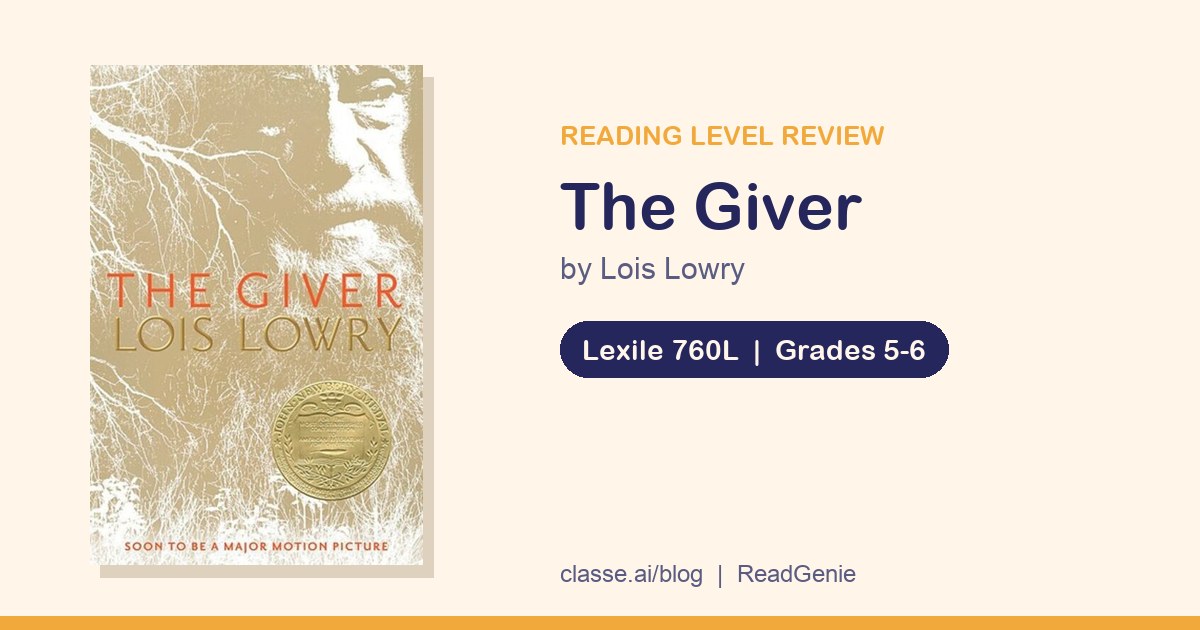
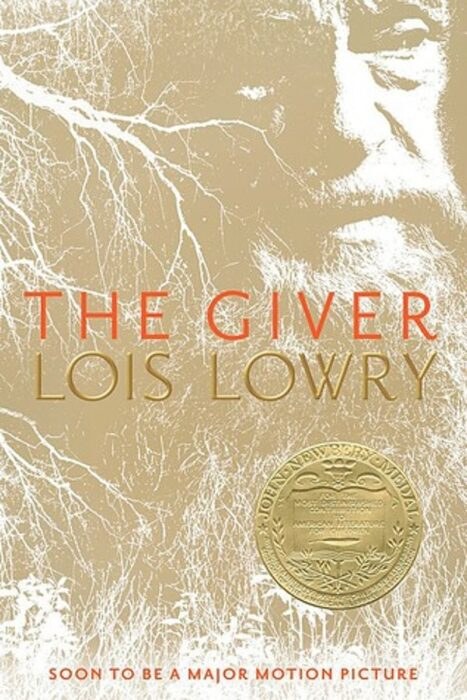
The Giver by Lois Lowry has a 760L Lexile measure, an AR (ATOS) book level of 5.7, a Guided Reading level of Y and a DRA level of 60. Most kids can read it on their own in 5th or 6th grade. It is short for a classic and the ideas are big, so it is a good pick for struggling readers in grades 7 and 8 when they have the audiobook or a grown-up to share the first chapters. The slow start and the heavy themes make it a poor fit for a reluctant 4th grader, even one who reads well.
Jonas is eleven and lives in a community where nobody is hungry, nobody is scared and nobody gets to choose much of anything. Jobs, spouses and even children are assigned. At the Ceremony of Twelve he is picked for a job no one else has, Receiver of Memory, and he starts spending afternoons with an old man called the Giver. The Giver passes him memories of snow, color, music and love, and later of pain and war. The more Jonas learns, the less his perfect town looks perfect. Kids who stick with it tend to remember it for years, and it won the Newbery Medal in 1994. It is also a common class novel in middle school, which is why so many parents end up searching for its level.
The Giver reading level at a glance
| Lexile measure | 760L (Scholastic Teacher Store) |
|---|---|
| ATOS / AR book level | 5.7 (TeachingBooks) |
| AR points | 7 (TeachingBooks) |
| Guided Reading (Fountas & Pinnell) | Y (Scholastic Teacher Store) |
| DRA level | 60 (Scholastic Teacher Store) |
| Flesch Reading Ease (0-100) | 74.2 ReadGenie estimate |
| Flesch-Kincaid grade | 5.7 ReadGenie estimate |
| Interest level | Grades 8-12 (Scholastic Teacher Store) |
| Approximate grade band | Grades 5-6 (ages 10-12) ReadGenie |
| Length | 240 pages, ~43,617 words |
| Format | Middle grade novel |
| Good for struggling readers? | ★★★★★ 3/5 |
| Dyslexia-friendly rating | ★★★★★ 3/5 |
We couldn't find a published grade level equivalent for this book.
Scores checked 2026-11-14. Different leveling systems don't always agree, so we show each published value with its source and mark our own estimates. Links to every source are under How we rate books.
Is your child working hard and still getting stuck on words?
ReadGenie helps struggling readers improve their reading, spelling and handwriting with Orton-Gillingham practice at home. Your child reads out loud, the app listens, and it helps with the exact sound they missed. Join today and we'll mail your child The Giver for free.
Try ReadGenie and get your free bookStarts with a free 7-day trial. Book mailed after your first paid month. US only, one per family.
What grade level is The Giver?
By the numbers, The Giver reads at about a 5th to 6th grade level. Schools usually teach it in 7th or 8th grade, and Scholastic lists it for grades 8 to 12. That gap is the first thing to understand about this book. The words are easier than the ideas.
An AR level of 5.7 means the text is about as hard as what a typical student reads late in 5th grade. A Lexile of 760L lands in the same place. Both measures look mostly at sentence length and how common the words are, and Lowry writes in clear, quiet sentences. In the opening chapter they average about 11 words. Our own readability check on that excerpt came out at almost exactly the same grade as the AR level, so the formulas agree with each other.
Guided Reading level Y and DRA 60 point higher, into 7th and 8th grade on most school charts. Those systems weigh how much a reader has to infer, and The Giver asks a lot. The community uses ordinary words like release, Elsewhere and Ceremony with special meanings, and the book never stops to define them. A reader has to work out from clues what release really means, and the whole story turns on getting it.
The length is gentle. At about 44,000 words and 7 AR points, it is shorter than Holes or Harry Potter. A 6th grader reading on grade level can manage it alone. A 7th or 8th grader reading a year or two behind can manage it too, with help.
Is The Giver good for struggling readers?
For older struggling readers, often yes. We rate it 3 out of 5 for struggling readers, and the audiobook pushes it closer to a 4.
What works in its favor is that the sentences are plain and the book is short for its reputation. There are 23 chapters, and the story never jumps around in time or switches narrators. A 7th grader who has been handed thick class novels before may be relieved by how readable the pages are. It also looks and feels like a teen book, and for a 13-year-old reading below grade level that counts for a great deal.
What works against it is the start. The first chapters are mostly Jonas thinking about his feelings, his family's evening talks and the rules of the community. Not much happens until the Ceremony, and a reader who is already working hard to decode may lose interest before the hook arrives. The ideas are abstract too. Sameness, memory and choice need talking through, and there are no pictures to help.
Watch for these sticking points:
- The community words that mean something different in this book (release, Elsewhere, Nurturer, Stirrings)
- Long, formal words in Jonas's thoughts, like apprehensive and palpable
- Chapters that average about 1,900 words, which is 15 to 20 minutes for a slower reader
- The emotional weight of chapter 19
A struggling reader in 7th or 8th grade who has it assigned will do well if someone reads the first few chapters with them and the audiobook carries the long middle. A child who is reading below a 5th grade level and is not assigned it should wait, or start with an easier dystopian story like The City of Ember.
Is The Giver good for kids with dyslexia?
Overall: ★★★★★ 3/5
| Factor | Score | Why |
|---|---|---|
| Sentence length | 3/5 | About 11 words per sentence in the opening chapter, with many short ones in the dialogue. |
| Vocabulary load | 2/5 | About 8 percent of words in the excerpt have three or more syllables, including apprehensive, palpable, sympathetically and recollection. |
| Decodability | 3/5 | Most words follow common patterns and the names are short (Jonas, Lily, Asher, Fiona). The long Latin-root words and the -ly adverbs take careful decoding. |
| Text density and layout | 3/5 | Standard novel pages of text in a regular serif font, with plenty of dialogue to break them up. |
| Pictures that carry meaning | 1/5 | No illustrations in the novel, so the words carry all of the meaning. The graphic novel is the exception. |
| Chapter length | 3/5 | About 1,900 words per chapter on average, or 15 to 20 minutes for a slower reader. |
| Engagement for reluctant readers | 3/5 | Starts quietly with family talk and rules, then turns gripping once Jonas begins receiving memories. |
| Audiobook / read-along support | 5/5 | Unabridged audiobook read by Ron Rifkin (Listening Library), on CD and as a download. |
We rate The Giver 3 out of 5 for dyslexic readers. It is a fair middle score. Few things make it hard, but few things make it easy either.
Sentence length and decoding are both manageable. The main names are short and regular (Jonas, Lily, Asher, Fiona), unlike fantasy novels full of invented names. Most of the words a reader meets are everyday words. The trouble is the long ones mixed in. About 8 percent of the words in the opening chapter have three or more syllables, and many of them are Latin-root words with prefixes and suffixes stacked on, like recollection, sympathetically and inconveniencing. For a dyslexic reader each of those is a small wall.
The novel has no illustrations and standard paperback pages, so the words carry all of the meaning. The chapters are long enough that a slow reader may need two sittings for one.
Audio is the strong point. There is an unabridged audiobook read by Ron Rifkin from Listening Library, available on CD and as a download, and many libraries carry it. For a dyslexic reader who has to finish this book for class, listening while following the print is the single best support.
There is also a 2019 graphic novel adaptation by P. Craig Russell that tells the same story with far fewer words and lets the art show the shift from gray to color. It has its own, lower level. It is a good way in for a reader who is far below the novel's level, and some kids read it first and then go back to the novel.
Words and phonics patterns to practice first
Most of the hard words in The Giver are long words built from smaller parts. A reader who can break a word into prefix, base and suffix will find the book much easier than one who tries to read the whole thing at once.
The suffix -tion comes up constantly: direction, explanation, attention, celebration, recollection, instructions. Teach that -tion says "shun" and always ends the word, then have your child find the base word in front of it.
The suffix -ly shows up on nearly every page of Jonas's thoughts: occasionally, anxiously, immediately, obediently, desperately, breathlessly. Cover the -ly with a finger, read the base word, then add it back.
The prefixes un- and re- start many words: unidentified, unloading, uneducated, reassuring, remembered, releasing. Releasing is worth extra time, since release is the most important word in the book.
The suffix -ed has its three sounds here: fascinated, intrigued, delivered, abandoned, apologized, considered. Ask whether each one ends in /t/, /d/ or /ed/.
R-controlled vowels run through the community's job names and Jonas's feelings: nurturer, nervousness, certainly, careful, barely, interest.
Pre-teach these as whole words before chapter 1: Jonas, Asher, Fiona, apprehensive, palpable, intrigued, disposition, sympathetically, Nurturer, newchildren, ceremony and release. If your child is still shaky on suffixes and prefixes, a few weeks of short daily Orton-Gillingham practice on multisyllable words (the kind ReadGenie gives at home) makes a book like this far less tiring.
How to read The Giver with your child
Read chapter 1 aloud together. It is the slowest part of the book, and reading it with a parent gets your child past the place where most reluctant readers give up. Once your child understands the Ceremony of Twelve and why Jonas is nervous, the story starts pulling on its own.
Stop after chapter 8, when Jonas is selected, and ask what being the Receiver might mean. Kids like guessing, and it gives them a reason to keep going.
For the middle chapters, let the audiobook do some of the work. Listening to one chapter and reading the next aloud together is a good rhythm. Try to read the memory scenes together, since that is where the book is at its best.
Preview chapter 19 yourself before your child reads it, or read it together. It is where Jonas learns what release really means, and some kids need a grown-up nearby for it.
Talk about the ending. Lois Lowry left it open on purpose, and there is no wrong answer to what happens to Jonas. Asking your child what they think is often the best conversation the book starts.
Using The Giver in the classroom or tutoring
For teachers, The Giver is a common class novel in grades 6 to 8. Chart the community's rules early in the book so students can compare them with what Jonas learns later. An anchor chart of the community's special words (release, Elsewhere, Nurturer, Ceremony, Receiver) helps every reader, and it helps struggling readers most. Prepare students for chapter 19 and give them a way to step out if they need to.
For tutors, pre-teach Jonas, Asher, Fiona and the community words before chapter 1. Use the opening chapter for suffix work with -tion and -ly, since it is full of examples like direction, explanation, anxiously and desperately. A good session pattern is to have the student read one chapter aloud for fluency and then finish the next with the audiobook, so they keep pace with the class without burning out.
Content notes for parents
The Giver is quiet on the surface and dark underneath. The most upsetting scene comes in chapter 19, when Jonas watches a recording of his father ending a newborn twin's life with an injection, which the community calls release. Jonas also receives a memory of war with a dying soldier, and he learns that an earlier Receiver asked to be released. Early on, Jonas takes a daily pill that stops his first feelings of attraction, which the book calls the Stirrings. There is no swearing and nothing graphic in the way it is written, but the ideas are heavy for kids under 11.
Should your child read it?
If your child is in 7th or 8th grade and has it assigned, yes, with support. Read the first chapters together, use the audiobook for the middle, and talk about chapter 19 and the ending. A 5th or 6th grader reading on grade level who likes big questions can read it alone. A child who is younger, reading below a 5th grade level, or sensitive to sad stories should wait and try The City of Ember or Number the Stars first.
Make the next book easier
Short daily sessions of reading, spelling and handwriting practice, built with Orton-Gillingham teachers. It works alongside tutoring and school support. The first 7 days are free. Join today and we'll mail your child The Giver for free.
Try ReadGenie and get your free bookStarts with a free 7-day trial. Book mailed after your first paid month. US only, one per family.
FAQ
What age is The Giver good for?
Most kids are ready for The Giver at about 11 to 14. The reading level fits ages 10 to 12, but the themes, including what release means, suit middle schoolers better than younger readers. Scholastic lists it for grades 8 to 12.
Is The Giver a good book for 6th graders?
Yes, for 6th graders reading on grade level. The text sits at about a 5th to 6th grade level, so most can read it alone. Preview chapter 19 first if your child is sensitive, and be ready to talk about the ending.
Is The Giver a good book for 7th graders?
Yes. It is a common 7th grade class novel. A 7th grader reading below grade level can manage it with the audiobook and a read-together start for the first few chapters.
What is the AR level of The Giver?
The Giver has an AR (ATOS) book level of 5.7 and is worth 7 AR points. That means the text is about as hard as late 5th grade reading. The 2019 graphic novel has its own, lower AR level and a separate quiz.
Is there an easier version of The Giver?
Yes. The 2019 graphic novel by P. Craig Russell tells the same story in comic form with far fewer words. The unabridged audiobook read by Ron Rifkin is the other easy way in, and it pairs well with the print book.
What is the next book after The Giver?
Gathering Blue is book 2 of The Giver Quartet, followed by Messenger and Son. Gathering Blue takes place in a different community with a new main character, and Messenger and Son tie the four books together.
Get The Giver free
ReadGenie helps struggling readers improve their reading, spelling and handwriting in short daily sessions at home. Join and we'll mail your child this book for free.
Claim your free bookStarts with a free 7-day trial. Book mailed after your first paid month. US only, one per family.
What to read next
- Number the Stars by Lois Lowry (easier). Lois Lowry's other Newbery winner, a shorter World War II story about a girl helping her Jewish friend escape.
- The City of Ember by Jeanne DuPrau (easier). Two kids in a closed city who discover their world is not what they were told, with more action and less philosophy.
- Among the Hidden by Margaret Peterson Haddix (similar). A boy hidden from a government that allows only two children per family, in short chapters.
- Gathering Blue by Lois Lowry (similar). Book 2 of the quartet, set in a different community with a girl who has a talent for weaving.
- The Hunger Games by Suzanne Collins (harder). A longer dystopian story with nonstop action, for readers in grades 7 and up who want more.
Browse all of our reading-level book reviews.
How we rate books
Lexile, ATOS (Accelerated Reader), Guided Reading and DRA levels come from the companies that own them and from publishers. We link to where we found each one, and when a level isn't published we say so. Anything marked "ReadGenie estimate" is our own call, not an official level. Flesch scores come from a short public excerpt when the publisher offers one. The struggling-reader and dyslexia-friendly ratings are our judgment, based on eight things (sentence length, vocabulary, decodability, page layout, pictures, chapter length, how gripping the story is, and audiobook support). Treat them as a starting point. The right book is one your child can read with about 95% accuracy and wants to keep reading.
Sources
- Scholastic Teacher Store: The Giver (paperback) (Lexile, Guided Reading, DRA, pages, grades, publisher)
- TeachingBooks: The Giver (ATOS, AR points, word count, Lexile check, grades)
- Booksource: The Giver (Guided Reading check, Lexile check, AR check, interest level, ISBN, pages)
- Novel Units: The Giver (Guided Reading check)
- BookBrowse: excerpt from The Giver (excerpt)
- Kirkus Reviews: The Giver audiobook, read by Ron Rifkin (audiobook narrator)